Abbecedario per il mondo nuovo – Zitta
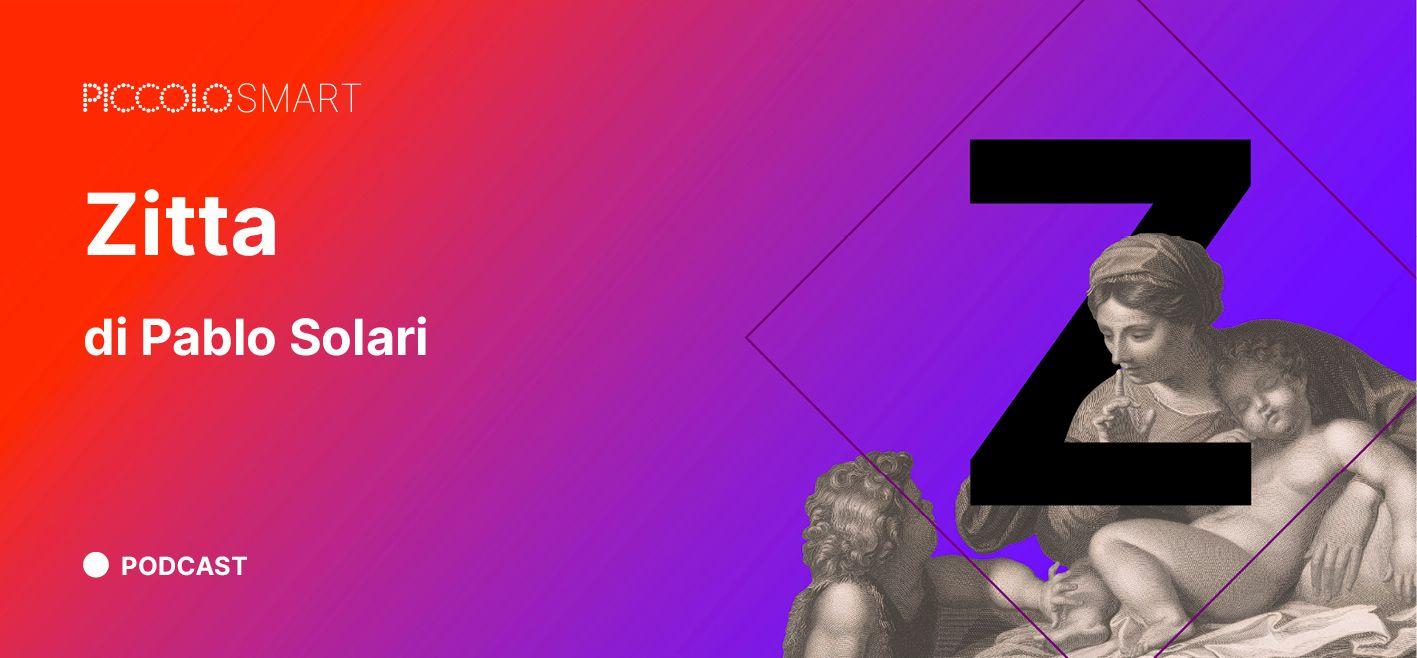
Abbecedario per il mondo nuovo – Zitta

Zitta by Fabio Pisano, with Leda Kreider
Podcast on Spreaker from Saturday 12nd June 2021

Ascolta "Zitta di Fabio Pisano" su Spreaker.

Z, the last letter. I chose the word Zitta (Shut up, Silent), because Z is a tricky, yet wonderful, fascinating letter. The last one.
Last, like Lisa Montgomery seemed to be, a crazed assassin but first and foremost a little girl tortured by her mother and stepfather who stifled her light, probably teaching her that life contains nothing but evil. Lisa committed a terrible murder, Lisa had always been forced into silence, suffering rape, violence and harassment of all kinds in a trailer that it is hard to imagine could contain so much suffering. Lisa was condemned to death via a letter sent to her by the Department of Justice of the State of Indiana, USA. In that letter, Lisa was defined as “dear”, and the message ended with “sincerely”, the only two words of affection that she had ever heard or read.
The team of psychologists who handled the case had repeatedly called for the pardoning of a woman defined as “the most broken in the world”, but President Trump did not accept the requests.
On the day of her lethal injection, her executioner asked Lisa if she had anything to say before dying, but Lisa, who was used to silence, to shutting up, simply answered no. (Fabio Pisano)

Synopsis
Zitta tells the story of Lisa Montgomery, a crazed assassin and a broken woman, a woman condemned to death by her State, Indiana, but who had previously been sentenced to life by her mother and stepfather, with no chance of pardon. None whatsoever.


Biography
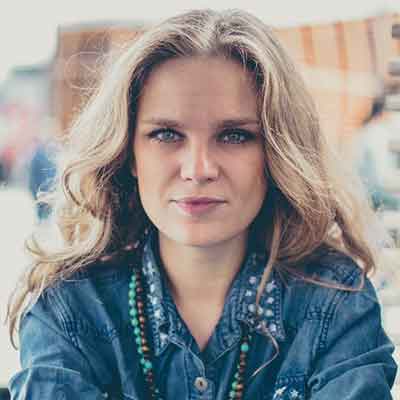
I was born in Naples on 27 September, 34 years ago. I studied Biotechnological Sciences, gaining a scientific training, while at the same time cultivating my passion for playwriting, studying with a number of dramaturgs including Mark Ravenhill, Martin Crimp, Enzo Moscato and Davide Carnevali, and I have studied with a number of authors from the new Spanish Scene, including Esteve Soler, José Mora and Ana Valbuena. I have also had very profitable encounters with Oskaras Korsunovas, Massimiliano Civica, and Laura Curino. I have participated in a number of national competitions dedicated to playwriting, winning a number, including the “Sipario.it” award, the “Aldo Nicolaj” award, the “Salvatore Quasimodo” award, the “Annibale Ruccello” award, the “Honorable Mention for Best Original Story” award at the international ISA - Independent Shorts Awards in Los Angeles for a short film, the “Hystrio 2019” award and the Fersen award. I read a great deal of contemporary playwriting, and I believe it is necessary for writers to always follow a dark path, allowing them to explore the genre and evolve their form while staying true to their narration.


Abbecedario per il mondo nuovo
a Piccolo Teatro di Milano – Teatro d’Europa production 
in collaboration with the Hystrio – Playwriting Award and the Riccione “Pier Vittorio Tondelli” Award
directed by Lisa Ferlazzo Natoli and Alessandro Ferroni
Abbecedario per il mondo nuovo –Y.E.T.I.

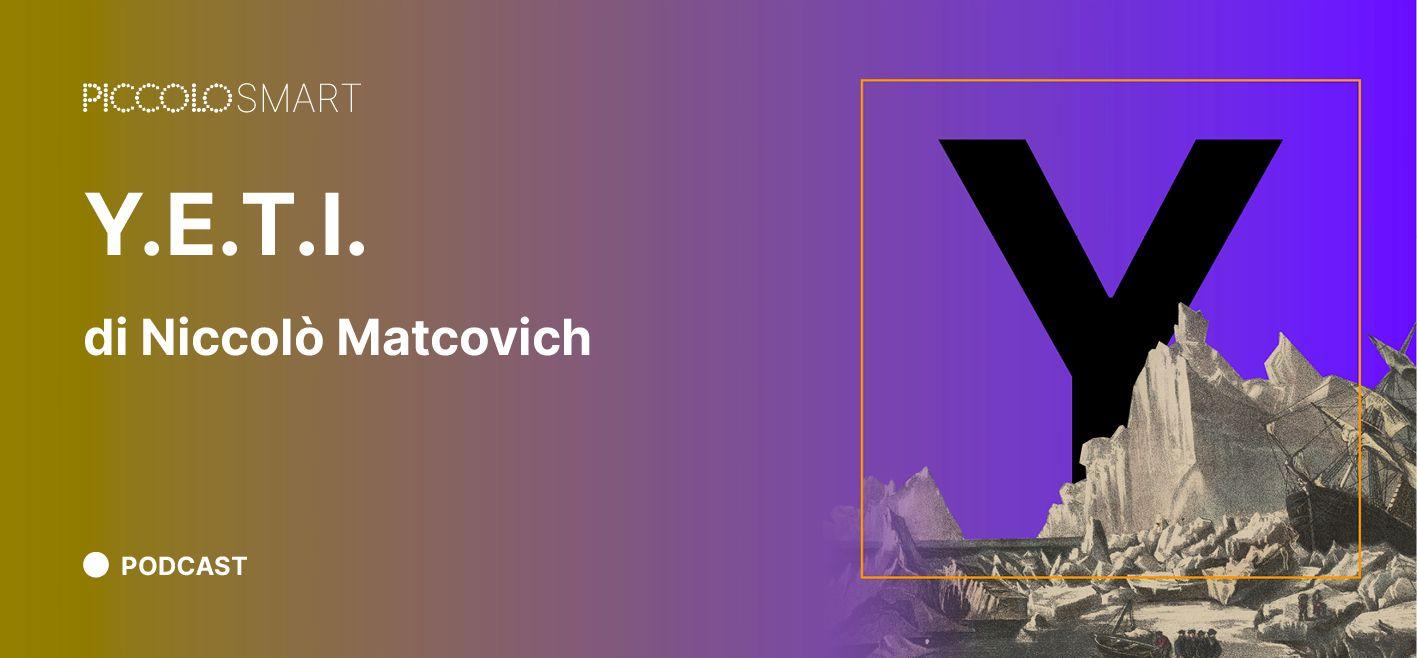
Abbecedario per il mondo nuovo –Y.E.T.I.

Y.E.T.I. by Niccolò Matcovich, with Alfonso De Vreese, Anna Godina, Marco Mavaracchio
Podcast on Spreaker from Friday 11st June 2021

Ascolta "Y.E.T.I. di Niccolò Matcovich" su Spreaker.

When the letters were drawn, I hoped I would be assigned a strange one, a difficult, problematic and limiting letter. This is probably because when I write “to order”, the more restrictions there are, the freer I feel within the thought structure. Y leaves little room for imagination. After a wander among the Yachts of the Yakuza, who reputedly spend time on YouPorn while eating Yoghurt produced by Yankees but purchased in Yen or in exchange for a few Yaks, I dreamt of a Yeti, one of those really big, bad a muscular ones that said choose me over and over, and the more it repeated its message, the bigger it became, until - swollen with rage and with its flames burning - it took hold of its hair head and pulled it off; it was a mask. Underneath was a normal, almost anonymous, person, who gradually deflated until he was about my size. He looked at me and said Choose me? and I answered OK, and he answered OK, and that night I found my word.  Niccolò Matcovich
 

Synopsis
It is the year 2050. The Great Frost has completely covered the planet. The cities are empty, the trapped oceans are endless sheets of ice, and the vegetation has wilted. The sun has grown cold, it seems unable to reach the planet. In the ice desert, two Ferrymen land on the Himalayas with a single goal: find the Yeti.


Biography

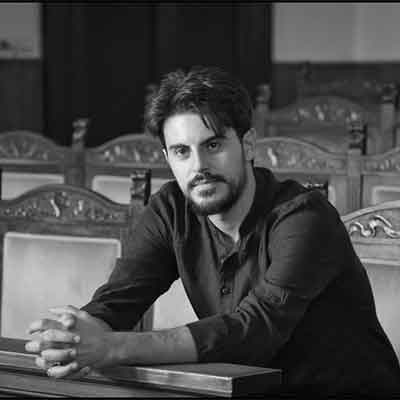
Niccolò Matcovich, born in 1989, is an actor and director. He graduated in Playwriting at the Paolo Grassi Civic School of Dramatic Arts in Milan in 2014 and, on returning to Rome at the beginning of 2016, he founded the company Habitas together with the actors Livia Antonelli and Chiara Aquaro. 
His directing ranges from classic prose, opera and research, while his writing focuses on the rhythm and musicality of words, as well as on linguistic experimentation. 
With Habitas, he works on contemporary playwriting and, since the summer of 2018, his production activities have been accompanied by the creation, artistic direction and organisation of CastellinAria - Festival of Pop Theatre in the castle of Alvito in the province of Frosinone. He is currently planning the fourth edition. As well as Habitas, the project also involves Anna Ida Cortese. 
In September 2020, together with Laura Nardinocchi, he won the Scenario Infanzia Award with Arturo. The play was also a semi-finalist at the In-Box Blu 2021 award. 


Abbecedario per il mondo nuovo
a Piccolo Teatro di Milano – Teatro d’Europa production 
in collaboration with the Hystrio – Playwriting Award and the Riccione “Pier Vittorio Tondelli” Award
directed by Lisa Ferlazzo Natoli and Alessandro Ferroni
 

Abbecedario per il mondo nuovo – Xabaras

Abbecedario per il mondo nuovo – Xabaras

Xabaras di Pablo Solari, with Marco Mavaracchio, Simone Tudda, Petra Valentini.
Podcast online on Spreaker from Sunday 6 June 2021

Ascolta "Xabaras di Pablo Solari" su Spreaker.

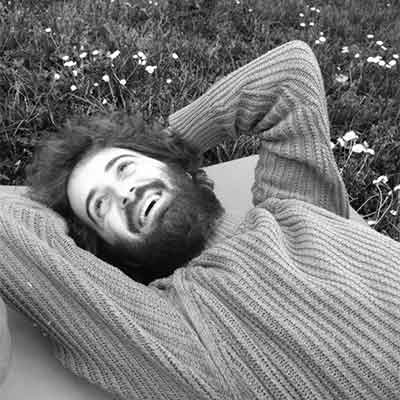
Xabaras, the father of Dylan Dog, an anagram of Abraxas, one of the names by which “the great archon”, God, or perhaps his opposite, is known. Fantasy, legend and divinity are the elements on which I built this dark tale in which Xabaras is the lead character. Pablo Solari

Synopsis
During a distant winter, that which was once known as the Piccolo Teatro is now a ruin overrun by vegetation and inhabited by a young man and a majestic black horse. Xabaras, a mysterious pilgrim, arrives at the door of the Teatro asking for shelter in exchange for precious knowledge.

Biography

 A director and playwright, he was born in 1989 and graduated in Theatrical Directing at the Paolo Grassi Civic School of Theatre in Milan in 2015. He wrote Oreste, part of the UBU award and 2016 Critic’s Award-winning play Santa Estasi: Atridi: otto ritratti di famiglia by Antonio Latella; he was responsible for the theatrical adaptation of Cavalieri di Aristofane, which was performed during the 54th Siracuse National Festival of Ancient Drama, with Francesco Pannofino, Gigio Alberti, Antonio Catania, Roy Paci and others. His directed works include: L'indifferenza; Contenuti Zero Varietà; Carapace, in collaboration with the musician Roy Paci; L'amore ai tempi dello storytelling (2020), written and directed in collaboration with the satirical group “Il terzo segreto di satira”; Elia Kazan. Confessione americana which made its debut at the 2020 Biennale of Theatre in Venice. He made his debut as an opera director with two completely original single acts for the evening 4 one-actoperas, which closed the 2019 Biennale of Music in Venice. He was a finalist in the 2019 Riccione Tondelli award with the text Woody è morto. Since 2021 he has been working with Marco Balich for Balich Worldwide shows, which produces large-scale events and Olympic Ceremonies. (Ph. Wanda Perrone Cappano)


Abbecedario per il mondo nuovo
a Piccolo Teatro di Milano – Teatro d’Europa production 
in collaboration with the Hystrio – Playwriting Award and the Riccione “Pier Vittorio Tondelli” Award
directed by Lisa Ferlazzo Natoli and Alessandro Ferroni


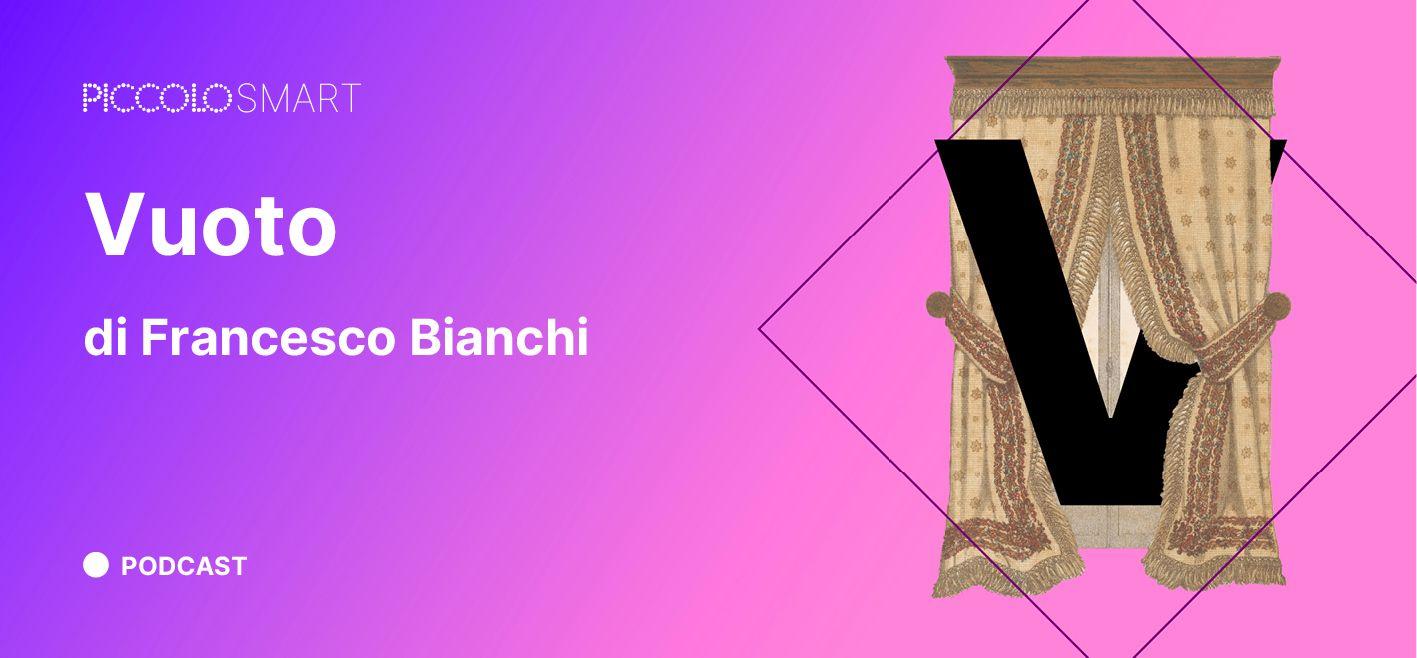
Abbecedario per il mondo nuovo – Vuoto

Abbecedario per il mondo nuovo – Vuoto

Vuoto by Francesco Bianchi, with Giovanni Drago and Francesca Osso
Podcast online on Spreaker from Friday 4 June 2021

Ascolta "Vuoto di Francesco Bianchi" su Spreaker.

I chose the word VUOTO (emptiness) for the Abbecedario because of all the words in the Italian language that begin with V, I think it is the one that best expresses this new era we find ourselves in, both individually and collectively.
When it becomes impossible to leave the house, when whatever lies outside seems dangerous and inhospitable, the four walls of a room change.
They become the walls of the skull, and at the same time of the whole world, enclose the totality of the human horizon.
The events and people that crowded our lives no longer exist, and we are left alone with ourselves, with our own id, our own memories.
Space expands and empties, leaving us alone.
Taking my cue from these thoughts, I chose to explore the condition of emptiness that characterises one’s perception of self. Faced with a void that appears to envelop them, the character digs deep into their own memories in search of a sense to their existence, in order to escape from the feeling of loss and dissolution. How? By seeking answers from the past, in the relationship that they have had (and which has finished) with a woman, in the midst of feelings that die and incongruities that grow and fester in the fabric of the couple’s lives. The fact that his ex is the Devil in person renders the whole situation even more complex, but also perhaps more ironic.
Vuoto is a failed relationship, a disappearing world, a pact with the Devil that is impossible to sign. At least for me. Francesco Bianchi

Synopsis
A man addresses a woman while looking out of a window. The two reflect on their lives, on the end of their relationship, and on the sense of emptiness both individual and collective that characterises contemporary existence. Oh, and the woman is the Devil in person.


Biography

Francesco is a playwright, director and translator. He was born in Colleferro (RM) on 28 July 1989. He graduated from the La Sapienza University in Rome and the IUAV University in Venice, where he was also a teaching assistant (2015/2017). Since 2012 he has been collaborating with the Teatro Due Foundation of Parma as a playwright, assistant to the artistic director and director’s assistant alongside Valerio Binasco, Massimiliano Farau, Walter Le Moli, Gigi Dall’Aglio, Bruno De Franceschi, Elisabetta Pozzi and Csaba Antal. Since 2018 he has held the role of Assistant Director In Italy to Declan Donnellan at the Piccolo Teatro di Milano and in the Cheek by Jowl company. He has been writing and translating theatrical works ever since he began in the theatre, accompanying his writing with theatrical research and study in all its forms. He received a special mention at the 2016 Hystrio Playwriting Award with the work Europa, as well as a special mention at the Extrême Contemporain 2021 Award with the piece Per lei, nel giorno del suo compleanno.


Abbecedario per il mondo nuovo
a Piccolo Teatro di Milano – Teatro d’Europa production 
in collaboration with the Hystrio – Playwriting Award and the Riccione “Pier Vittorio Tondelli” Award
directed by Lisa Ferlazzo Natoli and Alessandro Ferroni
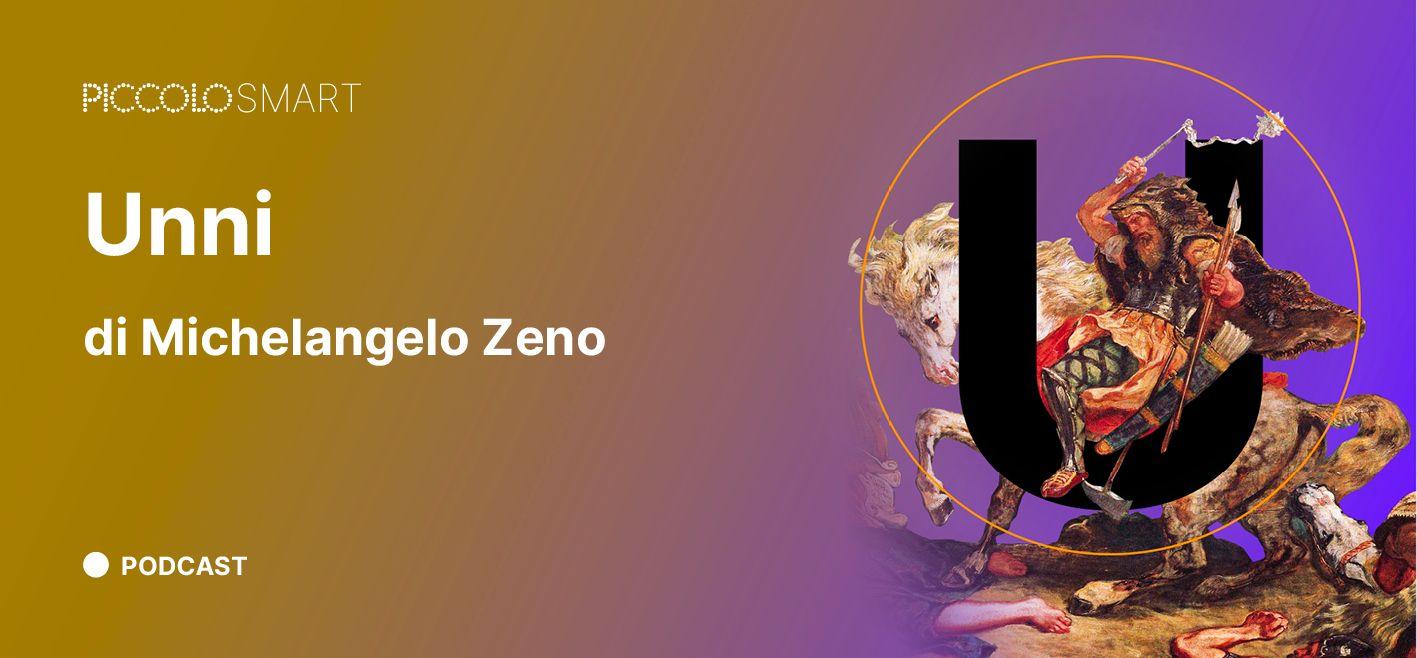
Abbecedario per il mondo nuovo – Unni

Abbecedario per il mondo nuovo – Unni

Unni by Michelangelo Zeno, with Alfonso De Vreese, Anna Manella, Marco Mavaracchio, Francesca Osso
Podcast on Spreaker from Sunday 30th May 2021

Ascolta "Unni di Michelangelo Zeno" su Spreaker.

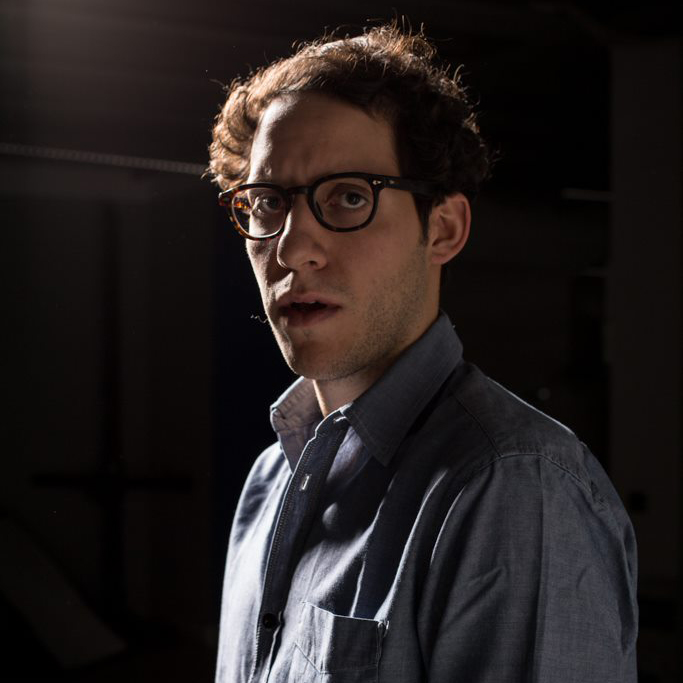
Unni (Huns) is a wonderful word for a wonderful population. They were invaders, and this is fun, because often the most fun people at a party arrive late, after dinner, and often haven’t been invited. Everything I know about the Huns I got from Wikipedia, a free encyclopaedia that is extremely popular on the internet. The word Unni has a double letter, but this was not the choice of the Huns. It was a decision made by a group of historians who have no respect for the wishes of the deceased. One thing that everyone knows is that the Huns cooked meat by putting it under their horse saddles. What many do not know is that sometimes they got confused and ate the horse by mistake, meaning they had to walk. If they had been more careful, they would have invaded the Roman Empire a century earlier, and we would have been saved an hour of history. The Huns are an extremely interesting people. My piece is not about them. Michelangelo Zeno

Synopsis
In a typical kitchen in a typical house, four people are having breakfast. A silent man, a woman tidying up, a young girl in a tracksuit and a teddy boy who has just been dumped by his girlfriend. Endemic inability to communicate, difficulty in accepting failure and repressed desire create a fertile ground for the invasion of something that is apparently unknown, but that is permanently before us.


Biografia

Michelangelo Zeno (1987) lives and works in Milan, where he graduated in playwriting at the Paolo Grassi School. Between 2011 and 2014, together with the Famiglia Mastorna group, he worked on re-writing and directing classic works (Bernhard, Müller, Ibsen). Together with the composer Gabriele Cosmi, he wrote the pocket-opera MagenZeitOpera, which made its debut in Venice as part of BiennialeMusica2014. From 2017 to 2019, he held the post of production dramaturg at the Cubo Teatro in Turin, for which he wrote Blatte, a piece that earned a special mention from the jury at the Hystrio Playwriting Award and that was translated into Czech by the Letì Theatre in Prague. The theatrical piece Malagrazia was staged by the Phoebe Zeitgeist company and opened the NuoveStorie2018 review at the Teatro dell’Elfo in Milan. The same year it was chosen for the international Fabulamundi Playwriting Europe project. 2019 saw the debut of Tito/Rovine d’Europa at the Festival delle Colline Torinesi, a theatrical suite about a journey between Germany and Poland produced by Cubo Teatro and TPE. During the pandemic, among other things, he wrote L’anello mancante (translated into English and published by OperaDaTreSoldi as an ebook, curated by Teatro i). He teaches playwriting at FE - Fabbrica dell’Esperienza in Milan.


Abbecedario per il mondo nuovo
a Piccolo Teatro di Milano – Teatro d’Europa production 
in collaboration with the Hystrio – Playwriting Award and the Riccione “Pier Vittorio Tondelli” Award
directed by Lisa Ferlazzo Natoli and Alessandro Ferroni

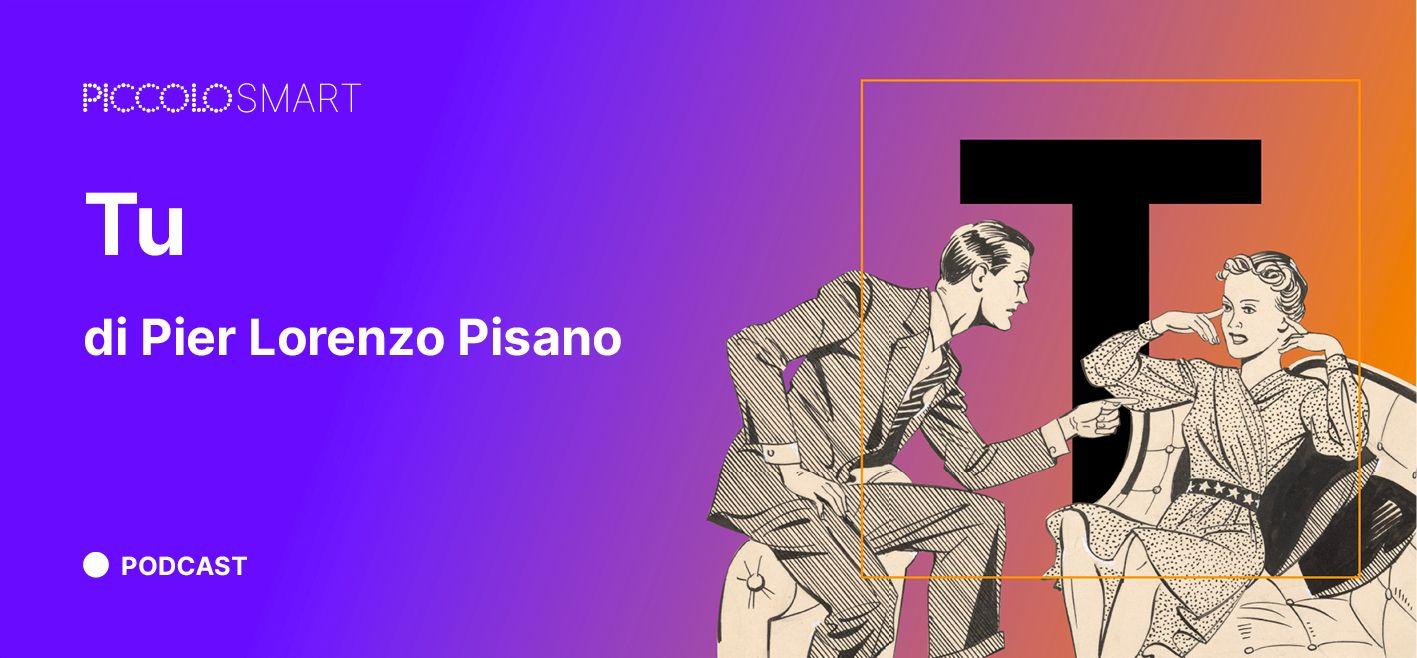
Abbecedario per il mondo nuovo – Tu

Abbecedario per il mondo nuovo – Tu

Tu by Pier Lorenzo Pisano, with Petra Valentini
and with Monica Buzoianu, Giovanni Drago, Alfonso De Vreese, Lorenzo Frediani, Anna Godina, Leda Kreider, Anna Manella, Marco Mavaracchio, Francesca Osso, Simone Tudda
Podcast on Spreaker from Saturday 29th May 2021


Ascolta "TU di Pier Lorenzo Pisano" su Spreaker.

TU (you) is the word that perhaps best expressed the sense of face-to-face encounters. It is a form of base unit of relationships, of theatre, encased in two syllables. In this work, it is a long chain of images brought together by meaning, scope and violence, expressing moments, stories and worlds without a precise common denominator. TU flows through everything that surrounds us, through our human experience. It is an ever-changing and composite river that splits into the most infinitesimal particles as it dives into the depths, to then leap away, once again just a blue line in the distance. Pier Lorenzo Pisano

Synopsis
TU is a chain of images brought together by meaning, scope and violence, expressing moments, stories and worlds without a precise common denominator. It flows through everything that surrounds us, through our human experience. It is a river that splits into the most infinitesimal particles as it dives into the depths, to then leap away, once again just a blue line in the distance.


Biografia

Pier Lorenzo Pisano is a director and writer for the cinema, theatre and narrative works.
He graduated in directing at the Centro Sperimentale di Roma (the National Cinema School). He made his debut as a film director with the short Così in terra, presented at the 71st Cannes Festival and officially selected for the Nastro d’Argento, nominated for a Golden Globe and selected at more than fifty international festivals. The following year his second short Antiorario was produced and presented by the 72nd Festival of Locarno, while for the theatre he directed the Italian staging of Per il tuo bene and held the role of residential playwright at the New York Theatre Workshop and the Royal Court Theatre (London) for the development of his next work. He is part of the projects Fabulamundi Playwriting Europe, Playstorm (Teatro Stabile of Turin), Between Lands (Emilia Romagna Teatro Foundation). His works have been translated into twelve languages and his work has been presented as part of the programme for the 72nd Avignon Festival, in the Forum des Nouvelles Écritures Dramatiques Européennes. He is the recipient of the most important Italian awards for new playwriting and dramaturgy, including the Solinas Award, the Riccione - Tondelli Award, and the Hystrio Award. This year will see the publishing of his first novel Il buio non fa paura.


Abbecedario per il mondo nuovo
a Piccolo Teatro di Milano – Teatro d’Europa production 
in collaboration with the Hystrio – Playwriting Award and the Riccione “Pier Vittorio Tondelli” Award
directed by Lisa Ferlazzo Natoli and Alessandro Ferroni

Abbecedario per il mondo nuovo – Simultaneità

Abbecedario per il mondo nuovo – Simultaneità

Simultaneità by Christian Di Furia, with Giovanni Drago and Petra Valentini
Podcast on Spreaker from Friday 28th May 2021

Ascolta "Simultaneità di Christian di Furia" su Spreaker.

Why Simultaneità (simultaneity)? Because it is magical, it is fathomless. It is the fantasy of being everywhere, here and there in the same moment. It is the knowledge that the world and all its forms of life exist not beyond us, but together with us, in the same moment, simultaneously.
We all live in the same moment.
Yet we live alone.
This is why simultaneousness is a utopian ideal. It is deceptive.
Christian Di Furia

Synopsis
A brother and sister find themselves, at the same moment, facing two events that are fundamental to their respective existence.


Biografia

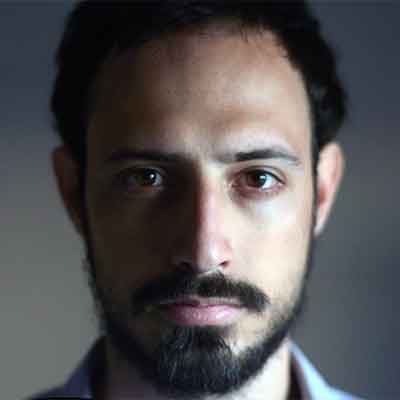
Christian Di Furia was born in Foggia in 1990. He writes for the theatre. His works have gained recognition from the most important festivals of theatrical writing; in 2017 his work Un pallido puntino azzurro was a finalist at the Riccione “Piero Vittorio Tondelli” award, and the following year was published as part of the Teatro series by Nowhere Books. He has published stories in various magazines and blogs, including Nazione Indiana.


Abbecedario per il mondo nuovoAbbecedario per il mondo nuovo
a Piccolo Teatro di Milano – Teatro d’Europa production
in collaboration with the
 Hystrio – Playwriting Award and the Riccione “Pier Vittorio Tondelli” Award
directed by Lisa Ferlazzo Natoli and Alessandro Ferroni

Abbecedario per il mondo nuovo – Rovesciato

Abbecedario per il mondo nuovo – Rovesciato

Rovesciato by Maria Teresa Berardelli, with Alfonso De Vreese
Podcast on Spreaker from Sunday 23rd May 2021


Ascolta "Rovesciato di Maria Teresa Berardelli" su Spreaker.

An upside-down (rovesciato) world is the idea that our current times brought to mind. An upside-down world is what Franz Liszt’s Hungarian Rhapsody n.2 - on which the text is constructed - gradually led me to. An upside-down world is where the lead character wakes up. All behaviour, all relationships, all situations have been turned upside down. In this overturned world, he no longer understands anything. He struggles to recognise objects, people, everything. He even struggles to recognise himself.Maria Teresa Berardelli

Synopsis
A young man wakes up to find the world has been turned upside down. All behaviour, all relationships, all situations have been turned upside down. In this overturned world, he no longer understands anything. He struggles to recognise objects, people, everything. He feels alone, and even struggles to recognise himself.


Bio

A graduate in 2008 from the “Silvio D’Amico” National Academy of Dramatic Arts, Maria Teresa Berardelli won the Riccione/Tondelli award in 2009 with Sterili. In 2010 she won the Città di Chieri e Colline Torinesi - Bando Inedito Award with Altrove and the 6th edition of the Fersen Award with Studio per un teatro clinico. In 2015 she received a special mention at the 2015 Hystrio Playwriting Award with 10 mg. In 2021, her work Il fiore rosso won the Mezz’ore d’Autore competition at the Teatro Due Foundation. She wrote the theatrical adaptation of Uno, nessuno e centomila by Pirandello, directed by Andrea Baracco (a Khora Teatro production), of A Winter’s Tale by Shakespeare (a Teatro Stabile dell’Umbria production), of Itaca per sempre by Luigi Malerba (a Trento Spettacoli production), and of Elective affinities by Goethe (a Teatro Stabile dell’Umbria production).
(Foto Andrea Macchia)


Abbecedario per il mondo nuovo
a Piccolo Teatro di Milano – Teatro d’Europa production 
in collaboration with the Hystrio – Playwriting Award and the Riccione “Pier Vittorio Tondelli” Award
directed by Lisa Ferlazzo Natoli and Alessandro Ferroni

Abbecedario per il mondo nuovo – Quasi

Abbecedario per il mondo nuovo – Quasi

Quasi by Stefano Fortin, with Alfonso De Vreese, Lorenzo Frediani and Petra Valentini
Podcast on Spreaker from Saturday 22nd May 2021


Ascolta "Quasi di Stefano Fortin" su Spreaker.

In this moment (both in history and in my personal life), substantives, verbs and adjectives frighten me with their semantic density. More than clear meaning, I feel that what I needed was a vacuum, a word in which I was unable to move freely. Quasi (almost) is this undefined space, the impossible, the infinitely small that fills our daily lives, whatever that may be. Stefano Fortin

Synopsis
Almost is everywhere in our lives, in events both exceptional and daily. It is a persistent sound that accompanies the dimming of the sun, a couple making a sex tape, a cashier working at a supermarket. It may be hidden in the four hundred and eighty seconds in which we are unable to notice.


Biografia

Born in 1989, Stefano Fortin attended the Academy at the Teatro Stabile del Veneto, where he graduated as an actor in 2014. In 2015 he took part in Il corpo delle parole, an advanced training course at the Santa Cristina Theatrical Centre, founded by Luca Ronconi. He has worked as director’s assistant for Giorgio Sangati, first for the play Le donne gelose by Goldoni (2015), produced by the Piccolo Teatro di Milano, and then for the study of O di uno o di nessuno by Pirandello, at the Santa Cristina Theatrical Centre (2017). As a playwright he was a finalist at the 2018 Hystrio Playwriting award and at the Riccione - Pier Vittorio Tondelli 2019 Award. He participated as a dramaturg in the Amleto project by Alessandro Businaro, a finalist in the Directors under30 competition at the Biennale Teatro 2019. In 2020 his work George II made its debut at the Biennale Teatro, directed by Alessandro Businaro. He collaborated as dramaturg in the project Orizzonte Postumo produced by Teatro Stabile, Veneto. He is currently also completing a PhD in Italian Studies at the Department of Linguistic and Literature Studies at the University of Padua.


Abbecedario per il mondo nuovo
a Piccolo Teatro di Milano – Teatro d’Europa production 
in collaboration with the Hystrio – Playwriting Award and the Riccione “Pier Vittorio Tondelli” Award
directed by Lisa Ferlazzo Natoli and Alessandro Ferroni

Abbecedario per il mondo nuovo – Pnìgos

Abbecedario per il mondo nuovo – Pnìgos

Pnìgos di Margarita Egorova, by Margarita Egorova, with Alfonso De Vreese, Lisa Ferlazzo Natoli, Lorenzo Frediani, Leda Kreider, Petra Valentini. And with Marco Mavaracchio, Anna Manella and Francesca Osso
Podcast on Spreaker from Friday 21st May 2021

Ascolta "Pnigos di Margarita Egorova" su Spreaker.

Pnìgos, suffocation, an interlude in a play in which the coryphaeus faces the public bare faced, maskless, to defend the political ideas of the author: a statement. In order to be able to speak of a new world, I felt it was important to speak of a new form of human, shaped by the times and by the technology that they have created. Smartphones, portable computers, internet connections: the pandemic has rendered them essential items, accelerating existing dynamics, such as the transformation of how we communicate, the perception of reality, the forced conversion from analogue to digital, where the ability to translate matter into numbers dictates its survival. Margarita Egorova

Synopsis
Pnìgos aims to examine the theme of the progressive digitalisation of human experience through the eyes of the most defenceless of subjects, and the category hardest hit by the pandemic: children.


Biography

In her work, Margarita Egorova (Saint Petersburg, 1986) shifts between writing and images, and both physical and digital media. She began working in the field of theatre as a playwright and director. In 2013 her first work received special mention at the Hystrio Award in the Playwriting section. The following year she made her debut at the Teatro Litta in Milan with New Yorker Hotel 3327, writing and directing the play. In the years to follow, her works were staged in Milan, Rome, Pesaro and Turin. She has approached new technology, such as video and interactive projections, to create shows that are a blend of theatre, installation and performance, examining the complex human-machine combination with a multimedia approach. In 2018 she graduated from the Brera Academy in Milan in Photography and New Technology for Art. The role of matter in the era of digital media and the internet lie at the heart of her work. (Photo Amin Zarif)


Abbecedario per il mondo nuovo
a Piccolo Teatro di Milano – Teatro d’Europa production 
in collaboration with the Hystrio – Playwriting Award and the Riccione “Pier Vittorio Tondelli” Award
directed by Lisa Ferlazzo Natoli and Alessandro Ferroni