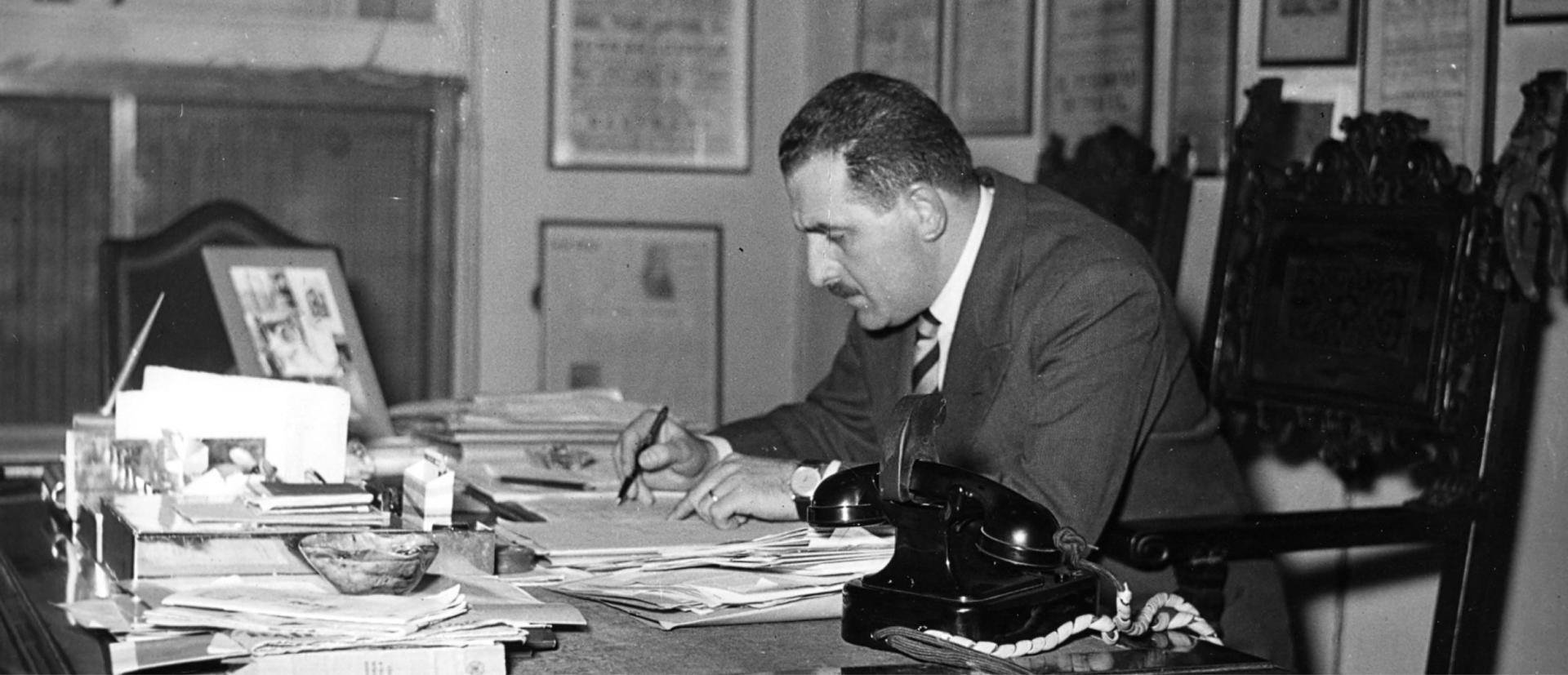
Paolo Grassi

Paolo Grassi

Paolo Grassi was born in Milan on the 30th October 1919 into an Apulian family from Martina Franca. At a very young age, he nurtured a profound passion for the theatre. A student of the prestigious high school “Regio Liceo Ginnasio Giuseppe Parini”, at the age of eighteen he was appointed “vice critic” of the Milanese “Sole”, at the same time collaborating with youth magazines with articles and essays. In 1937, he started working in the theatre as a director, with the staging of the show Bertoldissimo. This was followed by his joining the retinue of the “Compagnia della Commedia”, directed by Gian Maria Cominetti. At this point, with determination and sacrifice, he began to consolidate his skills as a critic, essayist and theatre practitioner through a rigorous apprenticeship. 1940 saw him as the organiser of the company “Ninchi-Dori-Tumiati”, bringing Sem Benelli’s The Jesters’ Supper to the Italian stage; the following year he founded the avant-garde group “Palcoscenico”, with the actors Giorgio StrehlerMario Feliciani and Franco Parenti. The ensemble presented many contemporary authors such as: Rebora, Treccani, Pirandello, O'Neill and Chekhov, aiming to bring radical innovation to the dramaturgy.
In December 1941, with the outbreak of war, Grassi was called up for military service. After having participated in the Resistance in the ranks of the socialist militancy, he returned to the theatre and to culture in 1944, directing the series of books on theatre published by Rosa & Ballo, and Poligono. From the Liberation of Italy until March 1947, Paolo Grassi was the theatre critic for “Avanti!”. It is during this period that he nurtured the idea of creating a publically managed repertory theatre.
It was therefore in 1947, alongside Giorgio Strehler, that he founded and directed the Piccolo Teatro della Città di Milano, the first repertory theatre and municipal entity for prose in Italy. The theatre was inaugurated on the 14th of May with a staging of Maxim Gorky’s The Lower Depths. This event signalled not only the birth of a new theatre but of an organisation which believed in the “social commitment, ethical conscience and civil maturity” of creating performances: an “Arts Theatre for All”.

Grassi held the post of director of the Piccolo for twenty-five years, until May 1972. The list of all the shows produced by the Piccolo Teatro during Strehler and Grassi’s partnership is very long. During this time, Grassi, tireless organizer that he was, accompanied the Milanese theatre around the world. Neither did he neglect the cultural and editorial production, working on “Collezione di Teatro”, a book series he managed along with Gerardo Guerrieri for Einaudi, as well as consistently on the book series “Documenti di Teatro”, with Giorgio Guazzotti, for the publishing house Cappelli.
In the post-war period Grassi identified and advocated the need for a radical renovation of the national theatrical structure, calling for the creation of municipal Theatres as public services, with a culturally elevated level of repertoire aimed principally at bringing the lower classes closer to the theatre. Sensitive to the needs of the City of Milan, in 1958 he contributed to the reopening of the Teatro Gerolamo, promoting its activity of experimental theatre and inviting the participation of artists from all over the world. His prime objective was to develop a process of adaption of Italian culture and theatre to a European level, and the Piccolo Teatro and Milan are naturally the example and the foundry of this tireless cultural endeavour.
Alongside the shows produced in the now historic venue of Via Rovello, he also reopened the Teatro Lirico to the great shows of prose, he invented the international festival “Milano Aperta” and he prompted the city to participate in a challenging operation of cultural decentralisation with the big tops of the Teatro Quartiere.

When, on the evening of 25 April 1972, Grassi announced that he was leaving the Piccolo, he left behind a legacy of 150 shows, 8000 performances, and 185 tours in the cities of thirty different countries, and by then the Piccolo had already established itself as the most important Italian theatre, internationally acclaimed.
In 1972, Grassi was appointed as the superintendent of La Scala. He began working with Massimo Bogiankino and Claudio Abbado towards the common aim of restoring La Scala to its maximum artistic level and of bringing the theatre once again closer to the city and to the Lombardy Region, through the development of a dialogue with the cultural sector, students and organisations. Amongst his many endeavours, he was also the first superintendent to forge relationships with the Soviet Union, Japan and North America.

In January 1977, he left Milan and moved to Rome, where he became the President of Rai-Tv, with a three year mandate that was not without controversy, due to his rigorous application of cultural principles. At the end of his tenure he was appointed as the President of Rai-Corporation, and later as the President of the publishing group Electa, where he passionately resumed his editorial activities.

Paolo Grassi was also a fundamental contributor to numerous cultural activities as both promoter and supporter. He was President of the Italian Section of the ITI (International Theatre Institute), President of the David di Donatello, Honorary President of the Premio Dino Ciani and member of the Italian Commission of UNESCO.
Over the years, he received numerous Italian and foreign honours for his artistic merits: Knight of the Great Cross of the Order of Merit of the Republic of Italy; la Legion d'Onore, l'Ordine Arts et Lettres e l'Ordre National du Merite, all awarded by the French Government, and the Grand Cross of the Order of Merit of the Federal Republic, conferred by the German government. He died on the night of 14 March 1981 at the age of 62, during heart surgery.
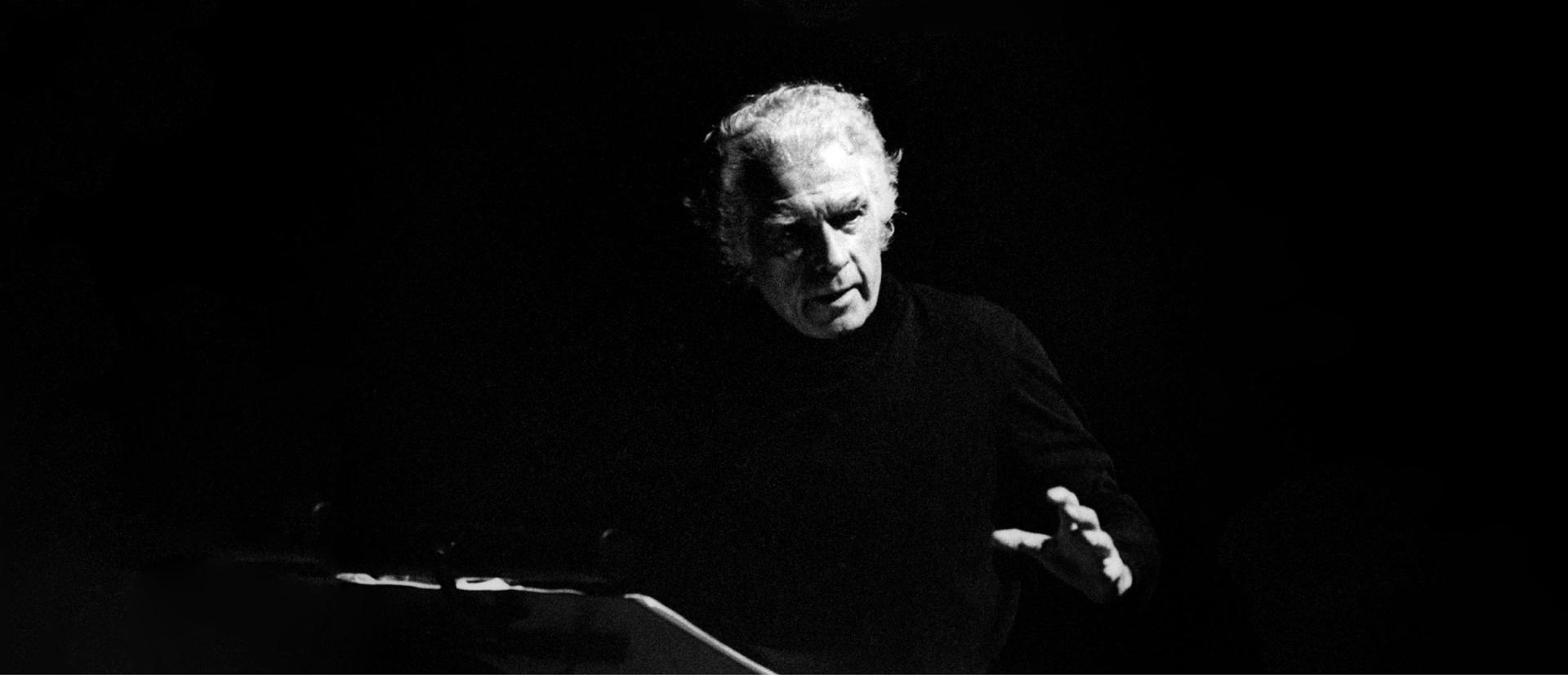
Giorgio Strehler

Giorgio Strehler

Giorgio Strehler (Barcola, Trieste 1921- Lugano 1997) director and actor

Giorgio Strehler, also known as “the Director” with a capital “D”, in much the same way as he himself wrote about and thought of Theatre: as a hyperbolic challenge, a diorama, a stage on which an image of the world takes shape, where the great masters of theatre, owners by right, delicately dialogue with the population of characters and, through them, with the audience. Parallel to this “regal” way of seeing theatre which crowned him the true heir to Max Reinhardt (the last of the demiurge directors, who he had admired since he was a child), Strehler had always courted a more severe, almost Jansenistic approach, embodied in the tradition of Copeau and Jouvet, where the director – this time without the capital “D”, but no less important – began from the premise that everything is written in the text and that all that has been previously said and written can be mediated and personified by the Actor (with a capital “A”). These two ways of seeing the role of director are perfectly evident in two of his last works, namely Faust Frammenti, on which he worked continuously between 1988 and 1991, and in which he also starred in the title role, and Elvira o La Passione Teatrale (1987). These directorial concepts were also developed thanks to his family ancestry.

Strehler was born in Barcola, a little town close to Trieste, into a family where languages and cultures mingled. His grandfather was a musician (Giorgio studied music and orchestral conduction as well) and his surname was Lovric; Strehler’s grandmother was French and her surname was Firmy, the surname her grandson took during his Swiss exile, during which he began directing his first productions. His father, Bruno, died very young, when Strehler was little more than two years old. His mother, Alberta, was an acclaimed violinist. The young Strehler grew up in an artistically ‘predestined’ atmosphere and in an environment with a strong female presence. This immersion in femininity was useful to him useful later in life when, as a director, he delineated his female protagonists: Strehler was unparalleled in making the mystery, charm and the deceitful silence of his heroines palpable.

When he was a young boy, he moved to Milan with his mother, where he attended first the Longone boarding school, then the Parini high school, and finally University, where he studied Law. From adolescence, parallel to his studies, he began cultivating a love for the theatre and, as the legend goes, even attended shows as a claqueur. He enrolled in the Milanese Amateur Theatre Academy, where he met his favourite maestro, Gualtiero Tumiati. His first trials outside the school were as an actor, as part of the group Palcoscenico di Posizione in Novara and also at the Triennale, performing in a piece by Ernesto Treccani. But at the tender age of twenty-two, he had already developed the belief that Italian theatre, dominated at the time by Hungarians and false doctors, needed the healthy and demiurgic jolt of a director. He wrote as such in his article: ‘Responsabilità della regia’ (The Responsibility of Directing) in 1942 whilst working for “Posizione”, an article which, despite its absoluteness typical of the era, is fundamental in understanding the Strehler that was to come. Tied by a very strong bond of friendship to Paolo Grassi, who he had met (as the two always maintained) at the stop of the number 6 tram on the corner of Via Petrella, direction Loreto-Duomo, Strehler during the period before the war was straining at the leash and became part of the underground opposition within the GUF (Fascist university groups). Italy’s entry into the war saw him in Switzerland, first as a soldier and then as a refugee in camp Murren, where he forged a friendship with, amongst others, the playwright and director Franco Brusati. Here, very poor but very skilful at using difficulties to his advantage, he managed – under the name Georges Firmy – to find the money to stage, between 1942 and 1945, Murder in the Cathedral by T.S. Eliot, Caligula by A. Camus and Our Town by T. Wilder. At the end of the war, Strehler returned to Italy, determined by then to become a director. His first show, after having ‘directed’ a group of camels for the Liberation day celebrations at the Castello Sforzesco, was Mourning Becomes Electra by O’Neill, with Memo Benassi and Diana Torrieri. He also directed a series of productions for famous companies without particular enthusiasm, and returned to acting in Camus’s Caligula, a production that often had in the audience another great master of the stage, Luchino Visconti. In Caligula, he directed Renzo Ricci and played the role of Scipione himself. In the meantime he also worked as a theatrical critic for “Momento Sera”, never however losing sight of his dream of creating from scratch a different type of theatre.

His chance came with the foundation in 1947 of the Piccolo Teatro della Città di Milano: the first public Italian repertory theatre, which raised its curtains for the first time on the 14th May with the staging of Gorky’s The Lower Depths, in which Strehler played the role of the cobbler Alijosa. This play, which also brought together a considerable part of the company that would for some years be resident at the Piccolo with stars such as Gianni Santuccio, Lilla Brignone and Marcello Moretti, had in a way been “anticipated” the year before, through the staging of Gorky’s The Petty Bourgeois at the Excelsior, directed by Strehler and organised by Paolo Grassi. The foundation of the Piccolo also coincided with the first opera ever to be directed by Strehler, a production of La Traviata at La Scala which was destined to leave its mark.

Since 1947, however, the majority of Strehler’s efforts (first as resident director, later as artistic director, finally as the sole director of the theatre) were essentially devoted to the Piccolo Teatro, where he directed shows that have in the meantime become part of the theatre’s history and of the history of directing. Within this story, which can be described as positively eclectic, there is a constant theme: an interest in all aspects of mankind. This interest, which Strehler pursued throughout his life, was an act of loyalty to the profound reasons for existence harboured by Satin, one of the protagonists of The Lower Depths, namely that “Everything is in man”. Via this placing of mankind under the magnifying glass of his theatre, we see many of the relationships that interested him brought to light: the relationship between man and society, man and himself, man and history, and man and politics. Choices which were in turn reflected by his predilection for certain key authors, veritable companions during the theatrical work of the great Maestro (or better still “Maestro. Period.”, as he is often referred to): Shakespeare, above all others, but also GoldoniPirandello, as well as the bourgeois playwrights, the popular national theatre of Bertolazzi, Chekhov and, in his earlier years, contemporary drama; Brecht revealed to him a different approach to the theatre and to acting, an “Italian approach” to the alienation effect.

Although the over two hundred productions Strehler directed cannot all be mentioned, several fundamental shows, linked to key authors, stand out: Richard II (1948), Julius Caesar (1953), Coriolanus (1957), Il gioco dei potenti [Translator’s Note: based on Henry VI] (1965), King Lear (1972) and The Tempest (1978) for Shakespeare; for Goldoni, Harlequin [TN: the full title of the show is Harlequin, Servant of Two Masters] (in all of its versions from 1947 onwards), which hold the record as the longest running and the most seen Italian production in the world, The Holiday Trilogy (1954), The Chioggia Scuffles (1964) and The little square (1975); for Chekhov, Platonov (1959) and The Cherry Orchard (1955 and 1974); for Pirandello, the different editions of The Mountain Giants (1947, 1966, 1994) and As You Desire Me (1988); for Bertolazzi, El nost Milan (1955 and 1979) and L'egoista (1960); for the bourgeois playwrights, Garcia Lorca’s The House of Bernarda Alba (1955) and, above all, Strindberg’s The Storm (1980); for contemporary drama, Dürrenmatt’s The Visit (1960) and Eduardo De Filippo’s Grand Magic (1985); and finally, for Brecht, The Threepenny Opera (1956), The Good Person of Szechwan (1958, 1981 and 1996), Saint Joan of the Stockyards (1970) and most of all, Life of Galileo (1963). However, what comes to the forefront of this amazing theatrical production is his work on the signs of the theatre (the sets, the atmosphere, the unparalleled lighting, the prodigious ability of knowing how to recreate incredibly poetical situations with apparent ease), and his demanding, hard, insatiable investigation on acting. This reached its peak with the veritable fights he got into with his actors: an authentic example of maieutics, and, for those lucky enough to have been present at his rehearsals, the epiphany of a theatrical method.

Strehler’s story, marked by the opening and closing of the theatre’s curtains, took place mostly at the Piccolo Teatro, but not only: in 1968 he abandoned Via Rovello to found his own group, the Teatro Azione, organised on a cooperative basis; with this group he presented P. Weiss’s The Song of the Lusitanian Bogey (1969), a show that anticipated a conceptually ‘poor’ theatre. Saint Joan of the Stockyards (1970) marked his return ‘home’. In addition to this, Strehler also directed the newly created Theatres of Europe, an organisation wished for by Jack Lang and François Mitterrand, in Paris. Indeed, his cursus honorum is extensive: member of the European Parliament, Senator of the Republic and recipient of a long list of honours, including the beloved Legion of Honour. However, his final years were marked by the bitterness caused by a trial, at the end of which he was found not guilty. 

He died on Christmas night 1997; his ashes rest in the cemetery of Sant’Anna in Trieste, in the very simple family tomb.

Strehler’s directorial contributions in the field of opera were remarkable, favoured by his musical knowledge and his “ability to rejuvenate the inseparable and traditional gestures of the singers”. Amongst the many productions he conceived, memorable is his participation in the International Festival of Contemporary Music in Venice (Lulu by A. Berg, 1949; La favola del figlio cambiato by G.F. Malipiero, 1952; The Fiery Angel by S. Prokof'ev, 1955), his productions at the Maggio Musicale Fiorentino (Fidelio by Beethoven, 1969) and at the Teatro alla Scala (as far back as the spring of 1946 with Joan of Arc at the Stake by A. Honegger, with Sarah Ferrati), as well as the aforementioned La TraviataSimon Boccanegra (1971), Macbeth (1975) and Falstaff (1980) by Verdi; the production of the highly praised Cavalleria rusticana by Mascagni, directed by Karajan (1966); at the Piccola Scala with L'histoire du soldat by I. Stravinskij (1957), Un cappello di paglia di Firenze by N. Rota (1958) and The Rise and Fall of the City of Mahagonny by K. Weill (1964). In addition, he worked on his beloved Mozart: at the Salzburg Festival with The Abduction from the Seraglio (1965) and The Magic Flute (1974), in Paris with The Marriage of Figaro (1973), at La Scala with Don Giovanni (1987) and the sweet lightness of Così fan tutte, an ode to love and youth. More than a testament, this production was a bridge (albeit still “hidden by scaffolding”, due to Strehler’s sudden death a few days prior to the show’s premiere), connecting his fifty years of work with the new Century (for the Milanese theatre in its new venue and for those who have survived him and can reach him only through memories).

Maria Grazia Gregori, from DIZIONARIO DELLO SPETTACOLO del '900, Baldini& Castoldi, Milan 1998

The story of the Piccolo

© Arianna De Carolis

The story of the Piccolo


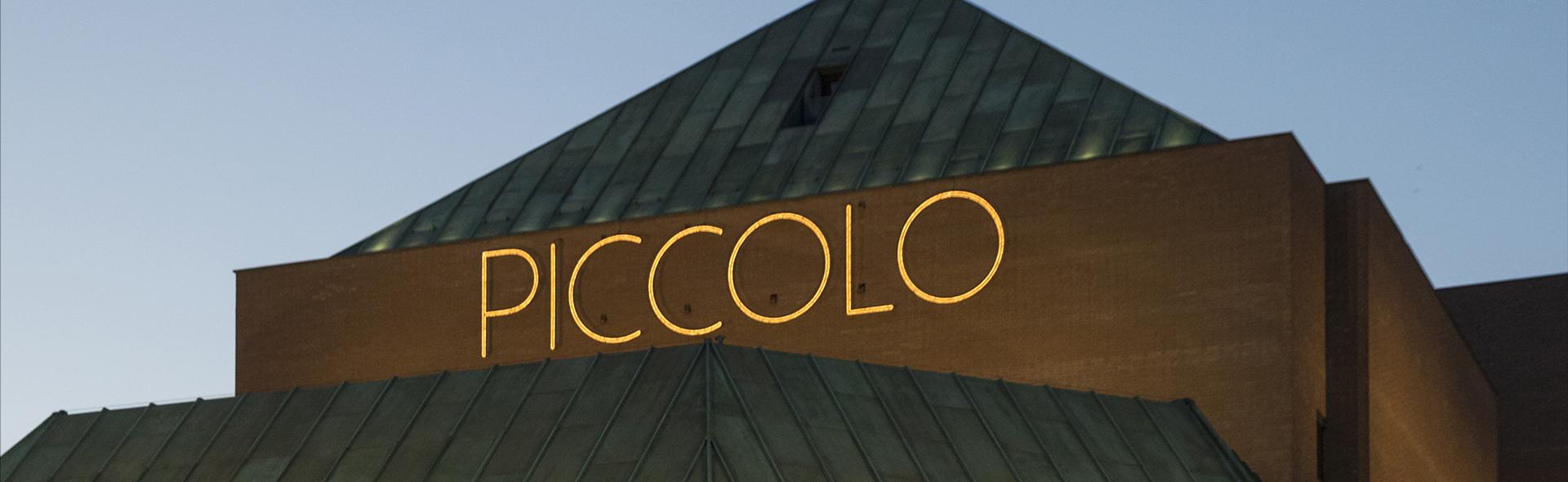
The first public repertory theatre in Italy, the Piccolo Teatro di Milano was founded on 14 May 1947 by Giorgio Strehler and Paolo Grassi, together with Nina Vinchi, with the aim of creating a Theatre that provides a public service; an essential artistic and cultural institution responding to a collective need and thus working to the benefit of the entire community.
 

“An Art Theatre for All” is the motto and underlying principle that has accompanied the Piccolo ever since it was founded, and that continues to express its mission: staging quality shows aimed at the most wide-ranging of audiences possible.
 

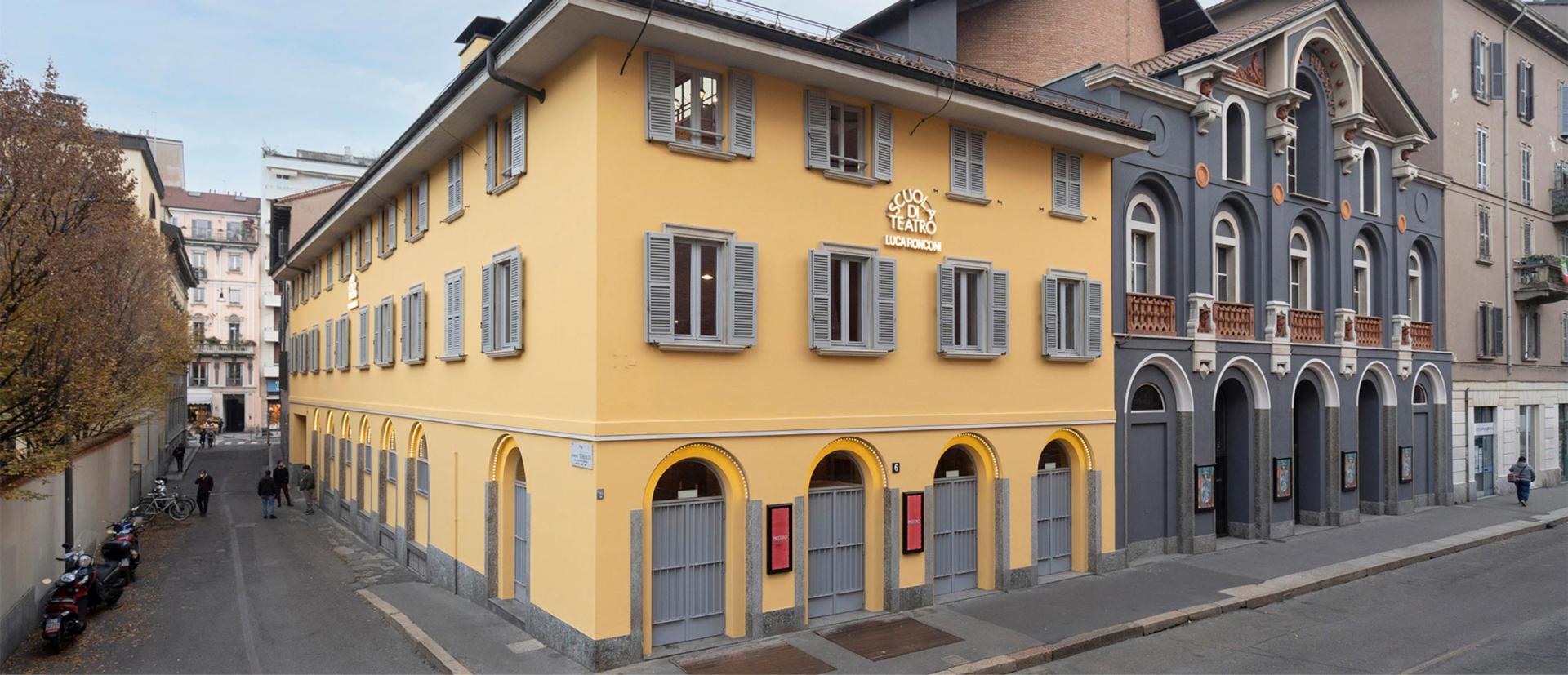
With support from the State and local administration – first and foremost the Municipality of Milan and the Lombardy Region – the Piccolo currently runs three auditoriums: the original location in Via Rovello, renamed the Teatro Grassi, is situated in Palazzo Carmagnola and, since 2009, also includes the magnificent Renaissance Cloister named in honour of Nina Vinchi, which was brought to light and reopened to the city through a restoration project; the Teatro Strehler, the main venue, designed by Marco Zanuso and inaugurated in January 1998 to the music of Così fan tutte by Wolfgang Amadeus Mozart, the last production to be directed by the great director after whom it is named; the Teatro Studio Melato, an experimental theatrical space dedicated to research and education and named in honour of the actress Mariangela Melato since 2014. Its home is the site of the nineteenth-century Teatro Fossati, which was reopened to the public in 1986. The building also houses the “Luca Ronconi” Theatre Academy, founded by Giorgio Strehler in 1987. Over the years, the Piccolo has also developed a sets workshop and a costume department to support operations. 

Over seventy-eight years of activity, the Piccolo Teatro has produced more than 400 shows – many of which were directed by Giorgio Strehler –, offering major productions of both classic and contemporary writers that have over time become part of international theatrical history. With regard to Strehler’s works alone, these productions include: William Shakespeare (King Lear and The Tempest), Carlo Goldoni (Harlequin, servant to two masters, Brawling in Chioggia, The little square), Anton Chekhov (The Cherry Orchard), Bertolt Brecht (Threepenny Opera, Life of Galileo, The Good Person of Szechwan) and Samuel Beckett (Happy days).

Since 1991, the Piccolo Teatro has also been a “Theatre of Europe”, a status confirmed by article 47 of Italian Ministerial Decree 322 dated 27 July 2017, as amended. Strehler was the first to strongly promote a vision of openness and to seek a position in the international theatrical panorama, and this philosophy was carried forward under the directorship of Sergio Escobar – who headed the Foundation from 1998 to July 2020 – and of Luca Ronconi (artistic consultant and director of the Theatre Academy until February 2015).

During his time in Milan, Ronconi wrote a number of extraordinary theatrical masterpieces during the dawn of the new millennium, which – among their many merits – celebrated the interdisciplinary nature of theatrical expression. This was the case with Infinities by the English mathematician John D. Barrow, a literal theatrical experiment staged in the ex-workshops of La Scala in the Bovisa district for the 2001/02 season, or with Lehman Trilogy (2015), an epic ballad that explored the downfall of Western capitalism and was the last production to be directed by the maestro, based on the piece by Stefano Massini – who soon after was called on to take over as artistic consultant from 2015 to 2020.

It is thanks to these figures, and to the commitment of all the artists, workers and craftspeople who have played a role in its history that the Piccolo is now an urban and European centre for culture, with its stages playing host to theatre and dance, reviews and festivals, round tables and cultural events.

Since December 2020, Claudio Longhi has served as the Director of the Piccolo. Under his guidance, in addition to the traditional rich programme of in-house and guest productions, the cultural policy of the Theatre has focused on supporting contemporary playwriting, promoting young artists, internationalisation and the development of European networks and programming. In particular, as of the 2021/22 season, the Piccolo has become – in line with the desires of its founders – a veritable “home” to artists. The theatre now collaborates with fifteen Associate Artists from Italy and abroad, with the conviction that the theatre’s activities are not confined to the production of shows, but must also serve to favour processes of exchange, creation and cooperation, allowing spectators to connect not only with the performance themselves but also with the related processes. 

On the occasion of the celebrations for the one hundredth anniversary of the birth of Giorgio Strehler, the 2021/22 season also saw the launch of the Festival Presente Indicativo, a grand expression of international theatre that, for the May 2022 edition – per Giorgio Strehler (paesaggi teatrali) – saw the participation of 21 theatrical companies and ensembles involved in 25 shows performed in the Piccolo’s auditoriums and throughout the city, offering a total of more than 70 hours of theatre. May 2024 saw the presentation of the second edition of the Festival: Milano Porta Europa, a kaleidoscopic exploration of the multitude faces of contemporary Europe, of its contradictions, its hopes and its opportunities.

Last, but not least, through its various activities, the Theatre dedicates significant attention to dialogue with the community and to the theme of sustainability in the broadest and most inclusive sense of the term, examining relations between the environment, the economy and society.

In light of the imminent reform of the network of Italian theatres announced by the Ministry of Culture, the end of 2024 saw the beginning of a process to restructure the governance of the Foundation. One of the first steps, on 1 December 2024, was the unanimous vote by the Board of Directors of the organisation to renew the mandate of the Director Claudio Longhi – who, as part of his role as artistic director of the theatre also took on the management of the “Luca Ronconi” School of Theatre – and to appoint Lanfranco Li Cauli as General Manager, responsible for technical and administrative operations. To underscore the educational vocation of its Maestros, the Piccolo also launched a specialised master’s course for actors, overseen by Andrea Chiodi. 

At a later stage, implementing Italian Ministerial Decree 463 of 23 December 2024 and following a change in statute, in September 2025 the Fondazione Piccolo Teatro di Milano – Teatro d’Europa divided the directorate, creating the artistic directorate and general directorate. In particular, in the spirit of serving the Institution and the community, Lanfranco Li Cauli was appointed to fill the role of Chief Executive Officer, and Claudio Longhi was appointed as Artistic Director

Almost eighty years on from the debut of L’albergo dei poveri by Gorky, the memorable inauguration of the theatre in Via Rovello, the journey continues, with the ceaseless daily task of realising the dream of “an art theatre for all”, embracing tradition and future, and celebrating the greatness of the Piccolo the world over. 
 

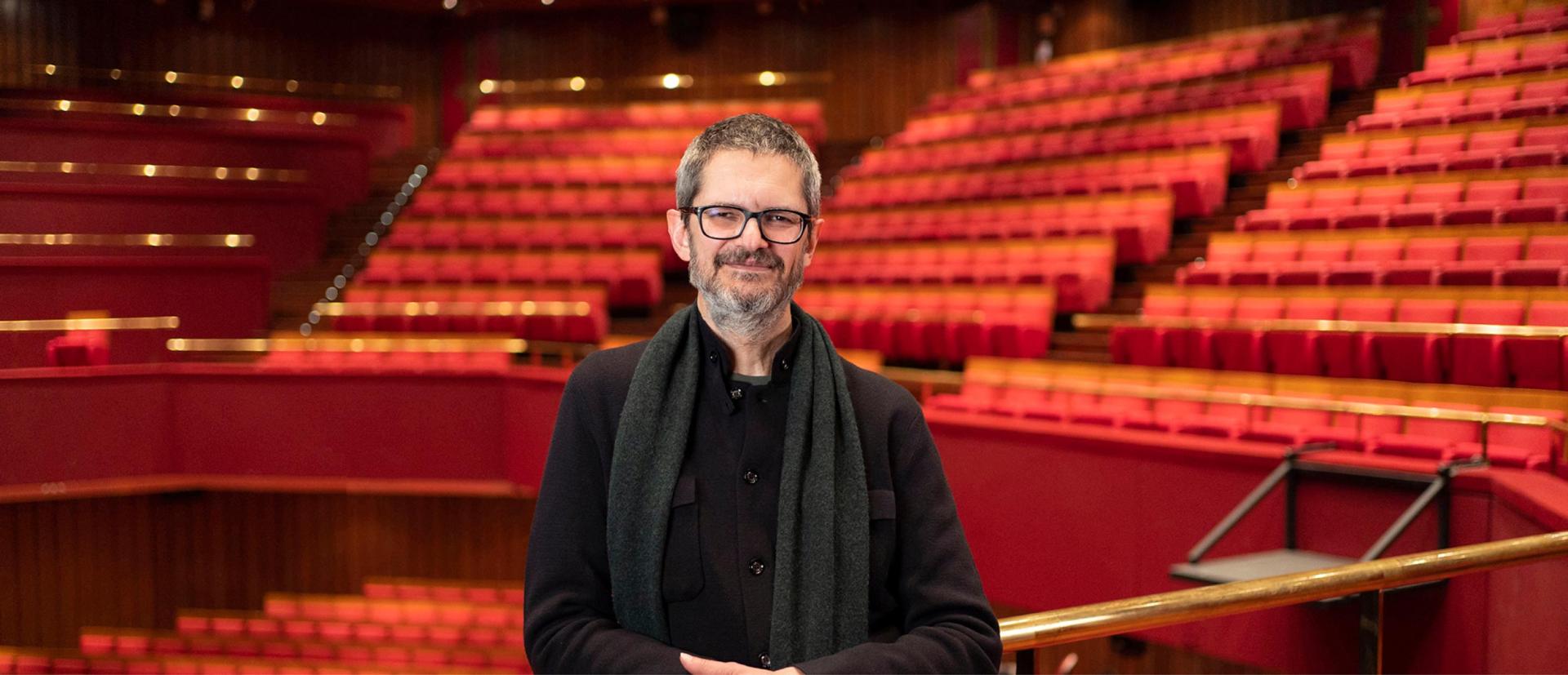
Claudio Longhi

Claudio Longhi

On 1 December 2020, he became the Director of the Piccolo Teatro di Milano– Teatro d’Europa.

Born in Bologna on 25 May 1966, he graduated with full marks at the Alma Mater Studiorum - University of Bologna in 1993 under the guidance of Professor Ezio Raimondi, with a degree thesis entitled  From epic to Theatre, Ronconi’s “Orlando Furioso”. In 1998, again at Bologna University, he gained his PhD with the thesis Twentieth-century dramaturgy: novel, cinema and editing, and won a post-doctoral scholarship in 1999 for a critical publishing project on the four comedies of Giovan Battista Andreini. In 2002 he won a position as Researcher in Entertainment Disciplines at the Department of Music and Entertainment, University of Bologna. In 2006, he was promoted to Associated Professor, moving to the Department of Design and Arts at the IUAV University of Venice. In December 2011, he returned to Bologna, and since 2015 has held the role of full professor (currently on leave) for History of Direction and Theory of Direction for the Department of Visual, Performing and Media Arts for the city’s University. Over the years he has also taught Playwriting, History of Playwriting and the Stage, and Planning and Management of Entertainment Activities. In 2014, he was elected Coordinator for the master’s course in Musical and Theatrical Disciplines at the University of Bologna. In 2015 he was appointed Deputy Vice-President of the School of Literature and Cultural Heritage at the same University. In February 2016, he was elected as Coordinator of the PhD in Visual, Performing and Media Arts at the University of Bologna. In March 2016, he became a member of the watchdog group “University Quality - Working Group dedicated to functions related to quality of research”, again at the University of Bologna, representing the macro-area of Humanities. He held the role of vice-president of CUT (University Theatrical Consultant) from 2016 to 2018.

His academic career has run parallel with his activity in the world of theatre, operating initially in the field of directing and audience education, to then widen his scope to organisational areas. Between 1993 and 1995 he worked as assistant to Pier Luigi Pizzi and Graham Vick, between 1995 and 2002 he collaborated on a regular basis with Luca Ronconi , first as his assistant and then as assistant director, taking part in productions such as Quer pasticciaccio brutto de via Merulana, 1996; Lolita, 2001 and Infinities, 2002. Between 2007 and 2008, he worked alongside Eimuntas Nekrošius for the staging of Anna Karenina. Beginning in 1999, he directed productions for the Teatro di Roma (Democrazia, 1999; Omaggio a Koltès: Deaf voices, Sallinger and In the Solitude of Cotton Fields, 2009), for the Teatro de Gli Incamminati (Moscheta, 2001; Cos’è l’amore, 2002; Caligola, 2003; Edipo e la Sfinge, 2004; Der Onkel, 2005), for the Piccolo Teatro di Milano (Ite messa est, 2002), for the Teatro Stabile di Torino (La peste, a co-production with the Teatro de Gli Incamminati, 2004; Leopardi, 2005; Biblioetica. Dizionario per l’uso, together with Luca Ronconi as part of “Progetto Domani”, 2006), for the Teatro Due di Parma (La folle giornata o il matrimonio di Figaro, a co-production with the Teatro Stabile di Torino and the Teatro di Roma, 2007), for the Istituto Nazionale del Dramma Antico (Prometeo, 2012) and for the Emilia Romagna Teatro Fondazione (Io parlo ai perduti. Le vite immaginarie di Antonio Delfini, 2009; La resistibile ascesa di Arturo Ui, 2011, a co-production with the Teatro di Roma, winner of the ANCT Award as play of the year; Il ratto d’Europa, a co-production with the Teatro di Roma, 2013; the trilogy Istruzioni per non morire in pace: Patrimoni, Rivoluzioni, Teatro, a co-production with the Teatro della Toscana, 2016; La classe operaia va in paradiso, 2018; La commedia della vanità, a co-production with the Teatro di Roma, Teatro della Toscana and LAC, 2019; Il peso del mondo nelle cose, based in the work by Alejandro Tantanian, 2020). He has been a long-term collaborator with Edoardo Sanguinetti, directing - among others - the first full staging in Italy of Storie Naturali (Bologna, 2005).

From 1 January 2017 to 30 November 2020, he held the role of artistic director at the Emilia Romagna Teatro Fondazione.

He has created and curated audience education projects for the Teatro di Roma (1994.1999), for the Teatro Due di Parma (2006-2009) and for ERT (2015-2016). He has collaborated on audience education projects for the Piccolo Teatro di Milano (2000-2002). Since February 2011, he has formed part of the international research group connected to the Prospero Project for Theatrical Cooperation, as representative for the ERT Foundation. Funded by the European Union Culture Commission, the project connects the Théâtre Nationale de Bretagne in Rennes (France), il Théâtre de la Place in Liège (Belgium), Emilia Romagna Teatro Fondazione di Modena (Italy), la Schaubühne am Lehniner Platz in Berlin (Germany), la Fundação Centro Cultural de Belém in Lisbon (Portugal) and the Tutkivan Teatterityön Keskus in Tampere (Finland), with the aim of favouring mobility of artists and their creations, as well as encounters and profitable exchange between a range of theatrical traditions.

Since 2008, he has been creating, organising and managing participatory theatrical projects: Shakespeare è un pezzo di carbone? (ERT Fondazione: 2008-2010); Omaggio a Koltès (Teatro di Roma, 2009); La resistibile ascesa di Arturo Ui (ERT Fondazione, 2011); Il ratto d’Europa: per un’archeologia dei saperi comunitari (ERT Fondazione – Teatro di Roma, Modena 2011-2014, Rome 2012-2014, UBU 2013 Special Award); Beni comuni. Un teatro partecipato per una cultura condivisa (ERT Fondazione-ATER-Municipality of Carpi, funded by the Ministry for Cultural Heritage and Acitivites, 2014); Carissimi Padri: almanacchi dalla Grande Pace (1900-1915) (ERT Fondazione – Teatro della Toscana, Modena 2015-2016, Florence 2016-2017).

Longhi’s work in the field of theatre has also extended to actor training. From 2005 to 2015, he taught History of Theatre at the Piccolo Teatro di Milano School; in 2004 he participated as a teacher at the “Finishing School for directors and actors” directed by Luca Ronconi at the Centro Teatrale di Santa Cristina; between 2013 and 2014, he was the didactic director and coordinator for the artistic higher education course Raccontare il territorio organised by the ERT Foundation and CUBEC - Accademia di Belcanto, in collaboration with the Accademia Filharmonica of Bologna. From June 2015 to November 2020, he was the director of the “Iolanda Gazzerro School of Theatre - Permanent Actors’ Workshop”, organised by the ERT Foundation. In October 2016, on behalf of the ERT Foundation, he organised and managed the international theatrical pedagogics project: At the Prospero’s School. Actors in the global net.

He has published more than one hundred works on the history of direction, the history of the actor, the evolution of contemporary dramaturgy and the Italian theatrical system. These include: the papers La drammaturgia del Novecento: tra romanzo e montaggio (1999), L’”Orlando furioso” di Ariosto-Sanguineti per Luca Ronconi (2006, Special Mention – Zevio Ferrigno Award – as part of the Pisa National Literary Award), Marisa Fabbri: lungo viaggio attraverso il teatro di regia (2010); his contributions to conferences such as La naissance de la mise en scène et l’“opéra”: le marché, la direction d’orchestre et la dramaturgie musicale (1831-1848) (2009), Un “oppositore” al potere: Luigi Squarzina direttore di teatri stabili (2013),or his essays published in some of the most prestigious Italian and International magazines such as: “Culture Teatrali” (La tentazione del “Portrait”, ovvero la scena della memoria secondo Lagarce, 2013; “L’unico responsabile sono io”? Appunti di regia, ricordando Luca Ronconi (Quasi un’introduzione), 2016; Natura facit saltus. Della Pandemia e dell’Europa, tra passato e futuro, 2020; he also curated the 25th annual of the magazine, entitled La regia in Italia, oggi: per Luca Ronconi, 2016), “Teatro e Storia” (Lettera da Avignone per “Papperlapapp”, 2010), “Acting Archives” (Il romanzo dell’École des Maîtres: elementi di pedagogia teatrale secondo Franco Quadri, à la manière de Jarry, 2014), “Drammaturgia” (Sul “Prometeo incatenato”. Tragedia dello sguardo e anatomie del tempo: considerazioni di regia, 2014) or “Europe” (Pour une critique postmoderne à la notion de postmodernité: sur le théâtre de Jean-Luc Lagarce, 2010).

Since June 2010 he has served as a member of the Scientific Committee for the magazine “Teatro e Antropologia”, and between 2011 and 2014 he was a member of the Editorial Committee for the magazine “Prospero European Review. Theatre and Research”. Since July 2012 he has been a member of the Scientific Committee for the new series of the magazine “Drammaturgia” and, since 2015, head of the editorial team for the magazine “Cutlure Teatrali. Studi, interventi e scritture sullo spettacolo”. In 2017 he served on the jury for the “Riccione Theatre Award”, with F. Paravidino as chairperson. Since 2018 he has been an ordinary member of EASTAP, the European Association for the Study of Theatre and Performance, and since 2020 a member of the Scientific Committee for the Gramsci Foundation Emilia-Romagna.

He is frequently involved in international conventions (“Comédiens-auteurs, comédiens-poètes; Angleterre, Espagne, Italie, France, 16e-17e siècles”, Paris, 2012; “Le théâtre et ses publics: la création partagée / Theatre and audiences: a shared creation”, Liège, 2012; “Luca Ronconi: maître d’un théâtre sans limites”, Paris, 2016; “Décentrer notre vision de lʼEuropeˮ, EASTAP, Paris, 2018; “Shared memory(ies)ˮ, EASTAP, Lisbon, 2019). Together with Daniele Vianello, he curated the 3rd international EASTAP convention “Creating for the stage and other spaces: Questioning Practices and Theories”, which was due to take place in Bologna from 27 February to 1 March 2020, but which was cancelled due to the COVID-19 emergency.

Together with Gerardo Guccini and Rossella Mazzaglia, he is the curator of In prospettiva. Dialoghi sul teatro, a series of online events that provide a platform for artists, scholars and operators from the world of live entertainment to examine the role of the performing arts in the era of the coronavirus and the post-pandemic phase (June-December 2020).

The Foundation

The Foundation


Governing Bodies


Founding Members 
Comune di Milano
Regione Lombardia

Supporting Member 
Camera di Commercio di Milano Monza Brianza Lodi  

Board of Governors 
Giuseppe Sala 
Mayor of Milan 

Attilio Fontana 
President of Regione Lombardia 

Carlo Sangalli 
President of Camera di Commercio di Milano Monza Brianza Lodi  

Board of Directors 
President 
Piergaetano Marchetti 

Board Members 
Giulia Amato 
Enrico Brambilla 
Emanuela Carcano 
Massimiliano Finazzer Flory 
Antonino Geronimo La Russa 

Board of Statutory Auditors 
President
Luca Marchioro  

Auditors 
Alessandro Cafarelli 
Martino Bruno Gola 

Chief Executive Officer 
Lanfranco Li Cauli

Artistic Director 
Claudio Longhi 


Quality Policy

Quality Policy

The “Luca Ronconi” School of Theatre of the Piccolo Teatro di Milano – Teatro d’Europa Foundation is a world-famous school for higher-education and specialisation for actors. It is unique in the Lombardy Region in that it is linked to an international and inter-disciplinary theatre, characteristics that render the institution a cultural reference point on a city-wide, regional and European level.

The Directorate of the Foundation has adopted a quality management system that complies with the UNI EN ISO 9001:2015 regulation for activities regarding the planning and provision of services for the training of professional actors in the fields of theatre, cinema and television. The guidelines of the school are:

  • to offer the pupils the best possible service of an interdisciplinary nature, a constant exchange between the classroom and the stage, and attention to the demands of the market;
  • to respect the commitments it assumes, the mandatory requirements and those of the students and interested parties;
  • to act in compliance with the principles of the cited regulation, maintaining the quality management system operational and continuously improving efficiency;
  • to involve prestigious national and international professional figures in the training activities, figures capable of staying abreast of new trends and facilitating the development of the students’ talent;
  • to apply to all its activities the principle of preventative identification and management of factors regarding risk and opportunity.


Through the quality management system, the Directorate intends to guarantee its interlocutors that everything that occurs is planned and evaluated. Furthermore, the following goals are set:

  1. Pursue the full satisfaction of the students;
  2. Satisfy the requirements and expectations of all the identified interested parties;
  3. Maintain regional certification as an organisation providing training services in Lombardy;
  4. Help its students to enter the world of employment;
  5. Continue to represent a centre of attraction for all those who wish to serious take on the acting profession.


All the people operating in the School must consider themselves as committed to acting in compliance with the rules described in the documentation for the quality management system. The content of this document is communicated to all levels of the organisation. It is also available to whoever requests it and is published on the website. The Directorate confirms that the role of Quality System Manager has been assigned to Ms. Roberta Zanoli.


The Foundation Director: Sergio Escobar (until 31 July 2020) - Claudio Longhi (from 1 December 2020)
The Quality System Manager: Roberta Zanoli

History and Courses

History and Courses

The Luca Ronconi School of Theatre

Founded in 1987 by Giorgio Strehler and directed by Luca Ronconi until his death, the School of Theatre carries out its activities in symbiosis with the Piccolo Teatro di Milano - Teatro d’Europa, the first example of a repertory theatre in Italy, founded in 1947 by Paolo Grassi and Giorgio Strehler and, as of today, one of the most important theatrical institutions in Europe.
The Decree dated 27 July 2017 issued by the Ministry for Cultural Heritage and Activity and Tourism recognises the autonomy and the international role of the Piccolo Teatro, which - in a position that is unique - has the obligation to run a specialist School of Theatre that is closely linked to the Theatre and identified as an integral part of the theatre’s activities.

Recognised as an international excellence in the field of actor training, the Piccolo School of Theatre is particular in that during the training period it involves the students in the Piccolo’s productions, guaranteeing an on-going and profitable exchange between the classroom and the stage.

The Luca Ronconi School is a school for actors offering three-year courses for a total of approximately 4500 hours of lessons.

In order to gain a place on the course, it is necessary to take part in a competition that is organised every three years. October 2017 saw the beginning of lessons for the eleventh course, which has been named after Giorgio Strehler (2017/2020). As on 23 February 2020 the crisis surrounding COVID-19 interrupted all possibilities of providing continuous training to the students, depriving them of the possibility to achieve their goal, in agreement with the Lombardy Region the School decided to extend the Giorgo Strehler course, which between May and July of 2021 will prepare the final show under the guidance of the director Carmelo Rifici. The call for applicants for the new three-year training course will therefore be published in January 2021.

In order to access the Course, prospective students have to pass an entrance exam. Each course has between 20 and 24 students.

The school is completely free of charge. A contribution for registrar fees is requested in order to take the entrance exam.

Attendance is obligatory. The missing of 25% or more of the total number of annual hours will lead to expulsion from the school.

The students are obliged to respect the rules in an extract of the stage regulations signed by them on enrolment.

The Luca Ronconi school for actors is accredited by the Lombardy Region, listed in the Lombardy Region register for operators of professional training and instruction, and currently receives funding for the course From the classroom to the stage (March 2017 - November 2021) , part of the “Lombardia Plus - Linea Cultura” initiative that forms part of the policies put into place in order to support activities aimed at the objectives and purposes of section I - POR FSE Lombardy 2014/2020, and in particular of Action 8.1.1 - “active policies with particular focus on sectors that offer increased possibilities for growth”.


La Storia e i Corsi


The courses
Each course is named after an important figure from modern theatre.

1st - 1987/1990, the Jacques Copeau course
650 candidates, 31 students admitted, 29 graduated:
Sara Alzetta, Sonia Bergamasco, Giorgio Bongiovanni, Paolo Calabresi, Maria Gabriella Campanile,  Umberto Carmignani, Marta Comerio, Luca Criscuoli,  Leonardo De Colle, Gaia De Laurentiis, Stefano De Luca, Simona Fais, Simona Ferraro, Mario Guariso, Stefano Guizzi, Sergio Leone, Nicoletta Maragno, Sara Masini, Paola Morales, Claudia Negrin, Ilaria Onorato, Laura Pasetti, Mace Perlman, Rossana Piano, Stefano Quatrosi, Federica Roberto,  Victoria Salvador Villalba, Maria Teresa Sintoni,  Laura Torelli, Silvano Torrieri

2nd - 1990/1993 the Eleonora Duse course
440 candidates, 19 students admitted, 18 graduated:
Paola Benocci, Vincenzo Bocciarelli, Francesco Cordella, Margherita Di Rauso, Cristina Ferrajoli, Pia Lanciotti,  Maxmilian Mazzotta, Alessandro Mor, Maximilian Nisi,  Rinaldo Rocco, Patrizia Romeo, Paola Roscioli, Luca Scaglia, Giorgia Senesi, Maria Grazia Solano, Marina Sorrenti, Maria Egle Spotorno, Matteo Verona

3rd - 1993/1996 the Konstantin Stanislavski course 
420 candidates, 25 students admitted, 15 graduated:
Massimiliano Andrighetto, Roberto Andrioli, Biancamaria D’Amato, Giovanna Di Rauso, Marco Fubini, Ugo Giacomazzi, Alessandra Gigli, Diego Gueci, Mercedes Martini, Giulia Mombelli, Michele Nani, Carmen Panarello, Andrea Riva De Onestis, Silvia Soncini, Debora Zuin

4th - 1996/1999 the Louis Jouvet course
560 candidates, 26 students admitted, 24 graduated:
Elena Arvigo, Matteo Reza Azchirvani, Claudia Carlone, Serena Cazzola, Pierlugi Corallo, Luigi Distinto, Barbara Esposito, Elena Ferrari, Emanuele Fortunati, Giuseppe Fraccaro, Francesco Guidi, Francesca Inaudi,  Francesco Italiano, Annachiara Mantovani, Tommaso Minniti, Candida Nieri, Enrico Petronio, Christian Poggioni, Michele Radice, Annamaria Rossano, Nicole Vignola, Lorenzo Volpi Lutteri, Greta Zamparini, Sara Zoia

5th - 1999/2002 the Vsevolod Mejerchold course
511 candidates, 24 students admitted, 24 graduated:
Federica Armillis, Benedetto Bianchi, Luca Carboni, Maurizio Ciccolella, Pasquale Di Filippo, Raffaele Esposito, Laura Gambarin, Rossana Giordano, Giada Lorusso, Diana Manea, Marco Mattiuzzo, Stefano Moretti, Nicola Orofino, Valentina Picello, Angela Rafanelli, Erika Renai Cappelli, Vladimiro Russo, Chiara Rivoli, Irene Serini, Mirko Soldano, Chiara Stoppa, Simone Toni, Sara Tosi, Francesco Vitale

6th - 2002/2005 the Sergio Tofano course
850 candidates, 27 students admitted, 26 graduated:
Alice Bachi, Valentina Bartolo, Marco Brinzi, Fausto Cabra, Angelo Campolo, Federica Castellini, Gabriele Ciavarra, Mirko Ciotta, Giorgio Consoli, Luigi Di Pietro, Tiziano Ferrari, Luca Fiorino, Maddalena Gessi, Michele Giaquinto, Silvia Grande, Silvia Masotti, Ilenia Porcarelli, Matteo Romoli, Camillo Rossi Barattini, Giorgio Sangati, Caterina Simonelli, Rosanna Sparapano, Giulia Valenti, Jacopo Veronese, Emilio Zanetti, Camilla Zorzi

7th - 2005/2008 the Bertolt Brecht course 
1160 candidates, 28 students admitted, 27 graduated:
Ivan Alovisio, Caterina Bajetta, Emanuele Banchio, Clio Cipolletta, Ettore Colombo, Andrea Coppone, Silvia Degrandi, Laura Dell'Albani, Gabriele Falsetta, Marcella Favilla, Elisabetta Fusari, Paolo Garghentino, Andrea Germani, Andrea Luini, Fabrizio Martorelli, Antonio Mingarelli, Beatrice Niero, Luca Nucera, Eugenio Olivieri, Silvia Pernarella, Stella Piccioni, Silvia Pietta, Francesca Puglisi, Nicol Quaglia, Riccardo Ripani, Giuseppe Sartori, Camilla Semino Favro

8th - 2008/2011 the Evgenij Vachtangov course 
920 candidates, 32 students admitted, 32 graduated:
Maria Blandolino, Sebastiano Bottari, Nastassia Calia, Carolina Cametti, Lisa Capaccioli, Valentina Cardinali, Walter Cerrotta, Martin Chishimba, Nicola Ciaffoni, Paola Crisostomo, Pierpaolo D'Alessandro, Matteo De Mojana, Marco Di Giorgio, Dora Di Mauro, Lorenza Fantoni, Ilaria Fratoni, Mauro Lamantia, Katia Mirabella, Davide Paciolla, Matthieu Pastore, Riccardo Pumpo, David Remondini, Filippo Renda, Federica Rosellini, Jeanne Santos, Mattia Sartoni, Elisabetta Scarano, Ivan Senin, Laura Serena, Simone Tangolo, Anahì Traversi, Valentina Violo

9th - 2011/2014 the Jean Louis Barrault course 
871 candidates, 30 students admitted, 29 graduated:
Letizia Bravi, Valeria de Santis, Francesca Del Fa, Lorenzo Demaria, Elisa Fedrizzi, Maria Laila Fernandez, Domenico Florio, Ruggero Franceschini, Claudia Gambino, Davide Domenico Gasparro, Federica Gelosa, Gilberto Giuliani, Giusy Emanuela Iannone, Linda Macchi, Simone Marconi, Lucia Marinsalta, Lorenzo Massa, Federico Meccoli, David Amadeus Meden, Sylvia Katrina Milton, Daniele Molino, Maria Laura Palmeri, Nicolò Parodi, Andrea Preti, Livio Santiago Remuzzi, Roberta Rigano, Francesca Tripaldi, Giulia Vecchio, Marouane Zotti

10th - 2014/2017 the Luchino Visconti course 
28 students admitted, 28 graduated:
Giuseppe Aceto, Alessandro Bandini,Roberta Bonora, Alfonso De Vreese, Aurelio Di Virgilio,Salvatore Drago, Caterina Filograno, Ugo Fiore, Matteo Gatta, Valentina Ghelfi, Yasmin Karam, Leda Kreider, Marta Malvestiti, Viola Marietti, Marica Mastromarino, Cristina Nurisso, Benedetto Patruno, Claudio Pellerito, Matteo Principi, Marco Risiglione, Elena Rivoltini, Walter Rizzuto, Livia Rossi, Martina Sammarco, Francesco Santagada, Jacopo Sorbini, Sacha Trapletti, Annapaola Trevenzuoli