Milano in Piccolo: percorsi nella storia di una città

Milano in Piccolo: percorsi nella storia di una città

La cultura, l’urbanistica, la politica, la classe dirigente e i nuovi rapporti sociali: Milano, all’indomani della Liberazione, è come un tram in corsa che attraversa il boom e la recessione, le repentine metamorfosi economico-sociali, le scommesse culturali e la ricerca di una nuova identità internazionale con affaccio sull’Europa. Nella cornice della Sala Buzzati (Via Balzan 3, Milano) e nell'ambito del ciclo “Strehler” città aperta, Fondazione Corriere della Sera e il Piccolo in collaborazione con Fondazione AEM presentano un ciclo di quattro incontri-lezione dedicati alla Milano di Strehler, quattro fermate cittadine a scandagliare la “capitale morale” e la sua peculiarissima capacità di non tirarsi mai indietro di fronte alle sfide che i momenti di profondo cambiamento storico del secondo Novecento le hanno lanciato.
Gli eventi sono ingresso gratuito con prenotazione obbligatoria, cliccando qui
 
Venerdì 18 marzo, ore 18.30
Prima fermata: Cultura
Lezione di Alberto Rollo
Letture di Lucia Marinsalta

Milano fu crogiolo di innovazioni culturali, luogo di nascita di avanguardie artistiche, centro di divulgazione e di sperimentazione, città dove si incrociarono fermenti e ispirazioni differenti. La Liberazione non fu solo liberazione dalla dittatura politica del regime fascista, fu anche liberazione di idee, apertura e possibilità di realizzare progetti fino ad allora rimasti compressi. Questo aspetto fu particolarmente vivace nel capoluogo lombardo, dove nacquero decine tra istituzioni, luoghi di discussione e centri di dibattito, alcuni destinati a breve vita, altri, come la Casa della Cultura, capaci di continuare a essere nel corso dei decenni un punto di riferimento per la città, altri ancora, come il Piccolo, in grado di affermarsi non solo a livello nazionale, ma anche internazionale. Comune a tutte queste esperienze fu la volontà di coinvolgere i cittadini, di offrire momenti di partecipazione e luoghi di libertà. Si intendono ripercorrere queste esperienze, le diverse, complesse e talvolta contraddittorie vicende che ne segnarono la nascita e gli sviluppi nei decenni successivi la Liberazione.
 
Alberto Rollo, saggista e critico letterario, tra i protagonisti della scena editoriale milanese, è stato direttore editoriale della Baldini&Castoldi e, per oltre vent’anni, direttore letterario per la casa editrice Feltrinelli. Attualmente collabora alle collane letterarie di Mondadori. Ha scritto Un’educazione milanese (Manni Editori, 2016), Cinquina Premio Strega 2017. 


Martedì 29 marzo, ore 18
Seconda fermata: Milano tra politica e società civile 
Lezione di Emanuela Scarpellini
Letture di Daniele Gaggianesi

Milano è stata da sempre animata dalle grandi tradizioni della cultura politica, quelle stesse tradizioni (la liberale, la cattolico-democratica e la socialista e comunista) che, proprio perché avevano solide e profonde radici nella storia culturale europea, erano state fondamento e garanzia della carta costituzionale. Il legame tra queste tradizioni culturali e la vita politica e civile ha sempre trovato a Milano un proficuo terreno di incontro e di evoluzione sia pure all’interno di una storica ritrosia ad impegnarsi in prima persona nell’alta politica; una ritrosia a cui ha molto spesso fatto da contraltare il suo essere un laboratorio di fermenti e sperimentazioni politiche destinate a influenzare la dimensione nazionale. Basti pensare al centro sinistra, nato nel 1960 a Milano in anticipo con la vicenda nazionale, o alla stagione craxiana, a mani pulite o al fenomeno della Lega. Anche da un punto di vista politico, dunque, Milano ha così assunto una centralità per la capacità di produrre novità che, una volta affermatesi, hanno camminato sulle proprie gambe, modificando l’assetto politico nazionale.

Emanuela Scarpellini, ordinario di Storia contemporanea Università degli Studi di Milano, ha condotto ricerche sulla storia culturale, politica ed economica del Novecento, con particolare attenzione ai temi della modernizzazione dell’Italia e dell’Europa nel secondo Novecento, alla nascita della società dei consumi, il modello americano, il ruolo degli imprenditori, i cambiamenti, nel mondo del commercio, le nuove “culture del consumo”. Tra i suoi libri Storia degli imprenditori italiani (Einaudi 2003), L’Italia dei consumi. Dalla Belle Époque al nuovo millennio (Laterza, 2008, pubblicato in inglese da Oxford University Press).


Martedì 12 aprile, ore 18
Terza fermata: Le trasformazioni sociali. Da città borghese e operaia a metropoli globale
Lezione di Alberto Martinelli
Letture di Daniele Gaggianesi

Nel giro di alcuni decenni Milano ha conosciuto un profondo rivolgimento economico e sociale: una città che negli anni ’50 si era imposta come una delle principali città industriali, oggi è il centro principale (e forse unico) in Italia dei flussi globali (finanza, moda, design, media, università, istituzioni sanitarie, centri di ricerca, fiere internazionali). Secondo gli studi sui world city network, che analizzano le città globali in quanto 'nodi della rete' e stabiliscono tra di esse una gerarchia in base alla loro capacità di connettersi con le altre mediante lo scambio di informazioni, persone, beni e servizi immateriali, Milano occupa l'ottavo posto nel mondo. Tra la fine degli anni 70 e gli anni 90 del secolo scorso non è cambiata solo la struttura economica e produttiva, si è modificata profondamente anche la composizione sociale delle classi e dei ceti e le loro relazioni. Sono cambiate le due classi protagoniste degli anni del miracolo economico: una  borghesia caratterizzata da grande vitalità imprenditoriale e tratti culturali e valori etici distintivi (spirito innovativo, pragmatismo, misura e moderazione, dedizione al lavoro, attenzione per la cultura, ma anche conservatorismo etico-religioso con atteggiamenti patriarcali e autoritari(vedi contestazione alla prima del film di Fellini La dolce vita), cui faceva da contraltare una classe operaia con tratti culturali e valori etici in parte comuni (nell’etica del lavoro e nell’autoritarismo dei rapporti familiari) e in parte diversi e antagonistici (nella sfera politica e sindacale). Questa realtà si è radicalmente trasformata nell’arco di alcuni decenni. Che cosa è rimasto di quella realtà? Quali strutture, processi, attori l’hanno sostituita nel nuovo contesto della globalizzazione? In particolare, che cosa hanno significato per Milano il ridimensionamento del ruolo delle grandi famiglie borghesi e la loro sostituzione con una realtà più frammentata, più eterogenea e meno compatta e la parallela scomparsa della classe operaia tradizionale? Quali nuovi cittadini, indigeni e immigrati, lavoratori, e consumatori, vecchi e giovani, ne hanno preso il posto? Quali nuovi valori sociali sono andati a sostituire quelli che, pur tra contraddizioni e conflitti, avevano garantito forme di solidarietà e di coesione sociale? Esiste una specifica identità milanese che consenta a questa città di rispondere efficacemente alle sfide del XXI secolo?

Alberto Martinelli, Presidente Fondazione AEM e Professore Emerito di Scienza politica e Sociologia all'Università degli studi di Milano, dove è stato Preside della Facoltà di Scienze politiche dal 1987 al 1999, ha ricoperto incarichi direttivi in diverse istituzioni di ricerca italiane e internazionali (oltre a incarichi di insegnamento a Berkeley, Stanford, New York University e altre ancora, è Presidente dell’International Social Sciences Council, Past President dell’International Sociological Association e altri ancora). Tra le sue opere si ricordano: European Society (con A.Cavalli, Brill, 2020); La modernizzazione (Laterza 1998, nuova ediz. 2010); Transatlantic Divide (Oxford University Press, 2008); La società italiana (Laterza 2002); Economia e società (Comunità, 1996).


Venerdì 29 aprile, ore 18
Quarta fermata: Da città a metropoli. La dimensione urbana e architettonica 
Lezione di Stefano Boeri

Tra il 1931 e il 1971 la popolazione milanese cresce a una media del 15% ogni decennio, con una punta del 25% negli anni Cinquanta. Sono gli anni del grande e spesso disordinato sviluppo edilizio di una città nel cui spazio urbano convivono funzioni e realtà insediative diverse. La decrescita demografica che segna i decenni successivi coincide con grandi rivolgimenti urbani: le grandi riconversioni (dalla Bicocca alle più recenti riqualificazioni) non hanno solo modificato lo skyline della città, ma anche avviato processi capaci di cambiare radicalmente e irreversibilmente il volto di Milano, trasformandola in una grande metropoli.

Stefano Boeri è Professore Ordinario di Urbanistica al Politecnico di Milano e visiting professor in numerose università internazionali. È Presidente della Fondazione La Triennale di Milano e Presidente del Comitato Scientifico di Forestami, il progetto volto a piantare 3 milioni di alberi nell’area metropolitana di Milano entro il 2030. Tra le altre cariche, dirige il Future City Lab della Tongji University di Shanghai. Tra le sue pubblicazioni: Milano, Cronache dell’abitare (Mondadori, 2007); Biomilano (Mantova 2011); Fare di più con meno (Il Saggiatore, 2013); Urbania (Laterza, 2021).


Sfogliare la scena

Sfogliare la scena

La cultura che mi ha nutrito è vasta. Ho avuto la fortuna, direi naturale, di essere curioso e tendenzialmente universale. E soprattutto di saper modificare, a seconda dei periodi della mia vita, certi interessi… così mi trovo alle spalle una biblioteca personale molto ampia e molto varia. 

Giorgio Strehler


Fondazione Arnoldo e Alberto Mondadori presenta tre incontri all’interno del palinsesto Strehler100. Stella Casiraghi, Irene Piazzoni e Oliviero Ponte di Pino raccontano in tre appuntamenti la storia dei grandi e piccoli editori che, dal dopoguerra a oggi, hanno riportato Milano al centro della vita intellettuale del paese, esplorando le connessioni tra carta e scena, con un affondo prospettico sull’editoria teatrale e un ritratto, inedito e privato, di Giorgio Strehler attraverso il suo rapporto coi libri e la carta stampata. 


mercoledì 23 marzo, ore 18
Pagina bianca: l’editoria del dopoguerra a Milano

presso Fondazione Arnoldo e Alberto Mondadori, via Riccione 8, Milano
1945: Milano è una città da ricostruire. L’eredità di una guerra, però, non si compone soltanto di case e di edifici distrutti, di laterizi e tetti scoperchiati. Ci sono anche le macerie culturali, il dialogo interrotto, sbriciolato o, nella migliore delle ipotesi, sospeso tra editoria e scrittori, i fili da riannodare coi lettori, il fare i conti con le esigenze e l’identità di nuovo pubblico.
A cura di Irene Piazzoni 


mercoledì 6 aprile, ore 17
Strehler lettore
 
presso la Scuola di Teatro Luca Ronconi, via Giorgio Strehler (già via degli Angioli) 3 
Ammettiamo per ipotesi che il processo della regia avvenga fra due poli: una conoscenza sensoriale di un testo drammatico e quella oggettiva dell’autore che si deve affrontare. Il lavoro procede sempre a tentoni tra questi poli con continui agguati, verifiche, ritocchi, riflessioni...leggere senza fine. Un viaggio indiscreto fra le letture di un Maestro del ‘900, testimone oculare del suo tempo, nel confronto inedito coi libri, le carte private e le interviste. Ricostruzione di un itinerario sul filo della memoria per scoprire la natura e il fine che Giorgio Strehler attribuiva alla conoscenza. Intervengono gli allievi della Scuola di Teatro e al pianoforte Maurizio Zippoli.
A cura di Stella Casiraghi 


mercoledì 20 aprile, ore 18
Teatro e editoria: la lezione di Paolo Grassi

presso il Laboratorio Formentini per l’editoria, via Marco Formentini 10, Milano
Il giovane Paolo Grassi è stato artefice di due progetti editoriali innovativi e di grande respiro: prima con i testi pubblicati negli ultimi mesi della guerra da Rosa e Ballo, il cui archivio è conservato in Fondazione Arnoldo e Alberto Mondadori, poi con la collana di teatro Einaudi. Qual è stato l'impatto di quella autentica rivoluzione nell'editoria teatrale italiana dei decenni successivi?
A cura di Oliviero Ponte di Pino 
evento in collaborazione con ateatro


I relatori


Stella Casiraghi
Saggista, consulente editoriale, è specialista accademica nelle discipline dell’arte e dello spettacolo. Ha lavorato a lungo al Piccolo Teatro nei settori della formazione, redazione e comunicazione. Numerose le pubblicazioni su Strehler: Lettere sul Teatro, Archinto, Milano, 2000; Due volte sola. Sceneggiature per cinema e televisione, Aragno, Torino, 2001; Memorie goldoniane, Copione teatrale, Le Lettere, Firenze, 2005 (Premio Nazionale Cultura e Teatro); Nessuno è incolpevole, scritti civili e politici, Melampo, Milano, 2007; Le incompiute, in Atti Convegno Giorgio Strehler e il teatro pubblico, Rubettino, Roma, 2009; Non chiamatemi Maestro, Skira, Milano, 2010; Il metodo Strehler. Diari di prova della Tempesta, Skira, Milano, 2012; Scrivere dal palcoscenico. La lezione di Strehler, in AA.VV. Antologia teatrale, Liguori, Napoli, 2015; Eredità visionarie. El nost Milan, in Città, Milano, Skira, 2021; Strehler interpreta le donne. Volti e voci femminili del suo teatro, Skira, Milano, 2022.


Irene Piazzoni
È docente di Storia contemporanea presso l'Università degli Studi di Milano, dove insegna Storia della cultura contemporanea e Storia del giornalismo. Si occupa di storia della cultura, dei media e dell'editoria tra Otto e Novecento. Tra le sue pubblicazioni: Valentino Bompiani. Un editore italiano tra fascismo e dopoguerra (Milano 2007), Storia delle televisioni in Italia. Dagli esordi alle web tv (Roma 2014) e Il Novecento dei libri. Una storia dell'editoria in Italia (Roma 2021).


Oliviero Ponte di Pino
Ha lavorato per oltre trent'anni nell'editoria (Ubulibri, Rizzoli, Garzanti, di cui è stato direttore editoriale dal 2000 al 2012). Ha scritto su giornali e riviste, realizzato trasmissioni radiofoniche e televisive per la RAI, ideato festival, curato mostre, progettato iniziative culturali e spettacolari (Subway Letteratura, Maratona di Milano). Insegna Letteratura e filosofia del teatro a Brera e conduce Piazza Verdi (Radio3 RAI). Nel 2001 ha fondato il sito ateatro.it, dal 2004 cura Le Buone Pratiche del Teatro (con Mimma Gallina), dal 2012 cura il programma di BookCity Milano (con Elena Puccinelli).

Strehler città aperta: gli incontri

Strehler città aperta: gli incontri

​«Non è mai detta l’ultima parola» ricordava Strehler parafrasando un passaggio di Vita di Galileo a sottolineare l’irriducibilità che caratterizza la Versuche brechtiana e cui si ispira, più in generale, ogni ricerca artistica e scientifica. Non è mai stata detta nemmeno a proposito di Strehler, il cui slancio e la cui generosità prospettica diventano, attraverso questo ciclo di incontri, ponte aperto sul nostro presente.

Fondazione Arnoldo e Alberto Mondadori         
1945: Milano è una città da ricostruire. L’eredità di una guerra, però, non si compone soltanto di case e di edifici distrutti, di laterizi e tetti scoperchiati. Ci sono anche le macerie culturali, il dialogo interrotto, sbriciolato o, nella migliore delle ipotesi, sospeso tra editoria e scrittori, i fili da riannodare coi lettori, il fare i conti con le esigenze e l’identità di nuovo pubblico. Stella Casiraghi, Irene Piazzoni e Oliviero Ponte di Pino attraversano la storia dei grandi e piccoli editori che, nel dopoguerra, hanno riportato Milano al centro della vita intellettuale del paese, facendo dell’editoria e della carta stampata il fiore all’occhiello della città.
Scopri gli incontri del ciclo "Sfogliare la scena"

Fondazione Corriere della Sera    
La cultura, l’urbanistica, la politica, la classe dirigente e i nuovi rapporti sociali: Milano, all’indomani della Liberazione, è come un treno in corsa che attraversa il boom e la recessione, le repentine metamorfosi economico-sociali, le scommesse culturali e la ricerca di una nuova identità internazionale con affaccio sull’Europa. Si terrà, nella cornice di Sala Buzzati, un ciclo di quattro incontri-lezione dedicati alla Milano di Strehler, quattro fermate cittadine a scandagliare la “capitale morale” e la sua peculiarissima capacità di non tirarsi mai indietro di fronte alle sfide che i momenti di profondo cambiamento storico del secondo Novecento le hanno lanciato.
Scopri il primo dei quattro incontri

Fondazione Giangiacomo Feltrinelli        
Intellettuali contemporanei e rappresentanti del mondo artistico saranno chiamati ad approfondire la figura di Giorgio Strehler sotto il suo profilo più politico. Un ciclo di tre incontri dedicati ad altrettanti nuclei tematici: la funzione della cultura nelle fasi di ricostruzione di un paese, quello del teatro come critica sociale e, infine, il ruolo dell'intellettuale pubblico. A fare da ubi consistam l’inesauribile e preziosissimo patrimonio librario e archivistico della Fondazione Feltrinelli.

Gallerie d’Italia
Nell’ambito del sostegno accordato da Intesa Sanpaolo in occasione del centenario della nascita di Giorgio Strehler, Gallerie d’Italia ospiterà un doppio appuntamento: da un lato la visione europeista di Strehler; dall’altro l’esplorazione del contesto economico in cui nascono e si sviluppano i progetti culturali. Strehler e l’Europa, in collaborazione con Gallerie d’Italia, mira a restituire una prospettiva allargata sui rapporti tra enti locali e internazionali, sulle modalità di potenziamento delle relazioni progettuali, focalizzando l’attenzione non solo sui risultati ma anche – e soprattutto – sui processi.  Quelli culturali ed economici, sulle capacità di scambio e collaborazione che intercorrono tra attori pubblici e privati. 
Scopri gli incontri

Laboratorio Formentini per l’editoria     
Quaranta dì, quaranta nott: le parole della celebre canzone strehleriana fanno da viatico per un laboratorio di scrittura che il Piccolo, in collaborazione con Laboratorio Formentini per l’editoria, intende attivare con detenuti, avvalendosi della preziosa esperienza di Biblioteche in rete a San Vittore. La pratica della scrittura per la scena si fa pratica inclusiva, facendo della parola il grimaldello con cui aprire un canale di comunicazione diretto tra il dentro e il fuori, ma anche un testimone scritto che faccia da ponte tra i detenuti (la permanenza media all’interno di San Vittore è di novanta giorni) e diventi strumento di trasmissione esperienziale.

MEET Digital Culture Center | Fondazione Cariplo     
Non è solo il concetto di “ripartenza” che deve animare la stagione post-Covid, ma è quello di una vera e propria “ricostruzione”, una “rifondazione” valoriale capace di fondere la tradizione del sapere con le strategie del digitale e le nuove tecnologie. È sotto l’auspicio di un umanesimo digitale che il nuovo spazio MEET in piazza Oberdan apre le sue porte ai cittadini e al pubblico del Piccolo: un percorso che, a partire da Strehler e dalla sua eredità, rifletterà con una serie di eventi sulla capacità dell’arte di elaborare futuro. Il primo appuntamento è stato sabato 16 ottobre 2021 con una maratona dedicata a uno degli artisti visivi più importanti del panorama internazionale: al MEET Theater sono stati proiettati alcuni degli spettacoli più iconici di Bob Wilson, in particolare gli ultimi che lo hanno visto personalmente in scena come Hamlet: a monologue del 1995 e Krapp’s last tape del 2009. Al termine della giornata Wilson ha incontrato il suo pubblico per una riflessione sul suo percorso artistico e i nuovi linguaggi espressivi.

Museo Nazionale Scienza e Tecnologia Leonardo da Vinci       
Come vengono recepite all’interno della società civile la comunità scientifica e le sue scoperte? Il tema della divulgazione, al centro delle cronache degli ultimi mesi grazie all’emergenza sanitaria, si rivela materia incandescente anche sul versante della narrazione e della creazione drammaturgica. Lo sapeva bene Strehler quando metteva mano a Vita di Galileo, lo si cercherà di far percepire alle nuove generazioni attraverso un doppio laboratorio dedicato alla scrittura drammaturgica e alla messa in voce di una “drammaturgia per la scienza”.

Museo del Novecento          
Da Renato Guttuso ad Alberto Savinio, passando per Piero Fornasetti e Felice Casorati: sono molti gli artisti visivi che, nel corso degli anni, hanno incrociato il proprio cammino con quello di Strehler. Un incontro di operosità che è qualcosa di più di un “mettersi al servizio” del teatro o del genio strehleriano, ma è – come si racconterà in questi due appuntamenti ideati in collaborazione con il Museo del Novecento – un intrecciarsi di intenti, un interrogarsi reciproco che illumina dialettiche sorprendenti e talvolta del tutto inattese.

Pinacoteca di Brera
Dalla braida (campo incolto ai limiti dell’abitato) a Brera: l’edificazione culturale di uno dei quartieri simbolo di Milano passa da figure irripetibili, Fernanda Wittgens, Luciano Bianciardi, Piero Manzoni – per nominarne solo alcune – a testimoni attivi e inestimabili fautori di una trasformazione epocale. Un fenomeno di conversione fatto di relazioni umane ma anche di dialogo con le nascenti istituzioni che ne abitano i confini: dalla Pinacoteca al Piccolo Teatro di Grassi e Strehler, dall’Accademia di Belle Arti al Corriere della Sera. Un ciclo di appuntamenti a ricordare il ruolo centrale della Grande Brera tra la fine degli anni Quaranta e quelli del boom: città nella città, motore culturale e pietra fondativa della Milano che sarebbe stata.

Pirelli
Un ciclo di appuntamenti che affronta il tema del lavoro attraverso il filtro del teatro e dell’opera strehleriana: il lavoro come pratica identitaria e valoriale (in rapporto con Santa Giovanna dei Macelli), il lavoro in relazione all’evoluzione tecnologica (in rapporto con Vita di Galileo). Un alternarsi polifonico di voci, testimonianze, esperienze dal mondo dell’industria, dell’imprenditoria e dell’arte, arricchito di interventi di attrici e attori. 

Triennale Milano    
Le locandine di Remo Muratore, i progetti grafici di Massimo Vignelli ed Emilio Fioravanti, il design di Marco Zanuso: l’identità di un teatro restituita attraverso il tratto grafico dei suoi protagonisti. Un ciclo di incontri in collaborazione con Triennale Milano a riscoprire e approfondire la relazione che lega design, ricerca iconografica e scena. Per un teatro che, sotto il segno di Strehler, dia all’attributo “di tendenza” la sua connotazione migliore: quella di una fisionomia precisa che non assolva, né si faccia semplice tramite, ma detti una linea sul futuro.
Scopri il primo incontro

Veneranda Fabbrica del Duomo   
Nel segno di Strehler100, il Piccolo intreccia il suo sguardo con quello della Veneranda Fabbrica del Duomo di Milano: a costruire una prospettiva inedita per far luce sulle implicazioni spirituali del “più umano dei teatri”, quello di Giorgio Strehler.


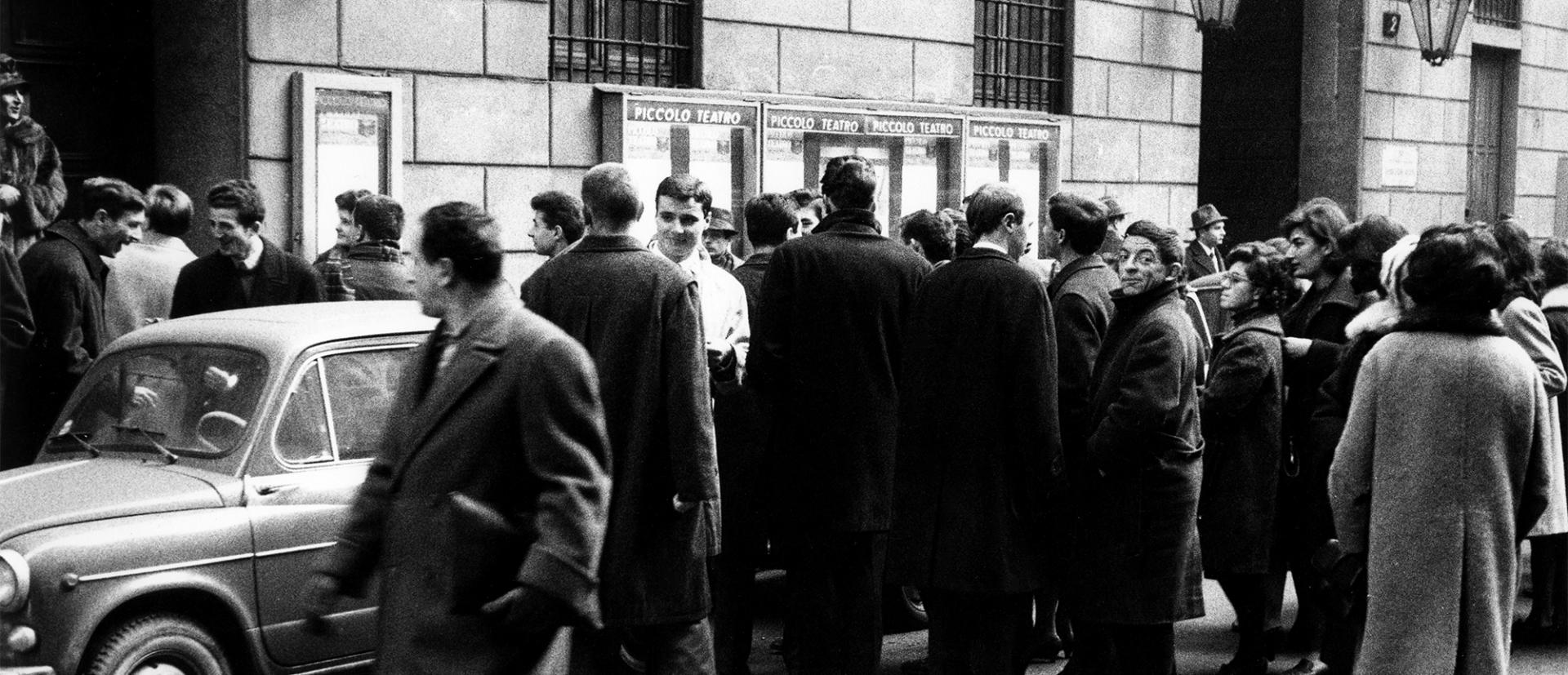
Immagine: Archivio Piccolo Teatro

Mostra | Strehler e i palcoscenici milanesi

Mostra | Strehler e i palcoscenici milanesi

Il percorso attraverso il lavoro di Strehler si divide tra i due teatri milanesi tra i quali si è diviso, nell'arco di oltre cinquant'anni di carriera: il Teatro alla Scala, per la produzione lirica, il Piccolo Teatro di Milano per la prosa.

Giorgio Strehler al Teatro alla Scala è dedicata alla regia lirica di Strehler, parte importante della sua attività artistica, ed elemento di esemplare portata innovativa nel panorama internazionale. Nel ripercorrere la carriera di Strehler quale riformatore dello spettacolo lirico, questa mostra occupa alcuni spazi del Museo Teatrale alla Scala (dalle stanze della Biblioteca Livia Simoni al Ridotto dei Palchi Arturo Toscanini) ma trova il suo sviluppo anche in forma digitale (Giorgio Strehler, o il soffio del vero poetico) grazie alla creazione di uno spazio virtuale e interattivo, composto da sette ambienti e visitabile da remoto e da due schermi posizionati nel percorso del Museo.

Amo il teatro perché amo la vita racconta il Maestro attraverso i grandi spettacoli allestiti al Piccolo. Negli spazi del Teatro Strehler, del Teatro Grassi e del Teatro Studio Melato, è esposta una ricca selezione di materiali che, intrecciando le coeve storie di Strehler e Milano, attraverso le pagine del Corriere della Sera, testimonia le molteplici forme di dialogo tra questo straordinario artista e la sua città. Come in uno spettacolo teatrale, scandito dai suoi cambi scena, l’esposizione prevede un’alternanza di contenuti lungo tutto il periodo di tenitura in modo da dare spazio, secondo precise cadenze, alle diverse ottiche da cui osservare l’intimo legame fra Strehler e Milano.
Il Piccolo Teatro apre i propri archivi e depositi per raccontare al pubblico il lavoro di Giorgio Strehler.
L’ idea dell’allestimento è creare uno spazio dove distribuire diversi ed eterogenei materiali come se essi fossero “in transito” da un luogo all’altro del teatro, per il montaggio o lo smontaggio degli spettacoli, appoggiati provvisoriamente in attesa di un loro utilizzo non meglio definito: è un riporre che implica uno spostamento, un’azione che libera i materiali di scena per metterli di nuovo a disposizione. Il risultato è qualcosa che starà allo spettatore scegliere e ricomporre nella propria memoria.
Obiettivo dell’esposizione è sottolineare la componente umana e pragmatica, la disciplina del lavoro quotidianamente applicata nella continua collaborazione tra il regista e le maestranze del suo teatro. Intuìto e immaginato da Strehler, lo spettacolo prende vita grazie a una concatenazione di fasi artigianali che producono le scene, i costumi, gli oggetti che il pubblico vede e che di quell’idea poetica costituiscono l’incarnazione.
Strehler concepisce il Piccolo come una realtà produttiva, una comunità di persone coinvolte nella creazione di un progetto condiviso, cui tutti concorrono in base alle specifiche professionalità, in un percorso di progressivo perfezionamento rappresentato dalle prove.

Nei foyer dei tre teatri – Strehler, Grassi e Studio Melato – dieci isole espositive raccontano questo metodo di lavoro attraverso alcuni spettacoli particolarmente significativi nella produzione strehleriana.
Ogni isola è arredata e delimitata da pannelli decorati con fotografie e riproduzioni di manifesti, bozzetti e figurini relativi allo spettacolo analizzato; lo spazio individuato dai pannelli è abitato da elementi materici, dai costumi a oggetti di grande e piccola attrezzeria, oltre a tavoli occupati da vari documenti di natura archivistica (tra cui note di regia, lettere, copioni, disegni tecnici degli scenografi, ordini del giorno e di servizio), offerti alla libera consultazione del pubblico.
A cura della Fondazione Corriere della Sera, una selezione di riproduzioni di pagine di quotidiani dell’epoca completa l’informazione presentata al visitatore: è possibile addentrarsi nella lettura non solo di recensioni, ma anche di articoli di cronaca e di costume che sottolineano quanto Strehler fosse un artista continuamente in dialogo con il proprio tempo e con la Storia.

Scendendo nel dettaglio dei materiali esposti, al Teatro Strehler il pubblico può muoversi tra i foyer di platea, balconata e ingresso, attraversando le isole dedicate a cinque spettacoli, L’anima buona di Sezuan di Bertolt Brecht, Il giardino dei ciliegi di Anton Čechov, I giganti della montagna di Luigi Pirandello, Le balcon di Jean Genet, oltre all’incompiuto Così fan tutte.
Nella tromba delle scale, un’installazione con altri elementi di scena, gigantografie e proiezioni arricchisce per suggestioni il racconto.

Al Teatro Grassi si narrano la scoperta della vocazione teatrale in Giorgio Strehler, il suo profondo amore per Milano che, congiunto al sogno di fondare un nuovo teatro, lo porta, insieme a Paolo Grassi, a dar vita, in via Rovello, al Piccolo Teatro di Milano. L’inaugurazione della nuova sala con L’albergo dei poveri lascia necessariamente spazio ad Arlecchino servitore di due padroni di Carlo Goldoni, la più longeva delle regie strehleriane, che, proprio in quella sala, debuttò sempre nel 1947, nel corso della prima stagione di vita della neonata istituzione. Un focus è dedicato a Bertolt Brecht, con Vita di Galileo e L’opera da tre soldi. Una teatrografia del regista completa l’informazione sulla sua attività.

Al Teatro Studio Melato, la scelta è caduta su Elvira o la passione teatrale – l’omaggio di Strehler al maestro Louis Jouvet e, in generale, al Teatro – spettacolo che inaugurò, nel 1986, quella stessa sala riqualificata.

Gli allestimenti potranno essere intercambiabili tra un periodo e l’altro di quest’anno dedicato al centenario strehleriano, con dei veri e propri “cambi di scena” pensati per offrire un più esaustivo percorso di esplorazione della sterminata produzione artistica di Giorgio Strehler.
 

Amo il teatro perché amo la vita

una mostra-installazione realizzata da
Piccolo Teatro di Milano – Teatro d’Europa 

Responsabile Scientifico 
Alberto Bentoglio

Progetto e allestimento 
Marco Rossi

Luci 
Claudio De Pace

Ricerche
Archivio storico 

Silvia Colombo, Davide Verga
con la collaborazione di 
Silvana Crocetta

Archivio costumi 
Roberta Mangano

Archivio scene e elementi di scena
Alberto Parisi, Carlo Lia, Giuseppe Rossi

Progetto grafico
Emilio Fioravanti – G&R Associati

Stampa allestimenti
Graphicscalve S.p.A.

Coordinamento grafico e stampa
Silvia Finotti

Fondazione Corriere della Sera

Presidente
Piergaetano Marchetti
 
Direttore Generale
Roberto Stringa
 
Iniziative Culturali
Margherita Ciampa, Chiara Guccione
 
Ricerche storiche
Andrea Moroni
 
Archivio storico
Francesca Tramma

Strehler100

Strehler100

The Strehler100 Project – A Summary

The Strehler100 Project – A Summary

2021 is a very special year in the life of Piccolo Teatro di Milano – Teatro d’Europa. The centenary of Giorgio Strehler’s birth will fall right on August 14th. In the runup to such an important anniversary, Piccolo Teatro di Milano has come up with a project that properly commemorates and celebrates its founder. A project devised to be first and foremost “vital”, capable of bringing the past, the present and the future together in the name of life and theatre. In keeping with the spirit and commitment that Strehler’s artistic career has always been imbued with, we decided to duly emphasise the centenary of his birth, not with a memorial event that would boil down to a sterile withdrawal into what ‘has been’, but by opening up a vibrant breeding ground of ideas in which – as we are going to explain, through a diverse range of activities (developing a website, producing two docufilms and a number of interviews, organising meetings, workshops, lectures and conferences, promoting publications, not to mention the actual experience of the stage) – we can discuss the life and work of this prominent figure of 20th-century theatre while reflecting on our present. In the complicated “here and now” we are living in now, poised between a pandemic and a post-pandemic world, Strehler’s work – entirely born, after all, in the difficult season of post-war “reconstruction”, and injecting precious new artistic life into it – is still a lodestar that keeps sparking off ideas, even on issues that are so crucial to this day and age: focussing on the public role of theatre, defining the relation between the cultural institutions and the city, the part that artistic and cultural policies and practices may play in reviving a system, the importance of rethinking the dialogue among theatres across the world (especially with a view to deeply questioning ourselves about the meaning and values of European culture), encoding a potential new statute for a theatre that should hopefully be truly “human” and “political”. All issues, these ones, which are more urgent and crucial than ever, and to understand which the lesson learnt from Strehler is essential in this day and age: which is evidence of the “classic” nature of the theatre of this outstanding artist. Supported by a Committee of Patrons that includes prestigious figures from the world of culture, art and research such as: Roberto Alonge, Georges Banu, Giovanni Bazoli, Stéphane Braunschweig, Peter Brook, Annamaria Cascetta, Lev Dodin, Sergio Escobar, Siro Ferrone, Carlo Fontana, Ezio Frigerio, Emmanuel Hoog, Andrea Jonasson, Pia Kleber, Jack Lang, Claudio Magris, Fausto Malcovati, Maria Cristina Mazzavillani, Dominique Meyer, Riccardo Muti, Lluis Pasqual, Rosanna Purchia, Andrée Ruth Shammah, Giovanni Soresi, Franca Squarciapino, Gabor Tompa and Robert Wilson (as well as Giuseppe Sala, Mayor of Milan, and Attilio Fontana, President of Lombardy), the Strehler100 meta-project is organised as a number of independent projects revolving around two types of events: theatrical ventures on one hand, and events about the theory, study and promotion of archival heritage on the other hand. Supported by an intricate network of partnerships, Strehler100 will start in August 14th and will end one year later, on August 14th 2022, spanning across a whole season.

Three events on August 14th

  1. Strehler at Estate Sforzesca: Premiering on Rai5 (with Rai Culture as Media Partner)

As part of the programme of the Estate Sforzesca Festival and of a broader partnership with Rai Cultura, Rai Cultura’s special Apprendisti stregoni. Il metodo Strehler, introduced by Claudio Longhi, will premiere on August 14th. Such documentary will be broadcast on Rai5 that night at 09.15pm. Rai5 will spend the rest of the day in a tribute to Strehler by broadcasting  Arlecchino servitore di due padroni (1955) at 04.15pm and, after the documentary, Le baruffe chiozzotte (1966) at about 10.15pm.
More generally, RaiCultura decided to become media partner of the Strehler100 project so more events have been planned as part of such collaboration, such as screening some of Strehler’s plays at the International Festival in May 2022 (but more on that later).

  1. giorgiostrehler.it and #strehler100

As from August 14th, a website about the great Artist, giorgiostrehler.it, will be launched as a sort of virtual exhibition, a place of learning and a sort of workshop for schools, a digital map of the entire Strehler100 project. It is a sort of “medley” that will not only act as a “showcase” and as a record of the many events planned, but will be a further mode of operation that will help multiply the perspectives on “Strehler’s universe” (divided into themed sections, it will also host a number of specially-made video-interviews about the director).
This will go hand in hand with a far-reaching programme of social-media campaigns that was launched on January 1st 2021 in the attempt to create online storytelling about Strehler’s journey in shows (and more) through videos, photos, texts, stories and other multimedia contents.

  1. A Commemorative Stamp

Also on August 14th, the Italian Ministry of Economic Development will issue a postage stamp in the series that commemorates Italy’s greatest performance artists, “Eccellenze Italiane dello spettacolo”, as a tribute to Giorgio Strehler on the centenary of his birth.


Il mio mestiere è raccontare storie: A Night for Giorgio Strehler

On Friday, October 1st, a special night at Teatro Grassi called Il mio mestiere è raccontare storie will try to outline a 360-degree portrait of the artist through a collage of words, music and images (by Stefano de Luca, with the support of Giancarlo Dettori, Andrea Jonasson, Ottavia Piccolo, Federica Rosellini, Ferruccio Soleri, Pamela Villoresi).


Arlecchino, Living Memory

From October 12th to 31st, Teatro Grassi will host an updated version of the timeless Harlequin, Servant of Two Masters, directed by Giorgio Strehler and produced by Enrico Bonavera, with the assistance of Stefano de Luca. It is as much a milestone in the catalogue of Piccolo Teatro’s own productions as a gem in the more “classic” repertoire of Italian drama. The new production of the show, by now a tradition, is testament to the attention paid to the great repertoire, in keeping with the Fondazione’s status as a national stage, and takes on special significance this year that celebrates Strehler’s anniversary.


Lettere agli italiani: an edition of Strehler’s writings

To coincide with Strehler’s centenary, Piccolo Teatro di Milano has started to edit the body of Strehler’s writings, a long-term feat that is inevitably going to last years and will be presented at Bookcity. The journey begins with the publication of Lettere agli italiani in 2021, a collection of about twenty pieces written by the director – most of which published on some of the most important Italian newspapers from 1984 to 1992 – focussed on mere politics and cultural politics. Lettere agli italiani, with a foreword by Ferruccio de Bortoli, will be the first title in one of the lines of the new-born collection which has been planned in partnership with publisher “il Saggiatore”. Other areas of interest in this series of books will lead to publish some as-yet-unpublished Italian and international plays that are closely related to Piccolo Teatro’s productions; collections of translations of new stage plays by international authors that come from non-Italian areas or that are monographic in nature; historical-critical research works and surveys as insights into dramatics.


About Strehler: the voices of books

Two recent books about Giorgio Strehler will be presented at Piccolo Teatro In the next few months (one has just been published, the other is still in press): Intervista a me stesso by Giorgio Strehler (which De Piante Editore issues in a precious small-run edition, with a foreword by Claudio Longhi); Strehler interpreta le donne. Volti e voci femminili del teatro di Giorgio Strehler by Stella Casiraghi (published by Skira). Note also that Strehler il gigante del Piccolo, a book edited by Sara Chiappori (with a foreword by Piero Colaprico and an afterword by Claudio Longhi), will be out with the newspaper “La Repubblica”, on July 29th 2021.


Strehler On the Small Screen: A docufilm and A Documentary

Piccolo Teatro di Milano has provided plenty of its archival records to make a docufilm and a documentary, which investigate Strehler’s artistic trajectory and creative processes from new, unusual perspectives. More to the point, Essere Giorgio Strehler is the docufilm directed by Simona Risi for 3D Produzioni, with a storyline by Didi Gnocchi and a screenplay by Matteo Moneta and Gabriele Raimondi. Strehler – Diario di bordo is the documentary directed by Alessandro Turci, written with Federica Miglio and Antonia Ponti and coproduced by Dugong Films and Rai Documentari, premiering on Rai3 soon.


Strehler e i palcoscenici milanesi: an exhibition in partnership with Teatro alla Scala and Fondazione Corriere della Sera

In partnership with Teatro alla Scala di Milano and Fondazione Corriere della Sera, a great exhibition called Strehler e i palcoscenici milanesi will lead the audience through an experiential and exploratory journey in the artistic and creative life of the great artist. Strehler e i palcoscenici milanesi will consist of two separate sections. Strehler, o il soffio del vero poetico is about Strehler as an opera director, an important part of his artistic career and an outstandingly innovation on the global scene. Moving through Strehler’s career as a reformer of operatic shows, the exhibition will take place in some areas of the Teatro alla Scala Museum (from the rooms of the Livia Simoni library to the Arturo Toscanini foyer) but most of it will develop in the digital world, creating a virtual, interactive space with seven areas, accessible on line and from two screens placed on the way to the Museum.

Amo il teatro perché amo la vita is focussed instead on telling about Strehler’s relationship with Milan: a treasure trove of materials will be on display in the areas of Teatro Strehler, Teatro Grassi and Teatro Studio Melato, as well in some other designated places around town (Via Dante, Loggia dei Mercanti), which will entwine the coeval stories of Strehler and Milan into a testament to the multiple forms of interaction between such outstanding artist and his city. As in a play that moves at a pace with the changes of scene, the exhibition will alternate contents till the end, so as to accommodate, now and then, the different perspectives from which the tight bond between Strehler and Milan should be looked at.

Strehler e i palcoscenici milanesi will officially open on November 4th.


“Strehler” città aperta: The Meetings

Spanning the entire 2021-2022 season, Piccolo Teatro di Milano will be organising a rich repertoire of meetings to question itself about the memory of the great director – a commemoration that is not aseptically an end in itself but one that tries to come to terms with the present, while giving it strength and substance. So, Strehler’s journey turns into an opportunity to broaden the perspective on contemporariness and on social, economic and political issues. Such score of meetings includes a factual conversation with many Milanese cultural institutions and players, such as: Fondazione Arnoldo e Alberto Mondadori (with Stella Casiraghi, Irene Piazzoni and Oliviero Ponte di Pino going through the history of the big and small publishers that brought Milan back to the centre of Italy’s intellectual life in the post-war period, making books and journalism the city’s pride and glory); Fondazione Corriere della Sera (in the setting of Sala Buzzati, a series of four meetings/lectures about Strehler’s Milan); Fondazione Giangiacomo Feltrinelli (a series of three meetings about three core themes: the role of culture in the reconstruction of a country, the role of theatre as social criticism, and, lastly, the role of public intellectuals); Gallerie d’Italia (as part of Intesa Sanpaolo’s patronage of the centenary of  Strehler’s birth, a double event about Strehler’s pro-European outlook and the exploration of the economic context in which cultural projects are born and developed); Laboratorio Formentini per l’Editoria (launching a playwriting course for the convicts of the San Vittore Prison, supported by the valuable experience of the Biblioteche in Rete a San Vittore project); MEET – Digital Culture Centre (a number of events prompted by Strehler and his heritage to reflect on art’s ability to work out the future); Museo Nazionale della Scienza e della Tecnologia Leonardo da Vinci (launching a double workshop targeted to the new generations, focussed on playwriting for scientific journalism as well as voicing “drama for science”); Museo del Novecento (two events dwelling on Strehler’s dialogue with visual artists, from Renato Guttuso to Alberto Savinio, via Piero Fornasetti and Felice Casorati); Pinacoteca di Brera (a series of events to emphasise the key role played by Grande Brera between the late Forties and the boom years); Fondazione Pirelli (a series of events about work, see through the filter of theatre and Strehler’s plays: work as an identity- and value-building practice, in connection with Saint Joan of the Stockyards; work in conversation with technological evolution, in connection with Life of Galileo); Triennale Milano (a series of meetings to rediscover and investigate the relationship that binds design, iconographic research and the stage together); Veneranda Fabbrica del Duomo (to shed light on the spiritual implications of “the most human theatre ever”, that is, Giorgio Strehler’s theatre).


News from the Past: an International Festival for Giorgio Strehler

In May 2022, Piccolo Teatro di Milano will launch a big international festival about Giorgio Strehler (which will bring artists and companies from many countries around the world to Piccolo Teatro and other places around town). About twenty plays will be performed, many of which never been seen in Italy before, some coproduced by Piccolo Teatro: for instance, Entre chien et loup by Christiane Jatahy, The sheep song by FC Bergman, a few plays by Constanza Macras and Tiago Rodrigues. Many other big names are expected to take part, some well-known, some less well-known to the Italian audiences, some bringing veritable masterclasses along with their shows. Burkina Faso, Brazil, Argentina, France, Uruguay, Sweden, Ireland, Portugal, Greece and Belgium have all joined in.


Il lavoro teatrale di Giorgio Strehler: a one-day lecture in partnership with Università degli Studi di Milano

On Monday, October 25th, Piccolo Teatro di Milano and the University of Milan (Department of Cultural and Environmental Studies, headed by Alberto Bentoglio) will be hosting a one-day lecture about Strehler called Il lavoro di Giorgio Strehler a cent’anni dalla sua nascita, in the attempt to develop a reflection from the perspective of dramatics about the director’s career, legacy and topicality through the lectures of young scholars who were too young to see the artist’s plays. Coordinated by Professor Mariagabriella Cambiaghi, the event will take place in the Bonaparte Hall at the University of Milan and will be followed by a number of exploratory meetings at the Nina Vinchi Cloister, including the screening of stock footage, targeted to the students of Università La Statale, Milan.


Fifth International EASTAP Conference

The Fifth International EASTAP Conference (EASTAP is the European Association for the Study of Theatre and Performance) will be held at Teatro Grassi and at the University of Milan, from May 23rd to 26th 2022, in partnership with Università degli Studi di Milano, Università della Calabria, Università Ca’ Foscari di Venezia and CUT (Consulta Universitaria del Teatro), with the support of Milan’s Università Cattolica del Sacro Cuore and Milan’s IULM University. Organised by Alberto Bentoglio, Claudio Longhi and Daniele Vianello, the conference will bring in lots of guest speakers, including experts, artists, professionals from the world of live performances, who will discuss the idea of a Theatrical Mind in connection with the many different  variations of live shows (from the Theatre of the Word to performances, to musical theatre and ballet) and in a dialectic conversation between theories and practices.


To sum up, a whole year to patch back together all the nuances of a fundamental voice of the 20th century cultural scene and make them reverberate again, with a special focus on his legacy for the young generations: culture as the pivot which any potential reconstruction of a social fabric, any real redefinition of an identity-building system, any conscious opening to an effective future prospect revolve around.
Vive!

Vive!

The heroines of Western literature are generally tragic figures, not only because they are loaded with the limitations and the weight of the human condition, just like their male counterparts, but also because, unlike the latter, they are invariably faced with a tragic ending. Unable to strive for the status of founders of tribes or winners of wars that are the reserve of male characters, their death on stage seems to be the only way they can achieve glory. It is a cage that reflects the social conventions that for centuries have relegated women to the roles of mothers, wives or lovers, and death - the bloodier the better - appeared the only sublimation possible for the female gender.

The “Vive!” series of podcasts, produced by Storielibere.fm and the Piccolo Teatro di Milano in collaboration with the Corriere della Sera newspaper, aims to look back at the stories of some of these characters, imagining a different destiny for them. The first episode is dedicated to Madame Bovary, and is followed by Francesca da Rimini, Dido, Ophelia and lastly Anna Karenina. What would have happened if, at a certain point in their story, they had changed direction and death was no longer their inescapable destiny? These female figures are given a new voice through the words of the writer Alessandra Sarchi and the performance of the actor Federica Fracassi.

The episodes:

  1. Madame Bovary, La penna e l’inchiostro: Gustave Flaubert described Madame Bovary as an avid reader and incurable dreamer, consumed by fantasies and illusions right until her death; here, however, Emma takes her pen and writes a long letter to her author to protest over the injustices that he subjected her to.
  2. Francesca da Rimini, galeotto fu il libro e chi lo scrisse: Francesca da Rimini, the noblewomen that Dante met in his Inferno, where she has been condemned for the sin of lust because of her relationship with Paolo Malatesa, the brother of her husband Gianciotto, is reborn, returning to her own body.
  3. Didone, la regina innamorata: Dido, after being abandoned by Aeneas, instead of killing herself continues to govern Carthage. She watched it grow and prosper and now, as she studies the sea on which her love fled, she gathers her tribe and prepares to wage her revenge on Rome.
  4. Ofelia, o della cura dei fiori: the young woman unwillingly involved in the intrigues of the Danish court, deceived and then abandoned by Hamlet, does not die in the icy waters of a river but rather finds refuge in a convent, and lives a tranquil and secular life there.
  5. Anna Karenina, un altro treno: After the fight with Vronskij and the visit to Dolly’s house, instead of throwing herself under a train Anna Karenina is comforted by her sister-in-law and her sister Kitty, and having found a new identity as a woman, retreats to the countryside with her children.

ALESSANDRA SARCHI was born in Reggio Emilia in 1971 and now lives in Bologna. She studied at the Scuola Normale in Pisa. In 2008 she published a collection of stories called “Segni sottili e clandestini” (Diabasis Editore). 2012 saw the publication by Einaudi Stile Libero of her first novel “Violazione”, winner of the Paolo Volponi award for a debut work. With “L’amore normale”, (Einaudi 2014), she won the international award “Scrivere per Amore”. With “La notte ha la mia voce” (Einaudi, Stile Libero 2017), she won the Mondello opera italiana award, the jury’s award for the Premio  Campiello and the 2018 edition of the Wondy award. 2019 saw the publication by Bompiano of the essay “La felicità delle immagini il peso delle parole. Cinque esercizi di lettura di Moravia, Volponi, Pasolini, Calvino, Celati.” In 2020 the novel “Il dono di Antonia” was published, again by Einaudi. She has translated a number of works from English, the latest of which is the collection of works by Annie Proulx, “Distanza ravvicinata”, published by Minimum Fax in 2019. She collaborates with the magazines Sette and La Lettura published by “Corriere della Sera”.

FEDERICA FRACASSI is an actor with a sensitivity for new dramaturgy, focused on the most visionary, savage and poetic works of recent years, and since the beginning took an independent path through experimental theatre. She trained at a very young age at the Paolo Grassi School of Dramatic Arts and followed the works of Carmello Bene, Luca Ronconi, Thierry Salmon, Romeo Castellucci and Cesare Ronconi. Together with the theatrical director Renzo Martinelli she founded the company Teatro Aperto, now known as Teatro i. Together with Martinelli and Francesca Garolla she manages the Teatro i space in Milan, which serves as a veritable factory of contemporary theatre. She has performed the leading role in countless productions by the company. In theatre, she has worked - among others - with Teatro Valdoca, Valerio Binasco, Valter Malosti, Antonio Latella, Luca Micheletti, Sonia Bergamasco, Motus, Fanny & Alexander and Andrea Chiodi, and has received numerous awards as leading actor: Ristori Award, Olimpici del Teatro Award, the Critics Award, Franco Enriquez Award, the Special Mention and Eleonora Duse Award, the Ubu Award, and the San Ginesio all’arte dell’attore Award. She made her cinematic debut in 2010 in Happy Family by Gabriele Salvatores. This was followed by other collaborations, including with Marco Bellocchio, Giorgio Diritti, Paolo Virzì, Renato De Maria, Francesca Archibugi, Carlo Verdone, Marjane Satrapi, Francesco Fei and Paolo Genovese. She is part of the cast for the television series Luna Nera, produced by Fandango and Netflix.

Ascolta "Ofelia, o della cura dei fiori" su Spreaker.

Ascolta "Anna Karenina, un altro treno" su Spreaker.

#Pinocchio. Una fiaba per immagini

#Pinocchio. Una fiaba per immagini

A project created by the Piccolo in collaboration with the Carlo Colla & Figli Puppetry Company and The Box Films, with the support of Rummo.

The first part of Fiabe, maestri e giovani eroi marks the beginning of the collaboration between the Piccolo Teatro and Rummo dedicated to younger generations.

Redesign the future, recompose the fragments of community and its representation through culture and a stubborn faith in its resources. It is the cornerstone of the collaboration that this year, for the first time, brings together the Piccolo Teatro di Milano and Rummo, two examples of excellence, each in its own particular way within its field, that share an idea of culture, of artisan artistry, of a form of knowledge that brings together tradition and innovation for the benefit of the sense of identity of a community that currently finds itself lacerated by the unprecedented events of the last year. The maestros of pasta production and the maestros of theatrical direction. They come together in a common project created for schools - primary and secondary - in Lombardy and Campania, and families. A positive expression of social responsibility from a company that in the wake of the violent flooding of 2015 has demonstrated energy, tenacity and unfaltering hope in reconstruction, from a theatre whose roots lie in the period of reconstruction following the destruction of the Second World War and which now, as is the case for many cultural institutions, is working hard to recommence activities, and from the younger generations, one of the categories that has paid the highest price during the pandemic due to the harsh denial of socialisation.

With the support of Rummo and the involvement of the Carlo Colla & Figli Puppetry Company, Beniamino Barrese, one of the most recent emerging stars of Italian cinema and the author of the documentary dedicated to his mother Benedetta Barzini, La scomparsa di mia madre, and Davide Carnevali, one of the most performed Italian playwrights on the European scene, the Piccolo aims to reconnect the thread of interrupted communication through a collective experience aimed at constructing a new narration of present times. The focus is on Pinocchio, a symbol of transformation and exploration, and the epic, the power that its code has in continuing to decipher the present.

The 7 episodes of the fable through images, directed by Beniamino Barrese and produced in collaboration with The Box Films, will be published every Monday and Wednesday on our YouTube channel. The episodes will be accompanied by #Pinocchio Lab, an educational activity involving 6 video tutorials have been recorded from inside the Colla workshops, which will be shown during the live links with the Company’s workshops aimed at primary school children. The video tutorials will then be published on our social network profiles.


Il laboratorio di geppetto
Online

from Monday 10 May 2021


La voce del grillo parlante
Online

from Wednesday 12 May 2021


Il gran teatro dei burattini
Online

from Monday 17 May 2021


Gli inganni del gatto e la volpe
Online
from Wednesday 19 May 2021


La fata turchina
Online

from Monday 24 May 2021


Tra balocchi e pescecane
Online

from Wednesday 26 May 2021


Il risveglio di Pinocchio
Online
from Monday 31 May 2021


#PINOCCHIO LAB
The educational programme

As well as being one of the most celebrated and well-known children’s tales in the world, Pinocchio has also been rewritten and reinvented by fiction, screen and stage writers more than almost any other story. In this light, the #Pinocchio educational programme will be taking its cue from Collodi’s original story to examine, on the one hand, how and in how many ways a story can be told and, on the other, to lend a voice and form to the imagination, the emotions and the adventures of all the children taking part.
The programme is made up of 6 live events via Teams broadcast from the artisan workshops of the Carlo Colla & Figli Company and accompanied by 6 video tutorials of a maximum length of 2 minutes. Each tutorial will be a summary of the workshop activity illustrated during the event by the puppeteers and can be used either in class or at home. The final aim of the course is to make a puppet theatre, with which each child/class can stage their own story, with the help of parents and teachers.

The tutorials will be published via social from September 2021. The work of the children collected during the workshops (audio accounts, sketches, figurines and videos) will be brought together on the websites of Rummo, the Piccolo Teatro and the Carlo Colla & Figli Company, providing a cue for further communication activities.

Info educational@piccoloteatromilano.it


The events 

12 May 2021 at 5.30 p.m.
Pinocchio & Co.
Taking its cue from the publication of the episodes of #Pinocchio as well as of the adaptation by the Colla Company, we will be looking at the infinite possibilities of telling a story, and we will be presenting the project to teachers and parents.
After having gone over the original version of the tale, teachers/parents and children will be involved in the writing of a new adventure for Pinocchio. The stories can be short written pieces or recorded as an audio file of at most 1 minute in length.
Le nuove avventure di Pinocchio will then be brought together in a multimedia publication that will also be shared on social media.
Target Primary schoolteachers and parents


26 May 2021 at 11 a.m.
Marionette e Burattini
Pinocchio is the most famous puppet in the world. The first event dedicated to children will draw on a number of elements from the Mangiafuoco scene to examine different types of puppet and their potential for expression.
The children will be involved in two especially important activities suited to the summer months. Firstly, they will create a diary with pictures/words/music dedicated to their summer adventures. One of these stories will be used for the final performance. The children will also be building their own puppet theatre, with the help of teachers and parents.
Target Children of 6 years old and over, and teachers/parents


October 2021
C’era una volta un pezzo di legno
In this event, we will see in detail how a marionette is made, from the engraving of the face to the building of the body.
The children will learn to build the characters in their story and understand how to move them in the theatre
Target Children of 6 years old and over, and teachers/parents


November 2021
Il vestituccio di carta fiorita
An event set in the tailoring workshop, where we will see how a marionette costume is made, beginning with the pattern.
The children will learn how to make the costumes for their characters with recycled materials.
Target Children of 6 years old and over, and teachers/parents


November 2021
Il Paese dei Balocchi
A fundamental aspect of the play we are putting together will be the painting of the backgrounds used to create the scene.
Using a simple piece of wrapping paper, we will see how to make the hand-painted sets for our play.
Target Children of 6 years old and over, and teachers/parents


December 2021
Nella bocca del pescecane
The final part of our course looks at how to put together and stage everything that we have learned. This session will uncover all the secrets of the operating bridge and the machinery used to create special effects during a performance.
The children will learn how to move the puppets, change the backdrops and use lighting and music for their play. The staging will be recorded as a video with a maximum length of 3 minutes, with the help of teachers and parents. All of the adventures can be shared on social media and in the promotional material for the Carlo Colla & Figli Company show, which will be performed at the Piccolo Teatro for Christmas 2021.
Target Children of 6 years old and over, and teachers/parents

Romanzi teatrali - "Wilhelm Meister's Apprenticeship" by Goethe

Romanzi teatrali - "Wilhelm Meister's Apprenticeship" by Goethe

Wilhelm Meister's Apprenticeship by Johann Wolfgang von Goethe, a conversation with Claudio Magris and Paolo Di Paolo, readings by Lino Guanciale

Published between 1975 and 1976, the novel - often considered to be a paradigm of the Bildungsroman (“novels of formation”) style of writing - tells of the preparation for life of the young Wilhelm meister, a lover of theatre and dramaturgy, who wants to become a theatrical actor and director. A long series of experiences and adventures await Wilhelm in his progressive game of living and learning. Set out in numerous plots, tangents and narrative threads, the novel was also an opportunity for Goethe for the progressive exploration - and destructuring - of the classically considered novel form.


Johann Wolfgang von Goethe (1749-1832) A German author, poet and playwright who produced an endless body of work that ranged from fiction to poetry, from philosophy to science, from religion to music and much more, in line with a model of “universal man” that saw few equals in his wake. A key figure in the transition from Enlightenment to Romanticism,  his most famous works include The sorrows of young Werther, Elective affinities,  and Faust. Enamoured of Italy, Italian journey describes a Grand Tour that lasted two years.



Tuesday 1 June 2021 at 6 p.m.
Wilhelm Meister's Apprenticeship by Johann Wolfgang von Goethe
A conversation with Claudio Magris and Paolo Di Paolo
Readings by Lino Guanciale

Romanzi teatrali - "Girl, woman, other" by Bernardine Evaristo

Romanzi teatrali - "Girl, woman, other" by Bernardine Evaristo

Girl, woman, other by Bernadine Evaristo,a cconversation with Igiaba Scego and Paolo Di Paolo, readings by Camilla Semino Favro

Amma is about to see her work debut on the prestigious stage of the National Theatre in London. It is a very special achievement for a black, militant director like herself, and it is a moment that she shares with her daughter Yazz, a university student, who is sitting in the audience with Shirley, an old friend of Amma. Numerous other female figures move around them, weaving the fabric of a choral piece, where people of all colours, social and cultural backgrounds and sexualities meet and clash, producing sparks of life.


Bernardine Evaristo (1959-) Born in London to an English mother and Nigerian father, she is a novelist and author of theatrical and critical works. Girl, woman, other has won the Booker Prize and the British Book Award and was a finalist for the Orwell Prize for political literature and the Women’s Prize for Fiction. She has always been actively involved in campaigns to valorise the work of artists of colour.


Tuesday 25 May 2021 at 6 p.m.
Girl, woman, other by Bernadine Evaristo
A conversation with Igiaba Scego and Paolo Di Paolo
Readings by Camilla Semino Favro


Romanzi Teatrali - “Woodcutters ” by Thomas Bernhard

Romanzi Teatrali - “Woodcutters ” by Thomas Bernhard

Woodcutters by Thomas Bernhard, a conversation with Sandra and Paolo Di Paolo, readings by Lino Guanciale and Camilla Semino Favro

Vienna, the 1980s. Following a performance at the Burgtheater of Ibsen’s The wild duck, a group of people wait to begin dinner - with some impatience and growing hunger - in the elegant apartment of the Auersberger’s, she a singer and he a composer. Sitting in an armchair with a glass of champagne in hand, the main character and narrator describes to the reader everything he sees and hears, using implacable harshness (cutting, just like a woodcutter) and unparalleled sarcasm to describe the tics, manias and miseries of a certain social circle that he himself is part.

Thomas Bernhard (1931-1989) Born in the Netherlands, where his mother, who had conceived him out of wedlock, fled to give birth, Thomas Bernhard - author, playwright, poet and journalist - spent most of his life in Austria, and is considered as one of the greatest German-language writers of the twentieth century. Published in 1984, Woodcutters is the second book (dedicated to the theatre) in the so-called Arts Trilogy, which also includes The loser (1983, which focuses on music) and Old masters (1985, on the theme of painting).


Tuesday 18 May 2021 at 6 p.m.
Woodcutters by Thomas Bernhard
A conversation with Sandra and Paolo Di Paolo
Readings by Lino Guanciale and Camilla Semino Favro