Sotterraneo Subscription

Sotterraneo Subscription


For the twentieth anniversary of the collective, choose the subscription that lets you see the shows in the Sotterraneo special programme at a dedicated price.


The subscription is by name, can be purchased from the box office, the box office line or online; once purchased, tickets cannot be either cancelled or changed

The subscription allows you to select 2 shows of your choice from those in the Vent’anni di Sotterraneo Special: L’Angelo della Storia, DJ-SHOW, Talk show, Il fuoco era la cura.
 

Sotterraneo subscription | 2 shows

Full price €30 
PURCHASE


Agorà della cultura

Agorà della cultura


An all-embracing setting to rediscover the pleasure of encounter and to feel an integral part of civil society.


A place where «the city comes to see its reflection» the theatre has always served as a space in which citizens can come together and talk; a space where dialogue is not only the result of performances, but also of the complexity of the world in which we live our daily lives.

It is with this spirit that, over the course of the season, we dedicate a series of events, under the name Agorà della cultura, to a multitude of themes and multidisciplinary viewpoints. On the one hand, individual encounters: conversations between experts, round tables and book presentations, to remind us that the written page and the world of publishing are a fundamental source for imagination and thought. On the other, veritable cycles of in-depth exploration of themes, such as that dedicated to the 2026 Milan Cortina Winter Olympic and Paralympic Games, which focuses on the relationship between sport and culture.


Beyond the stage – For schools

Beyond the stage – For schools


A shared project involving students and teachers.
 

A programme of activities in and for schools, where the forms of theatrical communication and the themes explored by the season serve as cues for didactic programming shared with teachers and students from lower and upper secondary schools.

In particular, the PCTO – Percorsi per le Competenze Trasversali e per l’Orientamento (Courses for Cross-Disciplinary Skills and Orientation) allow an examination from a range of viewpoints – text, mechanisms of performance, interference with the city and the environment – of some of the productions by the Piccolo. Through the active involvement of classes, engaged directly by the theatre’s artists and operators, the courses are designed to encourage original re-interpretations and in-depth studies.
 

Blitz | lezioni-spettacolo (Staged Lectures)

Staged Lectures in classes, held by the actors from some of the productions by the Piccolo, to focus on the main themes of the shows, involving the students in theatrical exercises and discussions with the artists.

Laboratori di visione (Viewing Workshops)

Encounters at school dedicated to productions and based on an analysis and deciphering of theatrical expression, promoting the receptivity and critical capacity of the students.

Quaderni didattici (Digital Dossiers)

Digital dossiers offering in-depth study, dedicated to the productions and enhanced with multimedia content and contributions created for use in class.

PCTO | Il barone rampante

A course exploring the language of directing, based on the theatrical edition of Calvino’s novel directed by Riccardo Frati, offers an in-depth reading and the development of original applications by students.

PCTO | Three workshop on Miracolo a Milano

Beginning with a viewing of the play and the interdisciplinary materials offered by the three forms of representation (literature, theatre, cinema) of the title piece, three workshops are dedicated to the new production directed by Claudio Longhi. The first, dramaturgic in nature, encourages the classes involved to explore rewriting and/or original writing; the second is based on the creation of a project (sets, costumes) in which to process the cues received and related to the viewing of the play. The third offers a course based on an encounter between the theatre and the city, from the film by Vittorio De Sica to today, through forms of urban, historical and iconographic “exploration”.

PCTO | Escaped Alone

The project by lacasadargilla serves as a springboard for a writing workshop involving young participants in the many themes examined by the piece by Caryl Churchill, the many questions regarding the near and “previous” future, and the disturbing environmental events suggested by the apocalyptic context in which the characters live.

PCTO | Variazioni sul modello di Kraepelin

The play by Davide Carnevali focuses on the theme of memory, beginning with the personal story of a man who is losing track of his own life to touch on the collective history of Europe; cues that will be picked up on in a workshop of ideas in which to practice stage writing.


Interesse pubblico

Interesse pubblico


An “Art Theatre for Everyone” for today.

The Piccolo Teatro di Milano has launched a three-year observatory on theatre audiences, with the aim of fostering exchange, analysis and shared views of the role of the spectator today, and on the evolution of the way in which the theatre is seen, experienced and shared.


Who, today, are the “all” of the “Art Theatre for Everyone”? We will be seeking to answer this question through a series of conferences that are running parallel to our programming until 2027.
 

It is a process that began with an initial reflection on the composition of Milanese audiences, forming part of the calendar of initiatives for the 80th anniversary of the founding of AGIS, the Italian General Association of Performing Arts, to then expand the field to international audiences in May 2026 – on the occasion of the Presente Indicativo Festival –, to then complete its investigations in 2027 with a final encounter during the celebrations for the 80th anniversary of the founding of the Piccolo.


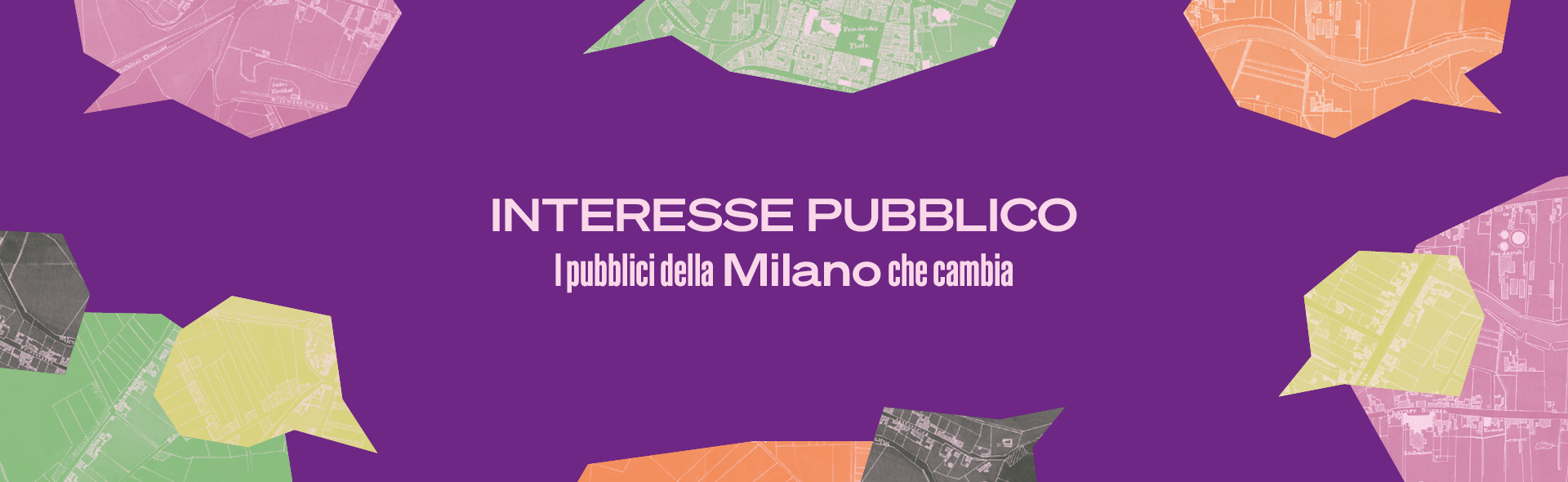
THE 2025 CONVENTION: I PUBBLICI DELLA MILANO CHE CAMBIA (the audiences of an evolving Milan)
Friday 24 and Saturday 25 October 2025 | Teatro Grassi

In a city that is constantly evolving, immersed in a present dominated by the multiplication of images and a stream of new forms of “visual consumption”, it is important – in the manner of Pirandello – to turn around the spyglass and to shift the focus of the lens from the “object” of entertainment to that mobile – at times constantly shifting – line that serves as the axis along which the position of the theatrical audience, or better still, theatrical audiences oscillates, multiplying through a process of a branching of viewpoints that Luca Ronconi had plotted with such clarity in 2012 when he stated: «[...] I do not like the idea of having to reduce 500, 200, 80 or 1000 people during a theatrical event to an audience. If there are 1000 people, I like to consider them as one thousand audiences, with each spectator present representing one audience».

A reflection of the city that it is called on to represent, the theatre thus assumes the role of a place that is home to multiple and diversified interactions between individuals and groups, a space for encounters between needs, expectations, values and desires in which dialogue can become living matter. Immersing itself in this current, in an attempt to analyse the dynamics of meaning that lie at the foundations, and the paths that emerge, the convention aims to promote a process of collective analysis and reflection on the current role of the spectator and on how the way we observe, inhabit and share the theatre is changing. With the conviction, paraphrasing Paolo Grassi, that only through the involvement and the raising of awareness on the entity of «the new audience can we resolve the matter of the authentic vitality of Italian performance. It is not an easy task», he added, «but it is a fascinating one».

The focus of the convention is the composition of the Milanese audience, seen through two distinct moments: a phase of analysis and exchange expressed through a series of themed debates, and a phase of public presentation, in which the results of the debates are shared and discussed with all the figures involved. 


THEMED DISCUSSIONS AND CHAIRS

      ➝ Anna Piletti: Generazioni in scena: il teatro e la scuola per i cittadini di domani (generations on stage: theatre and school for the citizens of the future)
      ➝ Maddalena Giovannelli: Pubblico in transito? La sfida degli under 35 (a shifting audience. The challenge of the under-35s)
      ➝ Andrea Rebaglio: Valorizzare la moltitudine: metamorfosi, aspettative e fruizione del “pubblico adulto” (Celebrating the multitude: metamorphosis, expectations and consumption of the “adult audience”)
      ➝ Ginevra Bocconcelli: Quando non vengo a teatro: il pubblico con disabilità e/o necessità specifiche (When I don’t go to the theatre: audiences with disabilities and/or special requirements)
      ➝ Noemi Satta: Quando non vengo a teatro: traiettorie, moventi e ostacoli per il coinvolgimento del pubblico (When I don’t go to the theatre: paths, movements and obstacles for involving audiences)
      ➝ Marianna d'Ovidio: Decentrare lo sguardo: abitare i teatri, gli spazi e i quartieri (Decentralising the gaze: inhabiting theatres, spaces and districts)
      ➝ Oliviero Ponte di Pino: Milano vicino all’Europa (e non solo): i pubblici internazionali (Milan embracing Europe, and beyond: international audiences)
 
The plenary sessions, open to the public, were coordinated by Alberto Bentoglio (University of Milan).

Download the research on audiences for performances in Milan carried out by AGIS and presented during the convention, and listen to the presentations by the chairs (the research and the presentations are in Italian):


Following the convention of October 2025, the focus of the period of study in May 2026 will be the international dimension, with particular attention to its audiences and the various generations involved – Millennials, Gen Z, Alpha. The leading question “Who, today, does the all of an ‘Art Theatre for Everyone’ refer to?” is thus the driver for a wider-ranging discussion that extends beyond national borders to generate a shared examination: is there such a thing as a common international audience? And how does it develop alongside the experience of festivals and the many international organisations in Europe (and beyond)? Who are the individuals or the groups of which they consist? And, within this extensive field, how will future spectators develop?


Read the call for participation in the 2025 convention (the call is in Italian).
Please write to interessepubblico@piccoloteatromilano.it for information.


The 2025 convention forms part of initiatives for the 80th anniversary of the founding of AGIS – Associazione Generale Italiana Spettacolo and is organised in collaboration with ABA – Advisory Board for the Arts, AGIS Lombardia, Associazione Culturale Ateatro, Associazione Teatri per Milano, Fondazione Cariplo, Fondazione Paolo Grassi – La voce della cultura, Stratagemmi_prospettive teatrali.


In collaboration with


Ricordando

Ricordando


The 2025/26 is once again an opportunity for the Piccolo to celebrate a series of anniversaries.


While the 120th anniversary of the birth of Samuel Beckett (Dublin, 13 APRIL 1906) is an opportunity to return to Happy Days the play in which, in 1982, Giorgio Strehler directed an extraordinary Giulia Lazzarini in the role of Winnie, 10 FEBRUARY 2026 marks the 70th anniversary of another masterpiece from Strehler’s repertoire: the first edition of the Threepenny Opera by Bertolt Brecht. The German playwright, who was present for a number of rehearsals for the play and who was full of praise for Strehler, died prematurely in August of the same year, 1956. The 2026 agenda of the Piccolo Teatro is also dedicated to Strehler’s Threepenny Opera.

70 years have passed since the first version of another of Strehler’s celebrated works, El nost Milan by Carlo Bertolazzi, which made its debut in DECEMBER 1955, with Valentina Fortunato and Tino Carraro in the lead roles. Twenty years ago saw the death of Gianni Ratto, scenographer and collaborator of Giorgio Strehler during the first seasons of the Piccolo. He created the sets for the first Arlecchino servitore di due padroni, which made its debut in July 1947.

This year would have seen the one-hundredth birthday of Dario Fo, born on 24 MARCH 1926, as well as the actor Giancarlo Sbragia (Rome, 14 MARCH 1926), who regularly featured in the first decade of activity of the Milanese theatre. Ninety years ago saw the birth of Franco Quadri (1936-2011), the essayist, curator and theatrical critic, founder of the Ubulibri publishing house and the creator of the Ubu award, the Oscars of Italian theatre, as well as the birth of the actor Corrado Pani (1936-2005), one of the lead actors in two memorable productions directed by Strehler: the first edition of Brawling in Chioggia by Carlo Goldoni, and Il gioco dei potenti by William Shakespeare. In memory of Franco Quadri and his profound relationship with Luca Ronconi, an afternoon of study has been planned, based on the book Ronconi secondo Quadri, published by Ubulibri and curated by Leonardo Mello. The initiative forms part of Prospettiva Ronconi, a programme of activities organised by the Piccolo on the tenth anniversary of the death of the director. 

Fifty years ago, on 2 NOVEMBER 1975, Pier Paolo Pasolini was assassinated, and half a century has also passed since the death of Luchino Visconti (MARCH 1976) and of Rina Morelli (JULY 1976). 

30 JUNE 2026 will mark the fortieth anniversary of the inauguration of Teatro Studio, an event for which Giorgio Strehler staged Elvira, o la passione teatrale, based on the words of Louis Jouvet and in which he performed, alongside Giulia Lazzarini. 

Additional moments of recollection on the social network channels of the Foundation will be dedicated to the many other actors who have contributed to the history of the Piccolo and who are celebrated with various anniversaries over the course of the season.
 

Il teatro tiene banco

Image processing © Riccardo Frati

Il teatro tiene banco


For the fourth year in a row, Il teatro tiene banco is back — a project made possible thanks to the generous support of Fondazione Monte di Lombardia: a program of shows and activities dedicated to different school-age audiences, in which the performing arts serve as a useful tool for students and teachers to enrich their educational paths.


Five shows, two theatrical guided tours and a workshop make up this proposal for younger audiences.


The programme includes five theatrical productions exclusively for schools, written and directed by Davide Carnevali and performed by Daniele Cavone Felicioni, Michele Dell’Utri, Diana Manea and Giulia Trivero. For primary schools, the Scatola Magica at the Teatro Strehler welcomes the return of La favolosa battaglia dei topi e delle rane, a show inspired by The Batrachomyomachia by Giacomo Leopardi that invites a reflection, with the children in the audience, on the management of conflict and the importance of dialogue and of listening (4–16 November 2025).

Also for younger children, Viaggio fantastico nel (sotto)suolo, which, again drawing inspiration from Giacomo Leopardi – this time from his Small Moral Works – addresses the themes of ecology, sustainability and de-anthropisation by revealing the wonders that hide in the first few centimetres of the ground (18–23 November 2025).

Pre-teens from lower secondary schools are taking on the themes of legality, violence and the oppression of the weak by the strong, in Quel ladro del Lago di Como, a re-reading of The Betrothed by Alessandro Manzoni (Teatro Studio Melato, 6–14 February 2026).

The situation is reversed for students from upper schools, with actors going to their audiences in classrooms, bringing with them two performances, from 15 to 18 October 2025 and from 13 to 30 April 2026: Antigone in cattedra is a true educational drama, in which the heroine of Sophocles and Brecht becomes a spokesperson for themes such as legality, politics, feminism and the patriarchy; inspired by the masterpiece by Luigi Pirandello, Sei personaggi in cerca di followers seeks to encourage youngsters to reflect on the pretence that fills our daily lives and on how we manage our own image in the era of social networks.

The 2025/26 season also includes the customary cycles of theatrical guided tours of the Teatro Strehler, with Benvenuti al Piccolo! Nel paese di Teatro, a behind-the-scenes exploration of the machinery that drives the theatre (21–29 March 2026), and Benvenuti al Piccolo! Green Tour dell’isola degli alberi, a sustainable voyage through theatrical places and texts (14 October–21 December 2025). Both shows are curated by Michele Dell’Utri.

Elementary school children are also the exclusive audience for La magica scatola di Arlecchino, a sustainable theatrical tailoring workshop curated by Andrea Zaru, with Roberta Mangano and the Piccolo’s tailors (Scatola Magica – Teatro Strehler, 8–30 April 2026).


With the support of
 
 
The show Benvenuti al Piccolo! Green tour dell’isola degli alberi is part of the European project


Logo EU


Teatro Fuori Porta

Teatro Fuori Porta


A new edition of the programme of cultural events throughout the Lombardy area.


Thanks to the contribution of Regione Lombardia, with Teatro Fuori Porta we developed a theatrical programme aimed on the one hand at favouring the distribution of high-profile cultural projects throughout the Lombardy area, and on the other at favouring locations and organisations that are not “conventionally” considered as theatrical.


The project contributes to the consolidation and bolstering of audiences, and implements the efforts made and results obtained in recent years by Regione Lombardia in combating educational and cultural poverty. The project, which lasts from October to December 2025, takes the form of cycles or courses in “educating the gaze”, which include the organisation of recitals, of “performances in the classroom” in schools, and of workshop activities, forming a calendar of 60 events in the districts of 23 municipalities (Brunate, Como, Cantù, Oggiono, Casatenovo, Carate Brianza, Monza, Brugherio, Saronno, Varese, Besozzo, Ponte in Valtellina, Sondrio, Lovere, Bergamo, Brescia, Salò, Desenzano del Garda, Mantova, Castiglione delle Stiviere, Vigevano, Mortara, Lodi), covering 10 Lombardy provinces (Como, Lecco, Monza e Brianza, Varese, Sondrio, Bergamo, Brescia, Mantova, Pavia, Lodi).

The performers involved include Francesco Centorame with Io quella volta lì avevo 25 anni, a tribute to the theatre of Giorgio Gaber and Sandro Luporini; Federica Fracassi reading Goffredo Parise in Sillabari; Fausto Russo Alesi with Mumù, a short story by Ivan Turgenev, and Arianna Scommegna who draws on the words and the masterpiece by Elsa Morante with La Storia.

Alongside the evening events, the project includes A scuola di teatro, a series of lecture-performances designed for schools built around four key figures of classical and contemporary drama: King Lear, Antigone, Galileo, and La Maria Brasca as well as a programme of reading workshops entitled AD ALTA VOCE, hosted in libraries, universities of the third age, and civic spaces, curated by Daniele Cavone Felicioni, Michele Dell’Utri, Diana Manea, and Giulia Trivero.


The project Teatro Fuori Porta is conceived by the Piccolo Teatro di Milano – Teatro d’Europa and organised with the suppport of



Piccolo <35

Piccolo <35

The Piccolo subscription for under 35s
 
Do you want to experience the theatre in a new way, and join a young, dynamic and passionate community? Piccolo <35 is the offer created just for you: an invitation to explore the Piccolo in a new, free and easy manner. Get ready to be amazed!
 

Piccolo <35 | 3 shows*

Full price €60
PURCHASE

*The subscription is available for purchase by people between the ages of 18 and 35. 
A maximum of one subscription can be purchased per person for the current season.


THE SUBSCRIPTION INCLUDES:

3 SPECIAL EVENINGS
exclusively for the under-35 community, in the company of the Piccolo’s artists, at the Chiostro Nina Vinchi:
Season Opening Party: a party to mark the beginning of the season, with music and encounters to welcome the new members of the community.
Masquerade Carnival Party: a masked party at the heart of the Carnival, where creativity and theatrical spirit come together.
Curtain Call Party: an exclusive opportunity to share a toast and enjoy an informal moment to celebrate the season.


AND MUCH MORE:

3 extra tickets for you or a companion under 35, at the special price of €17 each.
The possibility to cancel or change tickets, allowing you to enjoy the theatre with more freedom, even if your plans change.
Opportunities to meet artists from the season: a chance learn more, meet new people and share ideas.
Private tours backstage at the Piccolo: an exclusive glimpse behind the scenes.
Discounts in the theatre’s spaces: 10% discount at the Piccolo Café & Restaurant; 10% discount at the Piccolo Shop.
Dedicated communications: news, information and content for the under 35 community.


AND FOR THE FESTIVAL 2026:

up to 2 tickets for each show in the Festival programme at a special price of €15 each. 
Discover the shows


The Piccolo <35 subscription can be purchased online and from the box office, on presentation of a valid identity document

The subscription and the relative vouchers are personal and cannot be transferred; always bring an identification document when you come to see the shows chosen through your subscription, as this may be requested at the entrance. 

The Piccolo <35 subscription does not include the performances for MITO SettembreMusica; Festival IMMERSIONI; Festival MiX; La Fil – Filarmonica di Milano; NEXT | I cuori battono nelle uova; NEXT | L’eterno marito; the final event of UNLOCK THE CITY!; Milano Film Fest; Milano per Gaber; Milano Flamenco Festival and the performances for Il teatro tiene banco.

TERMS AND CONDITIONS
 

The Piccolo <35 project is organised with the support of  


Partner


Proposals for blind and visually impaired audiences

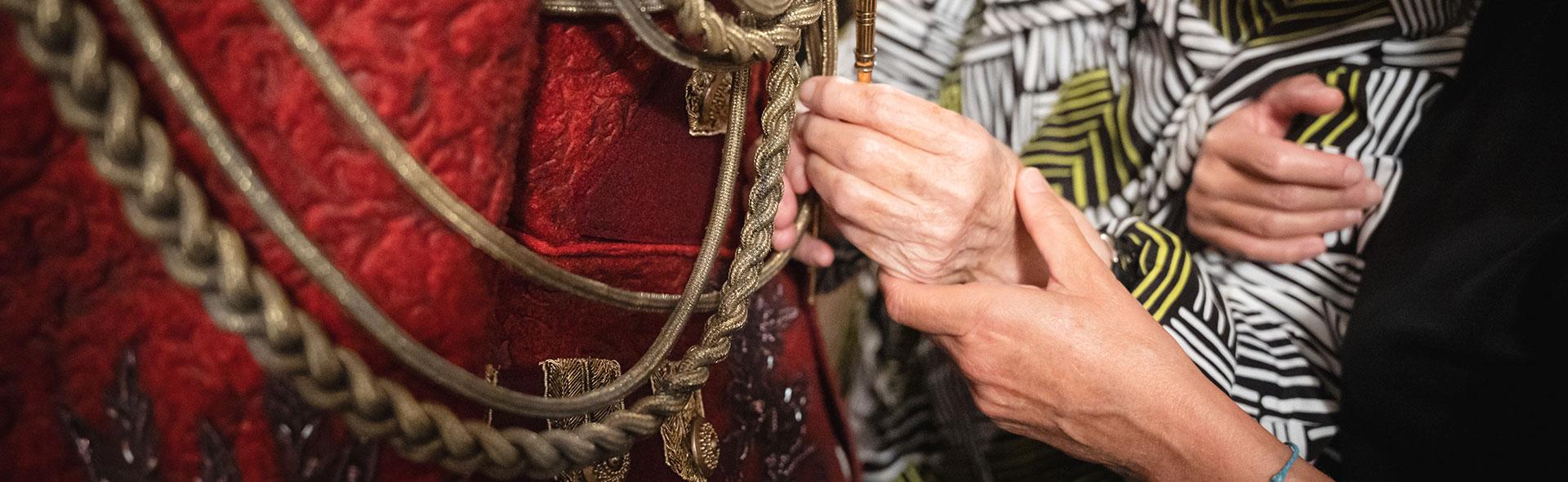
Dettaglio di due mani che toccano un costume dello spettacolo “Il barone rampante” di Italo Calvino, diretto dal regista Riccardo Frati. Il costume è un’uniforme militare di colore rosso, in stile settecentesco, con cordelline dorate. © Marta Cervone

Proposals for blind and visually impaired audiences


For us, “An Art Theatre for Everyone” also means a theatre that is open, inclusive and accessible to everyone. To this end, we are committed to improving and implementing our products and services through ongoing dialogue with our audiences.
 

A key aspect of this vision is the Piccolo Aperto project, set up with the contribution of the Fondazione di Comunità Milano; a structured process aimed at fostering profound and lasting change.


As part of this constantly evolving project, for the 2025/26 season, we have created a range of proposals that can also be accessed by blind and visually impaired audiences


TOUCH TOUR AND AUDIO DESCRIPTIONS

 Arlecchino servitore di due padroni | Teatro Grassi | Sunday 26 October 2025
 L’analfabeta | Teatro Studio Melato | 23 October–2 November 2025 (audio description only)        
 Sorry, boys | Teatro Studio Melato | Sunday 9 November 2025
 Lo schiaccianoci | Teatro Strehler | Tuesday 9 December 2025 (touch tour only)
 Ritorno a casa | Teatro Grassi | Sunday 15 February 2026       
 Miracolo a Milano | Teatro Strehler | Sunday 15 March 2026
 Orgasmo | Teatro Studio Melato | Thursday 21 May 2026 (audio description only)
 Flusso | Teatro Grassi | Thursday 28 May 2026 (audio description only) 

The touch tour is a sensory itinerary led by our operators to explore the stage, the costumes and the props just a few hours before the beginning of the performance. Once the touch tour is over and the spectators are seated in the auditorium, the audio description transmitted via headphones provides an account of the show, including more emotional aspects to allow audience members to imagine and interpret the action on stage.


WEBSITE
The icon at the bottom left on all the pages of our website offers access to a tool that allows a range of simplified content viewing options to be activated and managed, rendering our website as legible as possible.


SPACES
Our spaces offer routes that are free of architectural barriers and are equipped with toilets for disabled people. 
The auditoriums have reserved spaces for spectators with visual, hearing or motor-related disabilities.

With a view to facilitating awareness of spaces for blind and visually impaired spectators, our auditoriums are equipped with tactile maps – plans and key details of the three theatres and the Chiostro Nina Vinchi printed with raised services and accessible by touch. At the top right of each map, two QR codes link to the relative “guides to tactile exploration” (in Italian and English), providing instructions and useful information on how to interpret the map.  


CONTACTS
For information on prices, bookings, specific requests, suggestions and complaints, please write to accessibilita@piccoloteatromilano.it or call +39 02 72333216.


The Piccolo Aperto project is organized with the contribution of


Last updated in December 2025


Expression of relationship | 2025/26 season

Expression of relationship | 2025/26 season


Sometimes [...] I get this strange urge to break the windows, jump out, and run around outdoors until someone gets in my way, someone I'd grab by the arm and shake real hard to wipe the stunned look off their face. I’d make them mine for the night, all mine: to touch (He feels the air with his fingers.), to smell (He sniffs.); someone I could explain everything to: «Don’t worry,» I’d say, «take it easy - all you’ve got in front of you is a person who just needs to hear someone else breathing, someone who just needs to hear another heart beating. I broke all the windows and jumped right out, just so that I could touch somebody. It’s this feeling I get on nights like tonight. I’m just a person who’s too much of a person to stand being locked up all by myself.» 
Bernard-Marie Koltès, Sallinger 

... the physical, worldy in-between along with its interests is overlaid and, as it were, overgrown with an altogether different in-between which consists of deeds and words and owes its origin exclusively to men’s acting and speaking directly to one another. 
Hannah Arendt, Vita activa. The Human Condition

I am not one for museums […] I prefer seeing the city, the people, the shops, the streets, the urban fabric, the colours of the suburbs, the sunrises and sunsets, understanding the humanity, equal and diverse, in the various communities.  
Paolo Grassi, Pittori e musei, in Id., Quarant’anni di palcoscenico
 

DISCOVER THE SHOWS

BROWSE THE SEASON PROGRAMME 

Is it still possible to depict the world of today through theatre? Around seventy years ago, in the same period in which, in Milan, Strehler was preparing to orchestrate, with epic mastery, his refined Threepenny Opera, a very young Peter Szondi, studying the phenomenal vitality of Berlin theatre from his eccentric observatory within the austere halls of the University of Zurich in an attempt to codify the generative (and fatally transformational) language of “modern drama”, identified, through analysis of the relations between individuals, the cornerstone of contemporary theatre. According to the Hungarian scholar, the «bold intellectual effort made by a newly self-conscious being» of the Renaissance «after the collapse of the medieval world view» led to the inescapable declaration of dominion over «interpersonal relationships» as an essential aspect of modern dramaturgy. The conclusions came swiftly: «Man», nowadays, can enter drama «only as a fellow human being»; the sphere of «interpersonal relationships» is an «essential part of his being»; «freedom and obligation, will and decision» are «the most important of his attributes». 

Szondi was right in his thinking; it is within the vibrant and impassioned debate between “you” and “I”, in the determined close combat between “you” and “us”, in the intricate mass of contradicting ties between “him” or “her” and “them” that we must doggedly continue to seek the meaning of contemporary theatre (and perhaps even its future). It is in the fissures that furtively open between interlocutors, between the fault lines that suddenly split debates, and in the suspended silence that slips between the solitude of subjects, that theatre needs to persistently dig, to shed light on the impenetrable “middle ground” in relationships, and on the abyss of fear, desire, affinity, hatred, appetite, curiosity and indifference that drives relations. This impalpable and pulsating “middle ground”, the rich hummus of our inexhaustible need to find “completion” in others, offers fertile soil for our possibility to create community, on all levels and under the most varied of forms, be it as a couple, a family, a group of friends or a city... 
 

Without ever abandoning its constant striving to explore the transformation of contemporary theatrical language in search of future possibilities, the 2025/26 season at the Piccolo Teatro di Milano marks the beginning of a journey towards celebrating its eightieth anniversary, examining the ties between the theatre and the city that formed the very basis of the founding project launched by Strehler and Grassi, beginning with a study of the most authentic and profound etymons of this fundamental bond: relationship. 
 

Following the thread of an attentive analysis of contemporary dramaturgy, the productions by the Piccolo for the coming season offer a rich catalogue of the many “expressions of relationship” that present, through incisive “portraits”, a shifting reportage of our present made up of intimate cuts into the flesh of our inmost passions and desires, as well as sweeping panoramas that blow open the deafening labyrinth of passages that wind through our cities; of more or less composed “portraits of a family at home” and of slightly faded snapshots that foster old friendships, and of fascinating glimpses of history and bold visions of “times to come”, reminding us that «the end is» always «in the beginning and yet you go on»...

And there is more: hilarious pictures that tell an improvised tale of theatre’s funambulatory play on identity; laconic sketches that draw on language to freeze a complex embrace in silence; dizzying montages that express the polyphony of eras and cultures; violent slashes to understand the wounds within memory and imagine the contours of crumbling recollections, and lastly, darkness that fatally engulfs all annihilation of diversity. “Never come between a husband and wife”, the saying goes...

And so, perhaps, in a civil dialogue between us – in the “Calvino-esque” manner of Kublai Khan and Marco Polo –, sailing from show to show, between the Scylla and Charybdis of Babylon and Utopia, beyond the mythical archipelagos of the floating isles that lie on the horizon of our future, in a deluge of “with” and “close” and “against” and “adverse” and “to” and “between” or “among”, an elegant carousel of “expressions of relationship” leads us to reach (or build?) the ideal city: For these ports, I could not draw a route on the map or set a date for the landing. At times all I need is a brief glimpse, an opening in the midst of an incongruous landscape, a glint of lights in the fog, the dialogue of two passersby meeting in the crowd, and I think that, setting out from there, I will put together, piece by piece, the perfect city, made of fragments mixed with the rest, of instants separated by intervals, of signals one sends out, not knowing who receives them. If I tell you that the city toward which my journey tends is discontinuous in space and time, now scattered, now more condensed, you must not believe the search for it can stop. Perhaps while we speak, it is rising, scattered, within the confines of your empire; you can hunt for it, but only in the way I have said...

Claudio Longhi
Artistic Director Piccolo Teatro di Milano – Teatro d’Europa



Who, today, are the “all” of which the founding motto of the Piccolo “Teatro d’arte per tutti” speaks, and in whose service we work, day after day? This is the question that Claudio Longhi and I have been asking ourselves since we began working towards our common goal. In a context of increasingly international horizons marked, periodically, by conflict, uncertainty and fragility, we are called on to stand strong in the face of fear and care for our community. Our aim is to work and exist in the present, in a responsible manner and with the belief that theatre and art make us better people. 
 

Indeed, since the very beginning, theatre has always been a place for and an expression of the community, somewhere in which it can present itself in its many forms, in the irreducible wealth of its differences and its nuances. It is this extraordinary variety, like the strands of a web, that the Piccolo aims to examine, and to which it seeks to guarantee full and unlimited access. Our theatrical community is a cross section of the city in which we live, and we believe that it should represent all citizens, Milanese or not.
 

Together with all those who work for the Piccolo, with their daily efforts, their professionalism and their responsibility, we first and foremost wish to address the children who have their first experiences of theatre thanks to educational programmes, and the young people from all walks of life, cultures and social backgrounds, to ensure that they all feel part of the Theatre of the city of Milan, and that, with us, they can explore the beauty, the wonder and the excitement of theatrical expression. This is one of the reasons that lies behind the launch of our new project, Piccolo <35, which combines opportunities for encounter and sharing with in-depth studies of the classics of theatre and explorations, together, of the new contemporary scene. Particular attention will also be dedicated to other segments of the public, through specific proposals. 

Activities related to Oltre la scena and Agorà della Cultura continue, and we also have the new Piccolo Aperto project, the goal of which is to promote practical accessibility and an all-round theatrical experience, with services aimed at removing all forms of barrier, be they cultural, architectural, sensory, cognitive or economic. 
Our city is now home to a population of which more than 20% is foreign; a “potential” audience that still rarely ventures to our theatres. “International Milanese” of wide-ranging origin and profession, as well as a multitude of young university students studying finance, fashion and design. These are joined by the increasingly numerous tourists who come, either for just a few days or longer, to explore the city. We are now working, also with the use of surtitles for weekend performances of productions and collaborations, to welcome them with new shows. 

With a view discovering, together, who the new “all” are, Autumn 2025 will see the launch of a convention together with other cultural and theatrical organisations entitled Interesse pubblico (Public interest), which forms part of the New audiences project. The support of the Founding Partners and institutional partners of the Piccolo is an essential factor for the sustainability of artistic activities and events for the public; in addition to these figures, a precious element is, now more than ever, the involvement of the Milanese, Italian and international business world that, ever since the founding of the Piccolo, has sustained the Piccolo, forming a beneficial treaty in the post-war period that contributed to the cultural rebirth of our city, and that now, through its constant and enthusiastic support, provides a powerful stimulus for innovation, including within the theatrical world. 

The Piccolo creates networks: this is its most authentic characteristic. It does so in the etymological sense, drawing on the creative power of relationships. A net is, by definition, an interweaving of threads of various material, knotted and woven together. It has always sought connections with a broad range of institutions with the common goal of cultural programming, such as the Triennale, Grande Brera and Teatro alla Scala. It also forms networks with Fashion and Design, voices that create material culture and art. One new horizon in this network, for the coming season, is Milano Cortina 2026, which will see the participation of the Piccolo as the first Italian theatre with a programme dedicated to the Cultural Olympiad, the constellation of initiatives organised around the sports event that echo its significance. 
 

This is the vision and commitment of us, here at the Piccolo, where we have learned to create a form of theatre that is, both in idea and practice, for all, for the entire community: a community for which it is the theatre’s duty to care, just as the theatre is a shared asset that the community has the duty to nurture. Both through reciprocal openness, responsibility and kindness. 
 

Lanfranco Li Cauli
CEO – Chief Executive Officer Piccolo Teatro di Milano – Teatro d’Europa