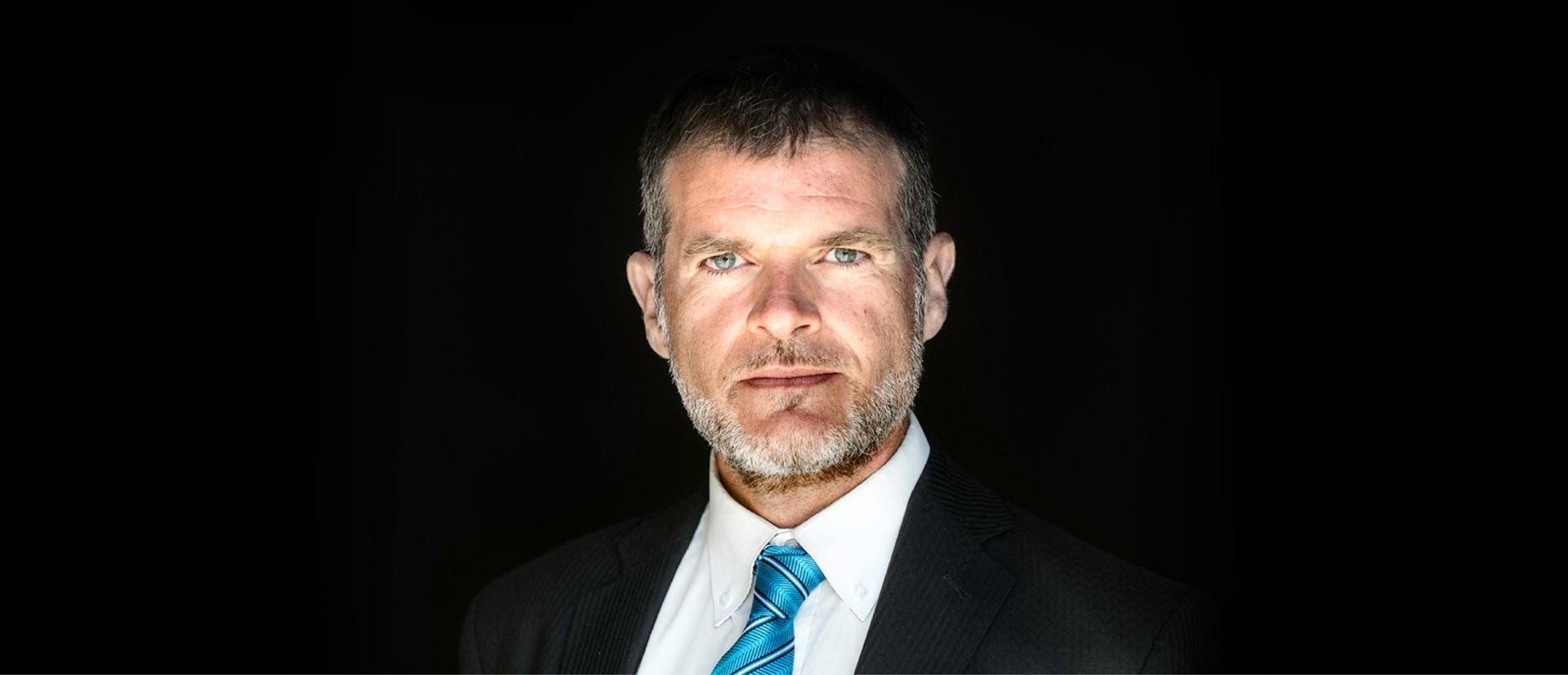
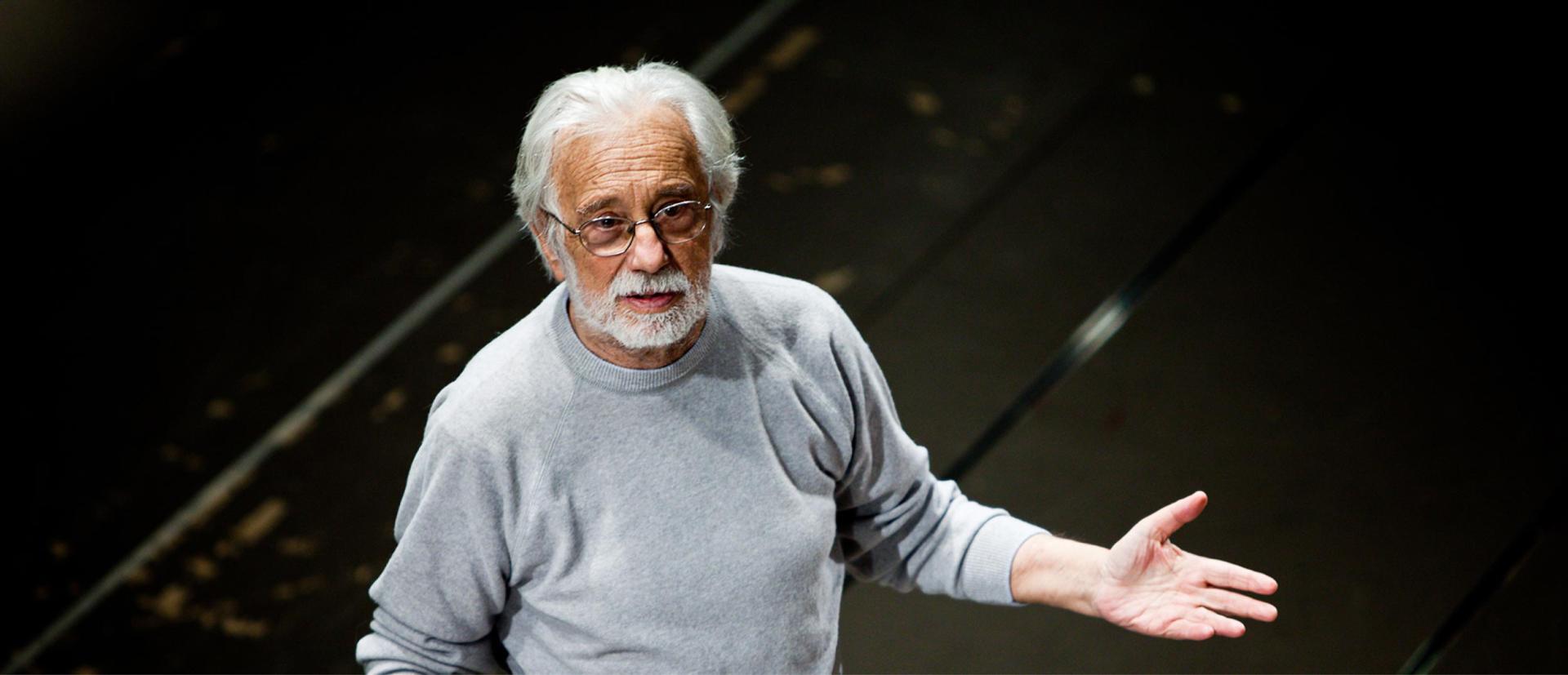
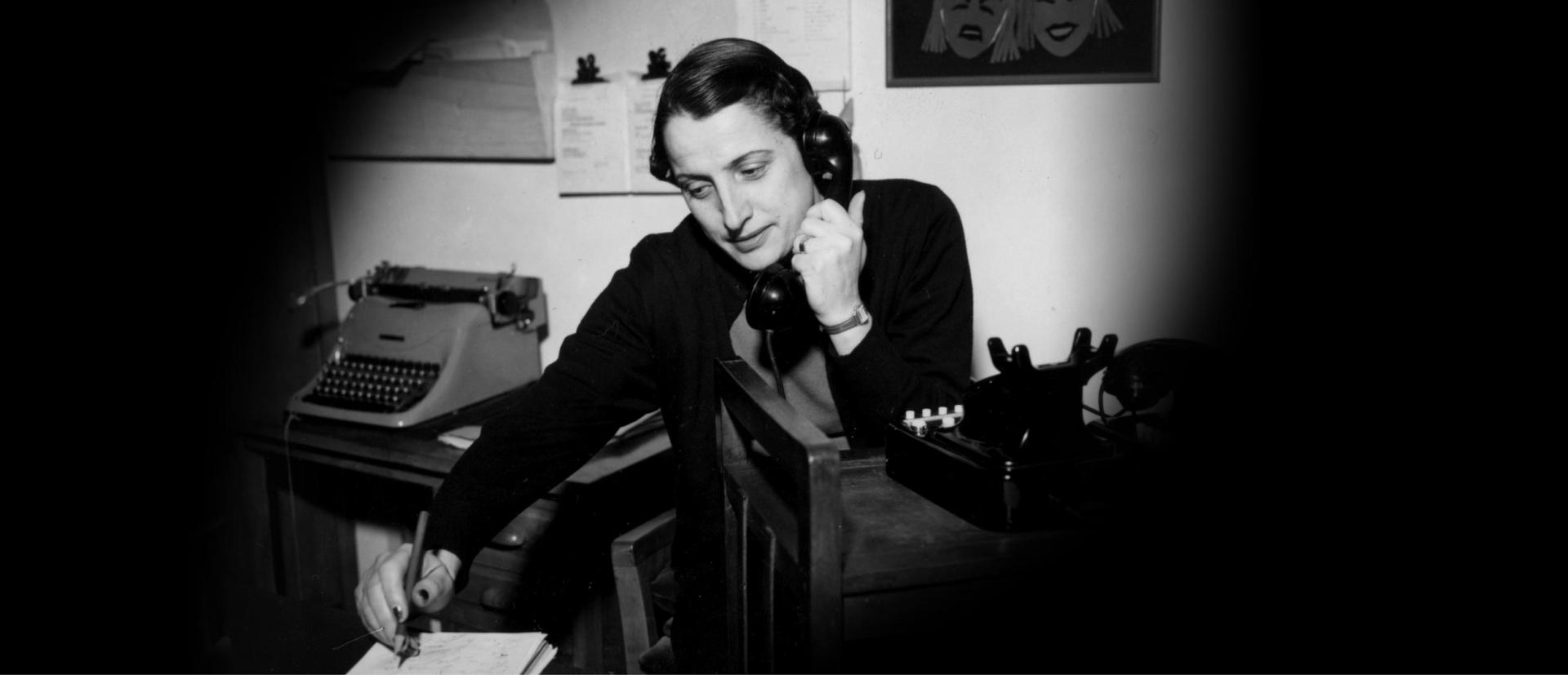
Stormi. Traiettorie sugli Artisti Associati

Stormi. Traiettorie sugli Artisti Associati

“Stormi. Traiettorie sugli Artisti Associati” è il magazine mensile curato dalla redazione di Stratagemmi – Prospettive Teatrali e realizzato da un gruppo di studenti e studentesse dell’Università degli Studi di Milano per raccontare percorsi, poetiche e pratiche degli Artisti Associati del Piccolo. 


Nel primo numero la sezione “Ritratti” è dedicata al collettivo Sotterraneo – di recente protagonista di una personale al Teatro Grassi con Shakespearology, Overload e L’Angelo della Storia – e a Federica Rosellini, che lo scorso ottobre ha impersonato l’Amleto di Antonio Latella allo Studio Melato. 

sCARICA IL 1° NUMERO

In conconcomitanza con lo spettacolo HEDDA. GABLER. come una pistola carica in scena al Teatro Studio Melato lo scorso dicembre, il secondo numero del magazine si concentra sul teatro di Liv Ferracchiati, le cui ultime creazioni prendono le mosse da Čechov e da Ibsen. È l’occasione per esplorare modalità e pratiche con cui tradurre, adattare, riscrivere – e infine tradire – un testo: sia esso un classico della drammaturgia o un celebre dipinto. Attraverso interviste, recensioni e approfondimenti, il numero indaga il ruolo di traduttori e dramaturg nella fucina creativa del palcoscenico.

sCARICA IL 2° NUMERO

Sono strade e piazze, linee del tram e architetture civili, i protagonisti di Città sola, la performance urbana creata da lacasadargilla: a partire da questa atipica esperienza spettatoriale, il terzo numero di “Stormi” indaga l’arte scenica della compagnia, punto di partenza per un’esplorazione dei legami, antichi e sempre nuovi, tra teatro e città. 
 

sCARICA IL 3° NUMERO


Francese di origini vietnamite l’una, brasiliana l’altra, Caroline Guiela Nguyen e Christiane Jatahy affrontano da sempre nelle loro opere l’ibridazione e il meticciarsi delle identità, delle lingue, delle biografie nelle società postcoloniali. Il quarto numero è dedicato alla galassia artistica e concettuale espressa da queste stesse società, in un costante processo di ridefinizione e rinegoziazione del passato. 

sCARICA IL 4° NUMERO
 

La curiosità verso gli altri è l’elemento che sembra accomunare i due Artisti Associati cui è dedicato il quinto numero della rivista: Pier Lorenzo Pisano e Marcus Lindeen. Con Carbonio, il primo mette al centro della propria scrittura l’alieno, l’icona che più di ogni altra ha saputo raccontare l’incontro con l’ignoto e il perturbante. In territori non meno coraggiosi si è spinto lo svedese Marcus Lindeen con la sua Trilogia delle identità, mettendo in luce quanto l’idea stessa che abbiamo del nostro “io” non sia altro che un’illusione o una sovrastruttura culturale.

SCARICA il 5° NUMERO

Gli splendori e le miserie del mestiere d’attore, la concitazione delle prove, la vita di una compagnia, oppure la genesi creativa: il teatro mette in scena sé stesso, con costruzioni drammaturgiche che dallo spazio ristretto del palco gettano uno sguardo sul mondo e la società contemporanea. Il sesto numero del magazine mette al centro le scritture di Davide Carnevali, in occasione di Ritratto dell’artista da morto, e di Pascal Rambert, il cui spettacolo Prima sarà in scena al Teatro Grassi dal 29 aprile al 28 maggio.

SCARICA il 6° NUMERO


Strumento primario di conoscenza, campo di battaglie politiche e sociali, spazio della memoria e del desiderio, infine arma e mezzo di lotta: il corpo si pone oggi come luogo animato da istanze contraddittorie e territorio d’elezione per indagini artistiche, filosofiche, letterarie. Il settimo numero esplora le poetiche di Marta Cuscunà e Marco D’Agostin, e di chi come loro costruisce sul corpo un archivio di ricordi e sogni, di immaginazioni e futuri possibili.

sCARICA IL 7° NUMERO
 

Ad arricchire i ritratti di ciascun numero, le recensioni delle pagine “Visioni” e gli approfondimenti di “Trame” dedicati alle questioni trasversali sollevate dallo sguardo sugli Artisti Associati, affidati alla voce di registi, docenti e critici. 


IN REDAZIONE
Carola Ambrosioni, Sara Biondi, Nadia Brigandì, Harriet Carnevale, Ivan Colombo, Giulia Facchetti, Anna Farina, Claudio Francesco Favazza, Elisabetta Forlani, Marta Fossati, Francesca Lepiane (organizzazione), Andrea Malosio, Noemi Mangialardi, Giacomo Matelloni, Mariachiara Merola, Federica My, Mariagrazia Olivieri, Leonardo Ravioli, Francesca Redaelli, Francesca Rigato, Alessandro Stracuzzi, Alice Strazzi, Elena Vismara, Alessia Vitalone

ILLUSTRAZIONI
Giuditta D’Annibale (copertina), Anna Corradi (Earthbound), Claudia Fiorelli (BEST REGARDS) – studenti IED Milano
Coordinamento Arianna Vairo

FORMAZIONE E EDITING
Maddalena Giovannelli, Alessandro Iachino, Camilla Lietti, Francesca Serrazanetti

IMPAGINAZIONE
Camilla Lietti

GRAFICA
Leftloft


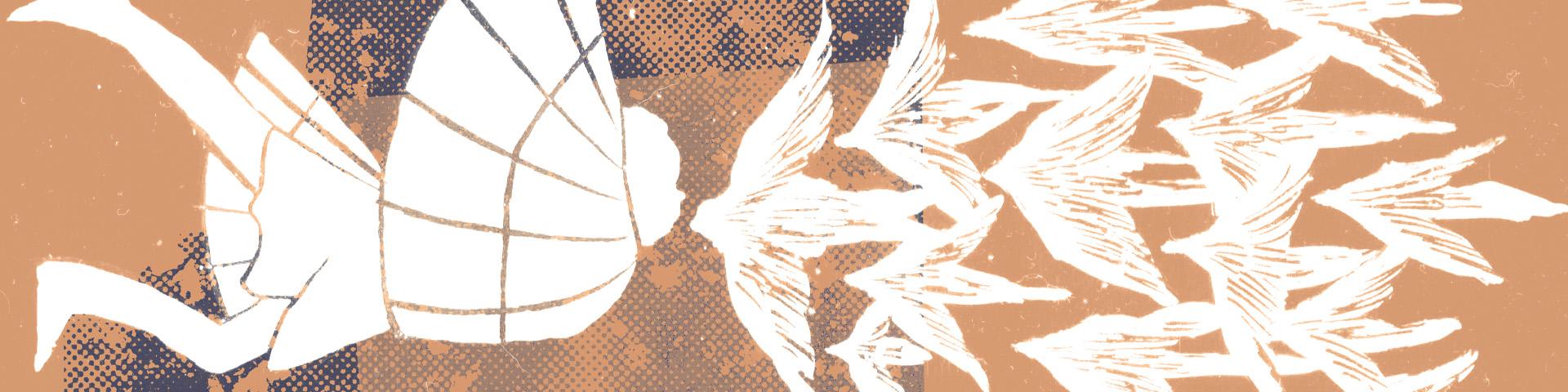
Illustrazione dalla copertina del settimo numero di Giuditta D'Annibale, studentessa IED, con il coordinamento di Arianna Vairo

Associate artists

Associate artists


Starting with the 2021/22 season, we began a dialogue with fifteen artists, both Italian and international, moving toward a new idea of theatre: a shared and ongoing approach that goes beyond the mere production of performances, fostering processes of exchange, creation, and collaboration.
 

A creative, dynamic, and multifaceted community that makes the Piccolo a “home” for artists, following the vision of our founders Giorgio Strehler, Paolo Grassi, and Nina Vinchi.
 

Davide Carnevali

Author, director, and theatre theorist Davide Carnevali – born in Milan in 1981 – earned a PhD in Theatre Theory at the Universitat Autònoma de Barcelona, with a period of study at the Freie Universität Berlin. Among his most well-known works are: Variazioni sul modello di Kraepelin (2009) – awarded at the Theatertreffen Stückemarkt in Berlin, the Riccione per il Teatro Award, and the Prix des Journées de Lyon des Auteurs de Théâtre – Sweet Home Europa (2012), Ritratto di donna araba che guarda il mare (Riccione per il Teatro Award in 2013), Actes obscens en espai públic (2017), and Menelao (2018). He has written and directed, among others, Maleducazione transiberiana (2018), Ein Porträt des Künstlers als Toter (2018), Lorca sogna Shakespeare in una notte di mezza estate (2019). Winner of the Hystrio Prize for Playwriting in 2018, he served as Maestro of the École des Maîtres in 2020/21 and, since 2021, has led the “Authors under 40” workshop at the Venice Biennale. His plays, translated into fifteen languages, have been presented in international seasons and festivals. In Italy, his work is published by Einaudi, il Saggiatore, Sossella, and Fandango Libri; in France, by Actes Sud and Les Solitaires Intempestifs. In the 2022/23 season, he created Ritratto dell’artista da morto, with a Catalan-language staging at the Teatre Lliure in Barcelona and a French-language version currently on tour, co-produced by Le Quai CDN Angers Pays de la Loire, Comédie de Caen – CDN de Normandie, Comédie – CDN de Reims, and Théâtre de Liège. In the 2023/24 season, as part of the Presente Indicativo Festival | Milano Porta Europa, within the European project UNLOCK THE CITY!, he created the site-specific performance Limited Edition in the neighborhoods of Corvetto and Porto di Mare. He has also written and staged several plays for children and youth within the school project Il teatro tiene banco: La favolosa battaglia dei topi e delle rane, Orlando hater e Angelica furiosa and Antigone in cattedra in the 2022/23 season; La meravigliosa avventura di Ciàula nella caverna, Guida pratica per orientarsi nella selva oscura and Sei personaggi in cerca di followers during the 2023/24 season; Viaggio fantastico nel sottosuolo, Quel ladro del Lago di Como and Le smanie per la diplomatura in the 2024/25 season. In the 2025/26 season, he will stage a rewriting of his Variazioni sul modello di Kraepelin.

Marta Cuscunà

Marta Cuscunà is a writer and performer of visual theatre, whose work blends activism with puppet-based dramaturgy. In 2009, she won the Scenario per Ustica Award with È bello vivere liberi!, the first chapter of Resistenze femminili, a trilogy that also includes La semplicità ingannata and Sorry, boys. In Il canto della caduta, she combines the ancestral imagery of the Fanes myth with animatronic principles used to manipulate puppets. Earthbound ovvero le storie delle Camille is inspired by Staying with the Trouble, the eco-feminist essay by Donna Haraway. In 2021, she took part in the RAI 3 television programme La Fabbrica del mondo, by Marco Paolini and Telmo Pievani, for which she wrote and performed a mini-series for mechanical crows, focused on eco-feminist themes. In 2023, that series moved from the screen to the stage as a show co-produced by MUSE - Museo delle Scienze di Trento, titled Corvidae. Sguardi di specie. In 2024, she created Bucolica. Paesaggio con fischiatori, pecore e umani, a site-specific performance produced by Piccolo in collaboration with the Politecnico di Milano for the European project UNLOCK THE CITY!. In 2025, she published her latest book Sguardi di specie. Una trilogia ecofemminista. From 2009 to 2019, she was part of Fies Factory, a project by Centrale Fies. As part of the season 2024/25, she performs in Sorry, boys.

Marco D’Agostin

Born in 1987, Marco D’Agostin is an artist active in the field of dance and performance. He won the 2018 Ubu Award for Best Performer Under 35 and the 2023 Ubu Award for Best Dance Performance (Gli anni). In 2023 he was awarded the 4th Riccione Special Award for dramaturgical innovation, in 2024 the Hystro Award Corpo a Corpo. His works question the functioning of memory and give life to choreographic devices that, starting from personal or collective archives, try to trigger practices of participation and identification with the audience. His dance, a complex geography in which sounds, words and movements continually collide, always tends toward the emotional compromise of the performer and the spectator. He has worked, among others, with Claudia Castellucci, Alessandro Sciarroni, Liz Santoro, Boris Charmatz. Since 2010, he has presented his works at major European festivals and theatres (including Théâtre de la Ville, Parigi; The Place Theatre, Londra; Kampnagel, Amburgo; Santarcangelo; Romaeuropa; VIE; Torinodanza) and internationally (including ESC Pompeia, San Paolo; Festival de Danza Contemporanea, Buenos Aires; GAM, Santiago de Chile). Among his most renowned works are Everything is OK (2015, winner of the second prize at the French choreographic competition (Re)connaissance), First Love, Avalanche (2018), Best Regards (2021, presented at Piccolo Teatro during the Festival Presente Indicativo: per Giorgio Strehler), SAGA (created with the support of the Hermès Foundation), and Gli anni (2022, with Marta Ciappina). In addition to these titles, in the 2023/24 season, in collaboration with Chiara Bersani, he created Jérôme Bel, a reinterpretation of the “dance-biographical” piece by the French artist of the same name, and again with Chiara Bersani, Hanging Rock, part of Paesaggi condivisi, a series of seven micro-dramaturgies within the framework of the European project Performing Landscapes. In 2024, as part of the series co-published by Piccolo and Il Saggiatore, Anni, lettere e valanghe was released – a volume on the dramaturgies he has created for dance, written with Alessandro Iachino. Marco D’Agostin was one of the protagonists of the season I fili dell’orizzonte, with Gli anni and Asteroide. In the 2025/26 season, he returns to Teatro Studio Melato with First Love.

Daria Deflorian

Daria Deflorian is an actress, writer, and director. As an actress, she has worked with, among others, Nanni Moretti, Stephane Braunschweig, Massimiliano Civica, Lotte Van Den Berg, Lucia Calamaro, Fabrizio Arcuri, Mario Martone, Martha Clarke, Remondi e Caporossi, Fabrizio Crisafulli, Marcello Sambati. She won the Ubu Award for Best Actress in 2012, and in 2013 she was awarded the Hystrio Prize. From 2008 to 2021, she collaborated with Antonio Tagliarini. Their productions, which toured across Italy and Europe, received several awards: the Ubu Award for Best Play in 2014, Best Foreign Show in Canada in 2015, the Riccione Award for playwriting in 2019, and the Hystrio Prize for playwriting in 2021. In 2020, Deflorian and Tagliarini staged Édouard Louis’ text Chi ha ucciso mio padre (Bompiani, 2019), which in 2021 earned Francesco Alberici the Ubu Award for Best Actor Under 35. Their plays have been published by Titivillus, Cue Press e Sossella editore. In 2020, she collaborated with visual artist Adrian Paci, writing the text for his video work Vedo rosso. With the Oceano Indiano group of Teatro di Roma, she co-founded Radio India during the pandemic, which won the 2021 Ubu Award as Special project. In 2022, she wrote and directed the final-year production for the students of the international theatre school La Manufacture: En finir, from “Changer Method” by Edouard Louis. In 2023, she created Elogio della vita a rovescio, the first stage of a two-year project that culminated in 2024 with the premiere of La vegetariana, scenes from the novel by Han Kang, Nobel Prize for Literature 2024. Since 2021, she has been the artistic co-director of INDEX, alongside the theatre company Muta Imago. She was an associate artist at Triennale Milano from 2022 to 2024. In our 2025/26 season, she will be featured in a retrospective including the works Memoria di ragazza, La vegetariana, Chi ha ucciso mio padre, and Elogio della vita a rovescio.

Anne Teresa De Keersmaeker

After studying dance at the Mudra School in Brussels and at the Tisch School of the Arts in New York, in 1980 Anne Teresa De Keersmaeker (born in 1960) created Asch, her first choreographic work. Two years later came the premiere of Fase, Four Movements to the Music of Steve Reich. In 1983, De Keersmaeker founded the dance company Rosas in Brussels while creating the piece Rosas danst Rosas. Beginning with these groundbreaking works, her choreography has been rooted in a rigorous and prolific exploration of the relationship between dance and music. With Rosas, she has developed a vast repertoire in dialogue with musical structures and scores from various eras, from early music to contemporary and popular music. Her choreographic practice also draws on formal principles from geometry, numerical patterns, the natural world, and social structures, offering a unique perspective on the articulation of the body in space and time. In 1995, De Keersmaeker founded the school P.A.R.T.S. (Performing Arts Research and Training Studios) in Brussels. Over the past ten years, her work has also engaged with the visual arts, presented in museum contexts such as the Louvre, Tate Modern, and MoMA. In 2023, she created EXIT ABOVE with a cast of 13 dancers, and in 2024 IL CIMENTO, an exploration of Antonio Vivaldi’s Le quattro stagioni. Her most recent creation, BREL (2025), is a collaboration with dancer and choreographer Solal Mariotte.

Davide Enia

Playwright, actor, director, and novelist, Davide Enia was born in Palermo in 1974. In 2002, he wrote, directed, and performed Italia-Brasile 3 a 2, which won the 2003 Special Ubu Award, followed by Scanna, which won the Riccione/Tondelli Award in 2003. In 2004, he created maggio ’43, once again as both author and performer, earning the Hystrio Prize and the E.T.I. Prize in 2005 as Best Author of New Dramatic Work for his overall body of work, and in 2019, the Le Maschere del Teatro Italiano Prize as Best Performer in a Monologue. In 2006, he was awarded the Vittorio Mezzogiorno and Gassmann Prizes as Best Emerging Talent. In 2012, he published his first novel, Così in terra (Baldini & Castoldi Dalai), which was translated and published worldwide; the French edition, Sur cette terre comme au ciel (Albin Michel), won the Prix du premier roman étranger and the Prix Brignoles for Best Foreign Novel of the Year in 2016. Così in terra was republished in 2023 by Sellerio. In 2017, he directed L’oca del Cairo, an unfinished opera by Mozart, at the Teatro Massimo in Palermo. That same year, he published his second novel, Appunti per un naufragio (Sellerio, 2017), also released in France, USA, Germany, Spain, Greece, and Portugal. The novel won the International Mondello Literary Prize, the Super Mondello, and the Mondello Giovani in 2018. From this novel came the stage play L’abisso (2018), which received the Hystrio Twister Prize for Best Show of the Year, the Le Maschere del Teatro Prize for Best Performer in a Monologue, and won the Ubu Award for Best New Italian Play or Dramatic Writing. He featured in our 2022/23 season with the production Eleusi, a 24-hour collective theatrical ritual involving more than 30 choirs and 21 performers, and with Italia-Brasile 3 a 2. Il ritorno, a restaging of his earlier play created to mark the 40th anniversary of the historic football match. In the 2024/25 season, he returns to the stage with the co-production Autoritratto, which premiered at the Spoleto Festival dei Due Mondi in June 2024. The text is published by Sellerio (Palermo, 2025).

FC Bergman

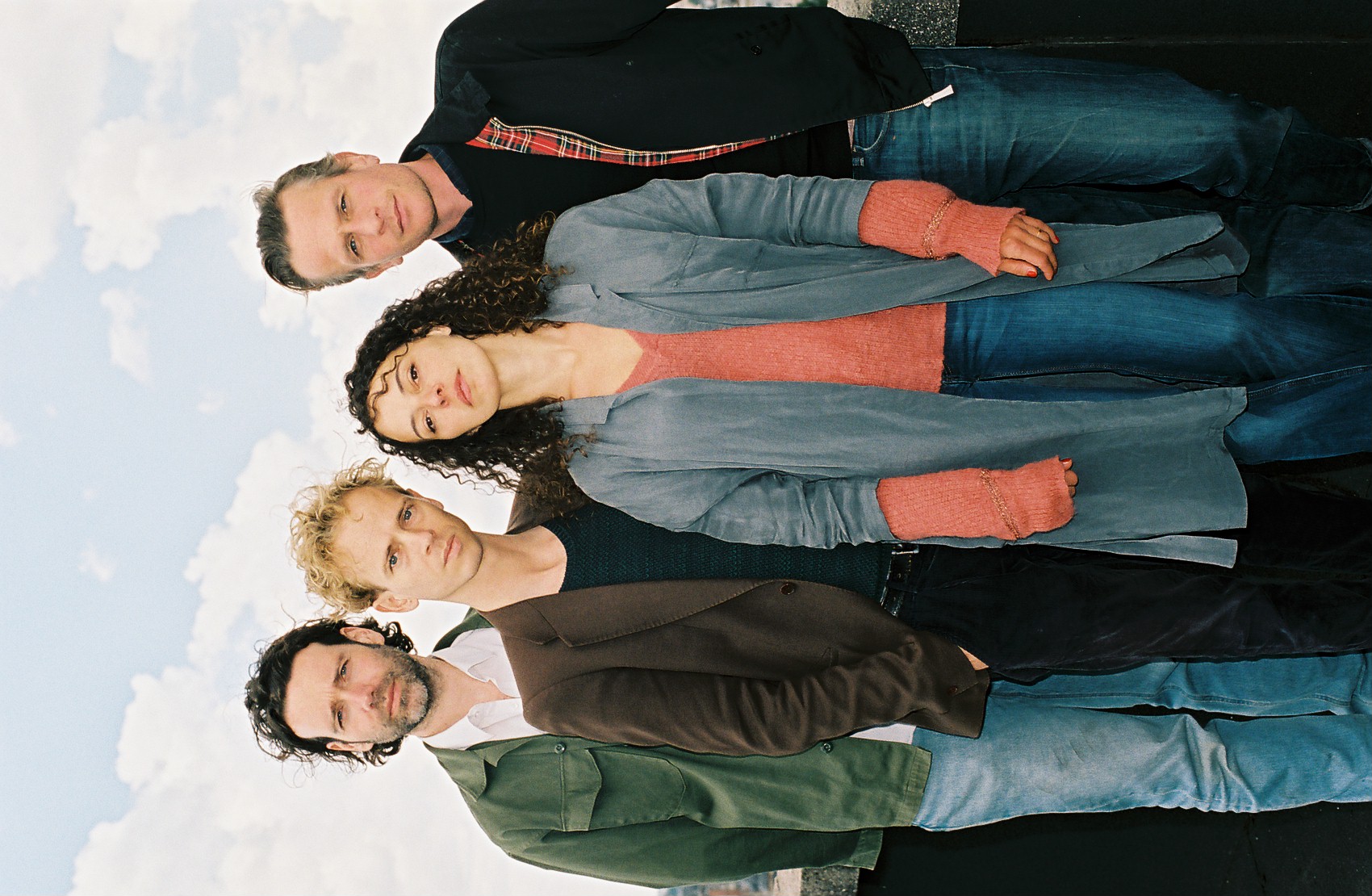
Four artists make up the FC Bergman theatre collective: Stef Aerts, Joé Agemans, Thomas Verstraeten and Marie Vinck. With their sensational site-specific productions, they made a splash the moment the company was founded back in 2008. In 2013 FC Bergman came under the wing of Toneelhuis. In May 2022 FC Bergman assumed the artistic direction of Toneelhuis, together with Olympique Dramatique, Lisaboa Houbrechts, Gorges Ocloo and Benjamin Abel Meirhaeghe. The thread running through FC Bergman’s work is the tragedy of the little guy struggling to branch out and broaden his horizons. This is often reflected in enormous stage sets and installations to which the actors endeavour to measure up. The scenography is the “beast that has to be tamed”, the show a composition of images. FC Bergman has played the past 17 years in Belgium, the Netherlands, France, Austria Switzerland, Greece, Spain, Italy, England, Poland, USA, Luxembourg, Norway, Scotland, Russia, Taiwan and Australia. The company was a guest at the 2016 Avignon festival with The Land of Nod. In 2021, FC Bergman was there for the second time, this time with the performance The Sheep Song. In 2022, the company made it to The New York Times' prestigious “Best Of” list with 300 el x 50 el x 30 el. In 2023, FC Bergman was a guest at the Venice Biennale with The Land of Nod. There, the company won the prestigious Leone d’Argento for Theatre. It is a crowning achievement for their entire oeuvre: poetic yet at the same time irreverent theatre, which arouses a feeling of disconcerting apprehension in the viewer. FC Bergman was present in our 2024/25 season with the international co-production Works and Days.

Niccolò Fettarappa

Niccolò Fettarappa (Rome, 1996) is a writer, actor, and director. He graduated in Philosophy in Bologna. He made his theatrical debut with Apocalisse Tascabile, which he wrote, directed, and performed. The play won several prestigious awards, including In-box 2021, the Critics' Award at the Nolo Fringe Festival, the United Juries Award at Direction Under 30, the Premio Italia dei Visionari, and earned him a nomination for the Rete Critica Award 2022. With Apocalisse Tascabile, he began a tour that took him all over Italy, receiving enthusiastic acclaim from both audiences and critics. Since 2021, he has held annual workshops on playwriting and staging at Carrozzerie N.o.t. In 2025, he leads the workshop “Caro Nemico, ti scrivo” for the advanced training course at Teatro di Roma. In 2022, he was featured in the FUTUROpresente series on Radio 3, curated by Antonio Audino and Laura Palmieri, with his text Nel mio bagno di sangue. La Sparanoia. Atto unico senza feriti gravi purtroppo is his second theatrical work, which he wrote and performs in, produced by Agidi and Sardegna Teatro. Together with Lorenzo Maragoni, he wrote and performed Solo Quando Lavoro Sono Felice, produced by Corte Ospitale, with which he won a Special Mention at the Forever Young Award 2022. In 2023, he was a finalist for the Riccione Award “Pier Vittorio Tondelli” with Orgasmo. Prosa dispiaciuta sulla fine del sesso, presented as part of REF–Situazione Drammatica 2024. His plays have been published by Ronzani Editore. In 2024, he wrote and directed Uno Spettacolo Italiano with Nicola Borghesi, produced by ERT, Agidi, and Sardegna Teatro. In 2025, as part of the Wordbox series at Teatro Stabile di Bolzano, he presents Il Perdente. Commedia con disprezzo, and, again with Lorenzo Maragoni, he writes Showpero. Manifesto Selvaggio Contro Il Talento, presented at the Salone del Libro in Turin in 2025 and published by TLON. In the 2025/26 season, he is on stage with Orgasmo. Prosa dispiaciuta sulla fine del sesso

Lino Guanciale

Born in 1979 in Avezzano, Lino Guanciale was selected for the Accademia Nazionale d’Arte Drammatica “Silvio d’Amico”, where he graduated in 2003, also receiving the Gassman Prize as the Best Student of the Last Ten Years. Immediately after, in theatre, he began working with directors such as Gigi Proietti (Romeo e Giulietta, the inaugural performance of Rome’s Globe Theatre), Franco Branciaroli (La peste, Cos’è l’amore, Lo zio – Der Onkel), Luca Ronconi (Atti di guerra), Walter Le Moli (Gli incostanti, Antigone), Massimo Popolizio (Ploutos o della ricchezza, Ragazzi di vita), Giampiero Solari (After Miss Julie), and Michele Placido, who directed him on stage in Fontamara and later in the film Vallanzasca – Gli angeli del male. Particularly significant is his long-standing collaboration with Claudio Longhi (La folle giornata o Il matrimonio di Figaro, Nella solitudine dei campi di cotone, Sallinger, Prendi un piccolo fatto vero, La resistibile ascesa di Arturo Ui, awarded the ANCT Award for Show of the Year, Il ratto d’Europa, winner of the Special Ubu Award, Istruzioni per non morire in pace, La classe operaia va in paradiso, for which he won both the Ubu and the ANCT Awards as Best Actor, Ho paura torero, Longhi’s first direction at the Piccolo after becoming its director). In recent seasons, he has brought to the stage Non svegliate lo spettatore, a tribute to the life and works of Ennio Flaiano, Dialoghi di profughi by Bertolt Brecht, Zoo by Sergio Blanco, L’uomo più crudele del mondo by Davide Sacco, and made his directorial debut with Nozze by Elias Canetti, followed by Europeana by Patrik Ourednik. Since 2005, he has also worked in education and scientific-theatrical teaching in high schools and universities (he is a member of the teaching staff at IUAV in Venice). He made his film debut in 2008, playing Mozart in Io, Don Giovanni by Carlos Saura, followed by La prima linea by Renato De Maria, Vallanzasca, Il gioiellino by Andrea Molaioli, Il mio domani by Marina Spada, To Rome with Love by Woody Allen, La scoperta dell’alba by Susanna Nicchiarelli, Happy Days Motel by Francesca Staasch, Il volto di un’altra by Pappi Corsicato, L’estate sta finendo by Stefano Tummolini, Maraviglioso Boccaccio by Paolo and Vittorio Taviani, I peggiori by Vincenzo Alfieri, La casa di famiglia by Augusto Fornari, and Arrivano i prof by Ivan Silvestrini. On television, he has acted in the series Il segreto dell’acqua and Una grande famiglia, and was the lead in several highly successful RAI productions: Che Dio ci aiuti 2 and 3, La dama velata, Non dirlo al mio capo, La porta rossa, L’allieva, Il commissario Ricciardi, Noi, Il conte di Montecristo, and the Sky series Un’estate fa. In 2015, he won the Flaiano Award as Breakthrough Performer of the Italian Entertainment Scene. In 2024, he was nominated for the Ubu Award as Best Leading Actor for Ho paura torero, which sold out at Teatro Grassi in both the 2023/24 and 2024/25 seasons. For the 2025/26 season, he is featured in our new production Miracolo a Milano.

Caroline Guiela Nguyen

Caroline Guiela Nguyen, director and filmmaker. Together with her long-term company, Les Hommes Approximatifs, project after project, she has created an aesthetic and a study of new forms that leave a permanent mark. Since 2013, her work has been toured throughout France and the world. Since 2023, she has been the director of the Théâtre national de Strasbourg (TnS), and of the School of Theatrical Arts. The artistic and pedagogical project that she has created maintains that the space should be used to bring together daily and guest activities and be committed to a constant reflection on the relationship between the local population and the works presented. In January 2023, she presented FRATERNITÉ, conte fantastique and during the season 2024/25 I fili dell’orizzonte she presented LACRIMA.

lacasadargilla

lacasadargilla is an ensemble. Composed of Lisa Ferlazzo Natoli – writer and director –, Alessandro Ferroni – director and sound designer –, Alice Palazzi – actress and project coordinator – and Maddalena Parise – researcher and visual artist –, it works on theatre productions, installations, radio projects, special formats, and curatorial ventures. The group gathers around it a fluid network of actors, musicians, playwrights, and visual artists. lacasadargilla bases its work on original writing, literary rewritings, and contemporary texts. Among its theatre productions: La casa d’argilla, Il libro delle domande, Foto di gruppo in un interno, Jakob von Gunten from Robert Walser, and Lear by Edward Bond. Among its special projects: IF/Invasioni (dal) Futuro, Art You Lost? 1000 persone per un’opera d’arte. Among its melologues for words, music and images: Les Adieux! Parole salvate dalle fiamme and Storia della tua vita. Arrival from Ted Chiang. In 2019, the play When the Rain Stops Falling by Andrew Bovell won three Ubu Awards. In 2021, they staged Heart's Desire by Caryl Churchill. In 2022, Il Ministero della Solitudine premiered at VIE Festival and won the Ubu Award for Best Direction. In February 2023, lacasadargilla premiered at the Piccolo with Anatomia di un suicidio by Alice Birch – a work never staged in Italy – which went on to win five Ubu Awards and was part of the 2024/25 season as well. Also from 2023 is the modular project Città sola by Olivia Laing. In 2024, they premiered the new piece Uccellini by Rosalinda Conti and the site-specific theatre/multimedia project Beautiful Creatures. Storie di lupi, di lantanidi e ginestre. Since 2021, lacasadargilla has been a partner in the European projects STAGES (Sustainable Theatre Alliance for a Green Environmental Shift) and PLAYGROUND / Creative Europe (2024–2026). For our theatre, in March 2022, they also staged A Play for the Living in a Time of Extinction by Miranda Rose Hall. lacasadargilla is featured in Complemento di relazione with the new co-production Escaped Alone.

Parini Secondo

Parini Secondo was founded in 2017 by dancers Sissj Bassani, Martina Piazzi, Camilla Neri and Francesca Pizzagalli. Questioning the relationship between art and originality, the group uses choreography to sublimate pop tendencies, embracing a strong formal rigour. The well-established collaboration with musician, producer and teacher Alberto Ricca/Bienoise denotes their transversal approach to dance, understood as rhythmic movement in close relationship with music. After completing individual training at academies and companies in Italy, Portugal, and Denmark, Parini Secondo settled in Emilia-Romagna, between Bologna and Cesena. Their debut in the Italian performing arts scene took place in 2022 with the iconic SPEEED (2020), which was selected for Vetrina della Giovane Danza d'Autore. The international scene is reached with HIT OUT (2024), BolzanoDanza/TanzBozen and Santarcangelo Festival co-production, selected for CINARS 2024 (Montreal) and touring Japan, America, Taiwan and Europe. In 2025, Parini Secondo joins Associazione Culturale VAN and becomes an associate artist of the Piccolo (2025-2027). Two projects are scheduled to debut in 2026: a new production inspired by trance music, selected for NID Platform 2025, and SLOOOOOOW, an extended reinterpretation of SPEEED, selected for the DanceBase/Yokohama (JP) residency programme, in collaboration with Rino Daidoji. In 2024 Parini creates the festival Tra questa gente esiste un sentimento within the season of Teatro Petrella in Longiano (IT); in 2025 they curate part of the programming of IMBOSCO within the 54th edition of Santarcangelo Festival.

Tiago Rodrigues

Artistic Director of the Festival d’Avignon since September 2022, Tiago Rodrigues is an actor, director, playwright, producer, and co-founder, together with Magda Bizarro, of the company Mundo Perfeito (2003). Among his most important works, which have received numerous awards in Portugal – where he was Artistic Director of the Teatro Nacional D. Maria II in Lisbon from 2015 to 2021 – and internationally, are By Heart (2013), António e Cléopatra (2014), Bovary (2014), and Sopro (2017). His more recent works include Catarina e a beleza de matar fascistas (2020), La Cerisaie (Festival d’Avignon, 2021), Chœur des Amants (2021), and Dans la mesure de l’impossible (2022), created for the Comédie de Genève in co-production with the Piccolo, and presented during the first edition of the Festival Presente indicativo. The volume Teatro, published in collaboration with Il Saggiatore, collects the Italian versions of Catarina e a beleza de matar fascistas, Chœur des Amants, and Dans la mesure de l’impossible. In May 2024, he was one of the featured artists at Festival Presente indicativo | Milano Porta Europa with Entrelinhas.

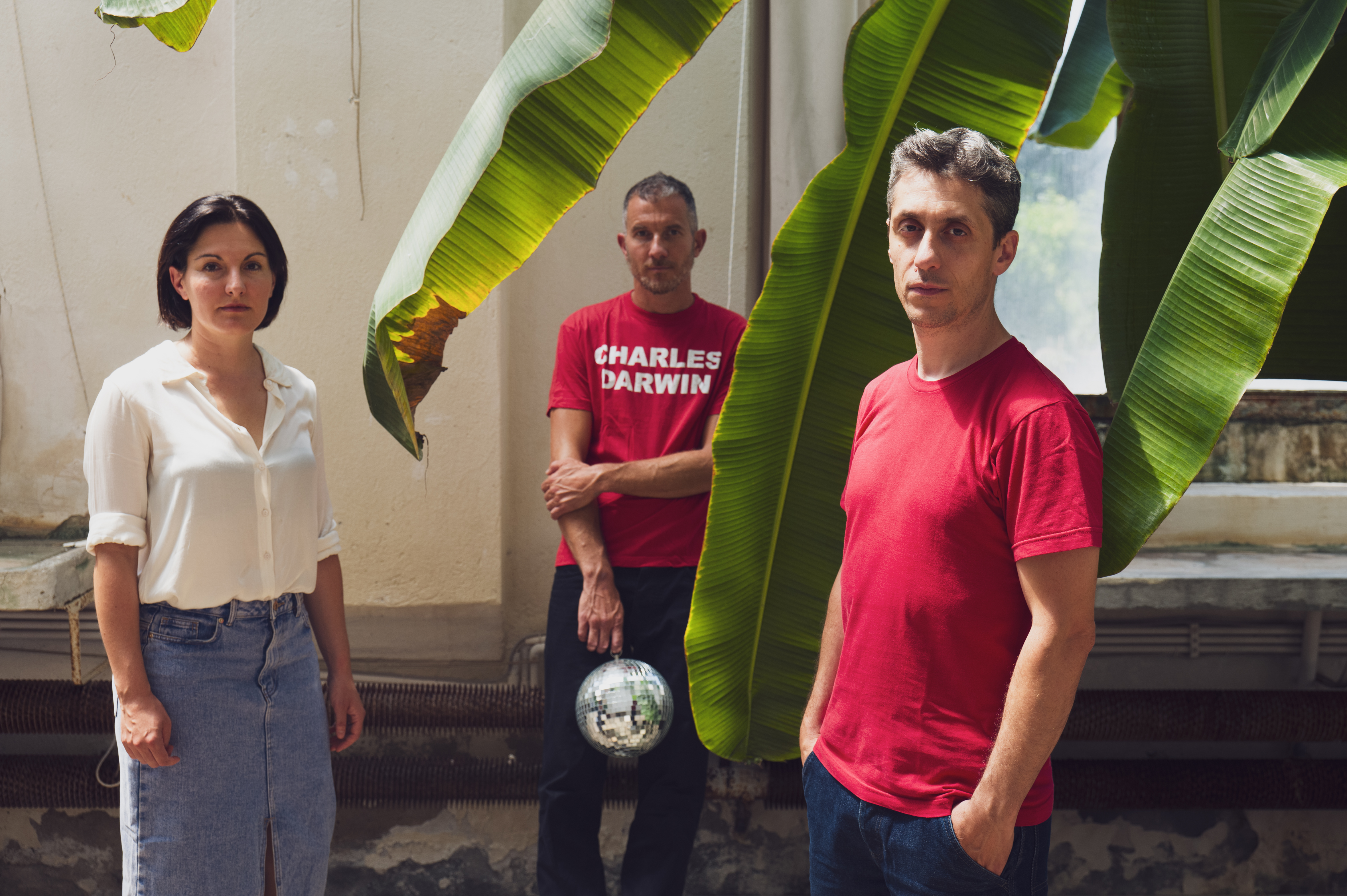
Sotterraneo

Sotterraneo are a theatre collective set up in Florence in 2005. Their pieces are easily recognizable for their avant-pop approach, combining collective imagination with unconventional thinking. Over the years, they have created several shows which were showcased in major national and international theatres – in Spain, Germany, France, Belgium, Greece, UK, Portugal, the Netherlands, Switzerland, Russia, Bosnia and Herzegovina, Slovenia, Croatia, Chile, China, South Korea. The shows obtained a number of awards including Lo Straniero, Hystrio, BeFestival First Award (Birmingham UK), Silver Laurel Wreath Award (Sarajevo MESS Festival), as well as three Ubu awards, two of them for Best Italian Theatre Show with Overload and L’Angelo della Storia - both coproduced, among the others, by Teatro Nacional D. Maria II in Lisbon directed by Tiago Rodrigues. Sotterraneo are part of the Centrale Fies and resident at Teatri di Pistoia. During the 2025/26 season they are on stage with L’Angelo della Storia, DJ-SHOW, Talk show and Il fuoco era la cura. 

Łukasz Twarkowski

Łukasz Twarkowski is a creator of multimedia performances combining theatre and visual arts. He places his projects in the context of extending reality through multimedia. A crucial element of Twarkowski's creative work is investigating the ability and limitations of theatre as a medium and tool of communication. By permanent deconstruction of narratives, questioning the fixed habits of the audience and by meaningful usage of new media, Twarkowski creates a new, original language of stage performance based on multimedia and, more widely, digital technologies. In using these, Twarkowski analyses and observes increasingly complex relations between the Real, the Symbolic and the Imagined. His projects are being programmed at the most important festivals and stages around the world, among others: Odéon - Théâtre de l’Europe, Ruhrtriennale, New York Skirball Center, Festival de Otoño de Madrid, Wiener Festwochen, Southbank Center London, Onassis Stegi, Taipei Performing Arts Center, Holland Festival, Münchner Kammerspiele, Théâtre de Vidy, Thalia Theatre. Rohtko, his first theatrical work to be presented in Italy, was staged at the Teatro Strehler in May 2024 during the Festival Presente Indicativo | Milano Porta Europa and won the Ubu Award as Best foreign show presented in Italy.

Pictures 1, 2, 3, 9 © Masiar Pasquali | 4 © Andrea Pizzalis | 5 © Anne Van Aerschot | 6 © Toni Gentile | 7 © Tiny Geeroms | 10 © Smith | 11 © Sveva Bellucci | 12 © Pier Paolo Zimmermann | 13 © Christophe Raynaud de Lage | 14 © Clara Vannucci | 15 © Beatrice Borgers


The Piccolo with il Saggiatore

The Piccolo with il Saggiatore


The fifth year of the series created by the Piccolo together with the Milanese publishing house.


Created with the aim of offering a selection of works on and related to Italian and international theatre, never before published in Italy, the series has, so far, led to the publishing of 21 titles: in 2022 Uno spettacolo per chi vive in tempi di estinzione (A Play for the Living in a Time of Extinction) by Miranda Rose Hall; Big Data B&B by Laura Curino; Abbecedario per il mondo nuovo by AAVV; Zoo by Sergio Blanco; Carbonio by Pier Lorenzo Pisano; Due amici by Pascal Rambert; Trilogia delle identità, a triptych by Marcus Lindeen (Orlando e Mikael, Wild Minds, L’avventura invisibile); Teatro, three dramaturgies by Tiago Rodrigues (Catarina e la bellezza d’ammazzar fascisti, Coro degli amanti, Nella misura dell’impossibile). 

In 2023 HEDDA.GABLER. come una pistola carica by Liv Ferracchiati; Anatomia di un suicidio (Anatomy of a Suicide) by Alice Birch. 

In 2024 Anni, lettere e valanghe, by Marco D’Agostin and Alessandro Iachino; Teatro, two works by Mariano Pensotti (Gli anni and Lo spettacolo); Come tremano le cose riflesse nell’acqua by Liv Ferracchiati; Limited Edition by Davide Carnevali

In 2025 Il teatro tiene banco by Davide Carnevali; Dittico by Antonio Latella (consisting of two texts, Zorro and Wonder Woman); Luca Ronconi. Gli anni del Piccolo (1998-2015), on the occasion of Prospettiva Ronconi, a series of initiatives over the ten years since the death of the director; Dance Me to the End of the World by Sotterraneo.

Three works from the special series dedicated to the writings of Giorgio Strehler: Lettere agli italiani, 2021; Shakespeare Goldoni Brecht, 2022; Un teatro necessario, 2023. 

A second volume of writings by Ronconi is planned for the 2025/26 season, again within the context of the Prospettiva Ronconi programme: following the collection of interviews given for the show programmes of the plays produced, co-produced or created in collaboration with the Piccolo, the new work will contain a series of “theatrical editions” curated by Luca Ronconi, illustrating his inventiveness and unbound concept of dramaturgy.

The special relationship between Giorgio Strehler and Bertolt Brecht is the subject of the fourth book from the series dedicated to the founder of the Milanese theatre.

In close relation to the season’s programme comes the publication of a book by Paolo Di Paolo and Lino Guanciale, based on Miracolo a Milano, our new production directed by Claudio Longhi, and the translation and publication of a collection of writings by the French-Vietnamese playwright and director Caroline Guiela Nguyen, Associate artist at the Piccolo.
 

Historical archive and library

Historical archive and library


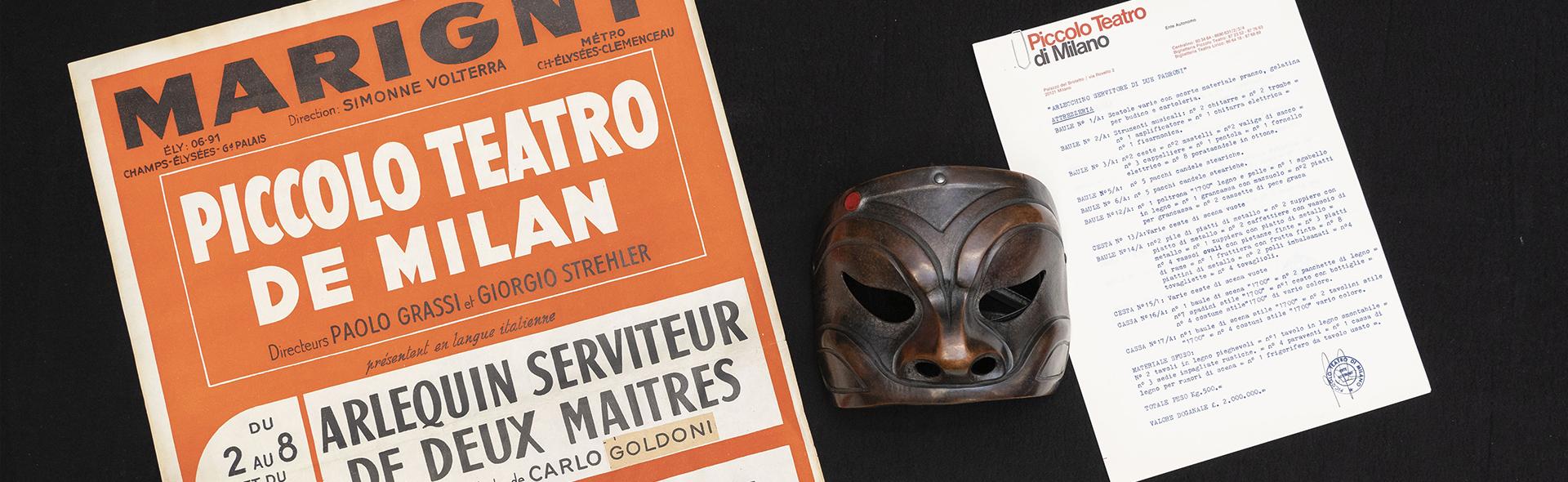
The historical archive is a place for the conservation, construction and exploration of the memory of the Piccolo Teatro di Milano.
 

Ever since it was founded, the Piccolo has put effort into safeguarding its own documentary patrimony. The organisation and creation of shows and cultural activities has been documented season after season, leading to the creation of an extensive archive. The cross-referencing of data, writings, images and objects uncovers the tapestry of relations between artists, operators, spectators and both political and institutional figures that spreads out from the local context to the furthest reaches of the international panorama. 
 

Based on these premises, the desire of the theatre is to promote access to the archive and library to a wide-ranging audience of enthusiasts, students, scholars and spectators, in line with its vocation as an “an art theatre for all”

The archival project currently under way aims to valorise the system of production in all its complexity, from conception to staging, and in all its forms of fruition. The arrangement of documentation from the various fields of activity – from management to artistic production (scripts, graphic and photographic material, agendas and stage reports), to administration and accounting, didactics, promotion and publications (photographs, posters, publicity and editorial material, statistics and sales) – is aimed at creating an articulated representation of the synergy between the many figures involved. The importance of the archive is further enhanced by contributions from important figures linked to the history of the Piccolo, who – together with the various projects under way – provide new views of the theatre’s activities in all their various forms. An articulated collection of printed material (posters, publications, themed press reviews) reflects the founders’ intent to create a laboratory of theatrical knowledge and information. 

The historical material is in the process of being arranged and catalogued and finding aids will be added as work progresses and material comes in. A wide range of documentation is now available for consultation related to the shows produced by the Piccolo and the types of material that the study centre has preserved since the early decades. These include, in particular, show programmes, scripts, press cuttings, musical scores and, when made, video recordings of the shows. For visual materials (stage photography, sketches, costume drawings, posters and playbills), please refer to the Eurolab project catalogue. There are also themed files and press reviews related to the organisation’s activities, its founders – Paolo Grassi, Giorgio Strehler and Nina Vinchi – and to Luca Ronconi, and the national and international activities of the theatre.

Of particular importance are the collections in the library, which provide an ample view of the activities of the organisation and various areas of theatre studies. The library holds more than 7,500 items (theatrical texts, critical writings, theatre history and documentation, etc.) as well as a collection of Italian and foreign periodicals, some of which are rare. The library catalogue is available via the SBNWeb application 

The historical archive and the library are open to the public from Monday to Friday, from 2.30 PM to 6.30 PM (Largo Paolo Grassi 2, 20121, Milan). Access is by appointment, which can be made by writing to archivio@piccoloteatromilano.it, indicating your area of research. Currently, the library does not allow books to be lent out.


Projects


Visual imagery for a theatre of relations

Winner of Strategia Fotografia 2022, promoted by the Direzione Generale Creatività Contemporanea at the Ministry of Culture, the project aimed to preserve and make accessibile thousands of images that document a theatrical event.

DISCOVER MORE

Theatre criticism and accounts in periodical literature

Thanks to the support of Regione Lombardia, our library offers the public its catalogue of theatre periodicals: a collection of approximately 200 Italian and foreign magazines that is unmatched in Italy in terms of size, range and historical importance.

DISCOVER MORE


Photo © Masiar Pasquali


Work with us

Work with us

The Fondazione Piccolo Teatro di Milano – Teatro d’Europa, a repertory organisation for the production of Dramatic Theatre, is a non-profit institution with the mission of staging quality theatrical shows on a continuous basis.


The goals of stability and an internationally significant role are pursued by the Foundation through investments that focus on its statutory activities, and also through the staging of long-run productions in its auditoriums, thus contributing to audience education. The Foundation, including in collaboration with other related Italian, European and international institutions, to encourage national tradition and artistic theatre on a European and international level, and to promote contemporary Italian productions in accordance with its role as a Theatre of Europe pursuant to article 48 bis of the Italian Ministerial Decree of 1 July 2014, integrated with the Italian Ministerial Decree of 5 November 2014 and the Italian Ministerial Decree of 3 February 2016.
 

Would you like to be a part of the team and contribute to the achievement of our mission?
Send your application for the position that interests you; if your profile is in line with the positions open, you will be contacted for an interview.


HOW TO SEND YOUR RESUMÉ
Click on the “discover” button for the position that interests you, read the job description and follow the instructions for sending your application. 
We kindly ask you to read the privacy policy before sending your application. By sending your application, you declare to have read and understood the policy.

THERE ARE CURRENTLY NO POSITIONS OPEN


Image from the show Prima by Pascal Rambert. Photo © Masiar Pasquali


Your event at Piccolo

Your event at Piccolo

Have you ever considered a theatre as the ideal venue for your event?
This is the perfect way to give your project an original and unforgettable atmosphere, set in an ambiance rich with history, prestige and cultural importance. You will also be directly contributing to the support of the production and life of our institution.
Since 1998, the Piccolo Teatro has opened its auditoriums for the organisation of events, congresses, presentations, meetings, conventions, seminars, fashion shows and screenings.


THE VENUES
Four theatres are available – as well as the numerous other spaces within the buildings – offering the chance to choose a location which offers the best possible space and access to form an ideal setting for your event.

Piccolo Teatro di Milano – Teatro d’Europa
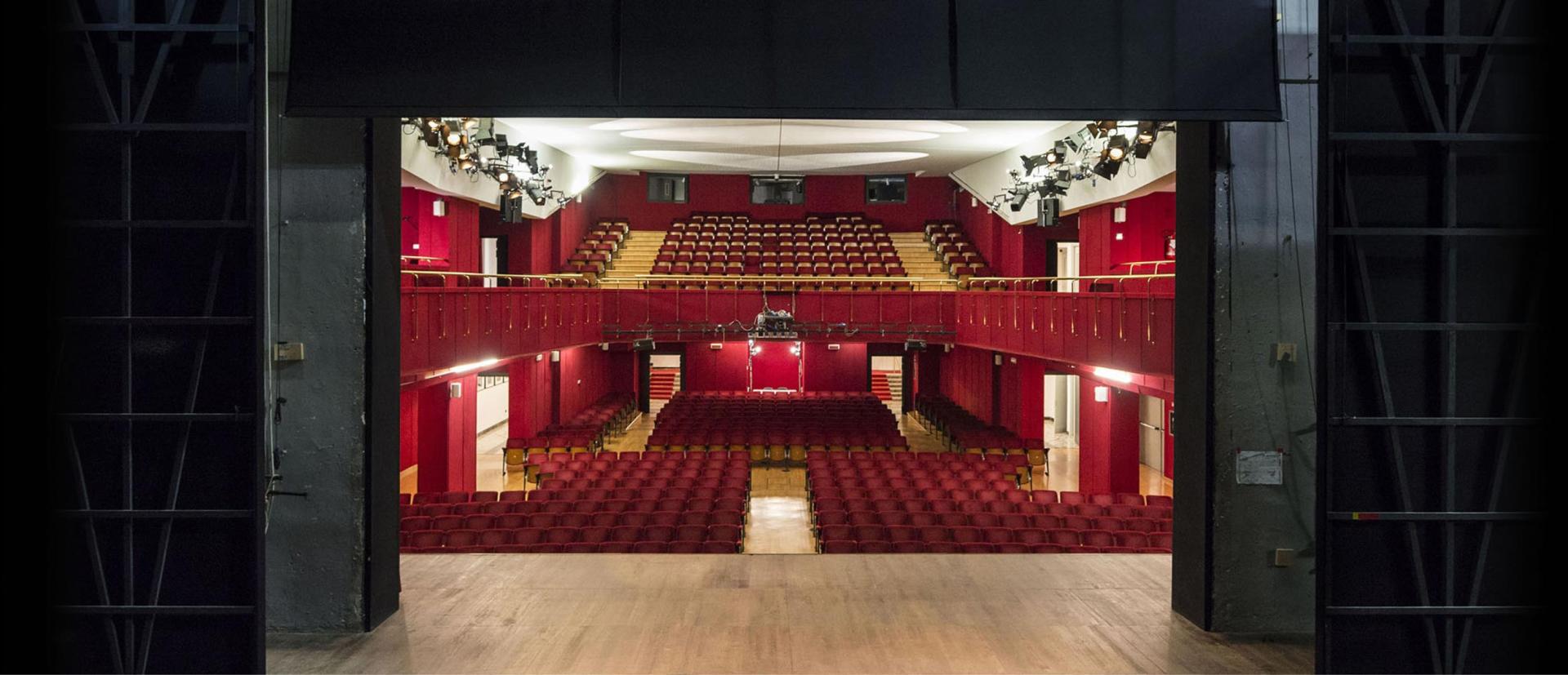
The Teatro Strehler: 968 seats in total between stalls and balcony, 2 large foyers (one for the Stalls and one for the Balcony) for the welcoming of the audience on arrival, the organisation of reception and cloakroom services and the setting up of catering services.
Scatola Magica (Magic Box - Teatro Strehler): a theatre within the theatre, a space that “magically” appears in the foyer of the Teatro Strehler. 90 seats placed in the evocative atmosphere of the sets of Strehler’s shows. 
The Teatro Grassi: 488 seats in total between Stalls and Balcony, a foyer for the welcoming of the audience on arrival, the organisation of reception and cloakroom services and the setting up of catering services.
Moreover, your event can also be organised in the wonderful Renaissance Cloister in Via Rovello, where conferences and screenings can be held and where you can take advantage of the excellent bar/cafeteria that can organise a tailor-made reception .
The Teatro Studio Melato: a circular theatre, with approximately 368 seats, a foyer for the welcoming of the audience on arrival, the organisation of reception and cloakroom services and the setting up of catering services.
Rehearsal Spaces: 5 rehearsal rooms can be surveyed and are available for your meetings and the preparation of your event.


SERVICES

In addition to the locations, the Piccolo Teatro can also offer, through the presence of its qualified personnel, the highest quality technical assistance for your event (audio, video, lighting and set design).
The theatre technicians are also on hand to provide a consultancy service in order to create the ideal setting to make your event unique and memorable.
The Scenic Construction Department is also available for the study, creation and assembly of personalised sets.
The following support services can be requested for cultural and congressional events: video projections, simultaneous translation, personalised catering services and much more. 


OPPORTUNITIES
The Costume Department can fabricate the highest quality costumes from your sketches and designs. The Piccolo Teatro also offers a rental service of the costumes created for the theatre’s shows: handcrafted clothes, made with high quality fabrics and attention to every minute detail, that have helped render the productions of the Piccolo Teatro unique and memorable worldwide.
The Department of Construction and Sets is available for the creation of your sets for commercial or artistic activities. Sets and props are also available for hire.


For more information and to view the locations please contact:

Production and Organisation Department Piccolo Teatro Milano
Teatro Strehler - Teatro Grassi – Teatro Studio
Andrea Barbato 02/72.333.262
e-mail barbatoa@piccoloteatromilano.it

Stefano Massini

Stefano Massini

Born in Florence in 1975, holder of a degree in Ancient Literature from the University of Florence, Massini began his theatrical career in 2000 as guest assistant to Luca Ronconi at the Piccolo Teatro di Milano, and before that as assistant to international directors at the Maggio Musicale Fiorentino.
Between 2000 and 2005 he dedicated himself principally to directing, first with a staging of The diary of Anne Frank, followed by various titles from contemporary Italian and international playwriting.
Between 2003 and 2005 he began experimenting with stage writing, creating Io sono il mare, Prima dell’alba and Memorie del boia for the Teatro di Rifredi (Florence), all staged with sets by Emanuele Luzzati. It was however in 2005 that his career as a playwright took off, when he was unanimously awarded the Pier Vittorio Tondelli prize, the most important recognition for theatrical writing in Italy, for L’odore assordante del bianco. He had already won the Flaiano Award and had received recognition at the Vallecorsi Awards for La fine di Shavouth in 2004.
During the 2005-2006 season he launched the Trittico delle Gabbie project for the “Teatro delle Donne” Centre of Dramaturgy with the presentation of the one-act La Gabbia, which earned him the National Critics Award, and third place at the Ubu Awards for best Italian newcomer. In December 2005 the book Una quadrilogia was published by Ubulibri, with a preface by Franco Quadri. In the same year he also wrote Muro di silenzio, which was staged by Anna Bonaiuto.
In November 2006 he wrote Processo a Dio, directed by Sergio Fantoni with a company led by Ottavia Piccolo, while February 2007 saw the presentation at the Teatro Stabile della Toscana of L’odore assordante del bianco, which he himself directed (the title was part of the triad for the Ubu Awards). Again in 2007, Massini won the Vallecorsi Award, and presented the second part of the Trittico delle Gabbie, entitled Zone d’ombra, completing the project in 2008 with Versione dei fatti (the triptych was then reunited at the Festival delle Colline Torinesi in 2009 on the occasion of the publishing of the book by Ubulibri). November 2007 saw the debut of La fine di Shavouth, produced by the Teatro Stabile di Bolzano and directed by Cristina Pezzoli.
The 2007-2008 season featured Ottavia Piccolo once again on stage (directed by Sergio Fantoni) in La commedia di Candido, but above all in the inauguration of the pièce Donna non rieducabile memorandum teatrale su Anna Politkovskaja, published by Ubilibri and staged by Ottavia Piccolo (directed by Silvano Piccardi), following a version directed by Massini in the festival organised by Dacia Maraini and then at Primavera dei Teatri of Castrovillari in 2008.
In 2009, Arche Editeur of Paris decided to publish his works in French, while Mireille Perrier staged Femme non-rééducable, directed by Michèle Guigon. The text was presented in Germany at the Munich Kammerspiele. In May 2009, the Teatro Stabile della Toscana commissioned the writing and direction of an abridgement of Mary Shelly’s Frankenstein (which made its debut the same month, with Sandro Lombardi), following close on the heels of Cosmologia, performed by Massimo Dapporto.
For the 2009-2010 season a new version of Femme non-rééducable made its debut in France, directed by Anton Koutnetsov for the Théâtre du Limousin. Massini began collaborating with the Prague National Theatre, which presented L’odore assordante del bianco, directed by Luzie Belhodaraska. Italy in the meantime saw the debut of L’arte del dubbio with Ottavia Piccolo (directed by Sergio Fantoni, based on the book by Gianrico Carofiglio) and L’Italia s’è desta directed by Ciro Masella (Primavera dei teatri, Castrovillari 2010), while Fabrizio Gifuni performed the work Questions (about tomorrow) for the Città della Creatività. Meanwhile Donna non rieducabile was translated and staged in various countries around the world, from Spain (the Off Theatre of Madrid, the Pradillo Theatre of Madrid) to France (Toulouse, Avignone, Strasbourg, Rennes), as well as in French Canada (directed by Olivier Lepine) and Russia (Baltiski Dom in Saint Petersburg).
In February 2010 in Reggio Emila he received the Matilde di Canossa Award, and in the same month Sanguinis Capitula, performed and directed by Giorgio Albertazzi, saw the light. In November 2010 he was called for a Master at the Università Cà Foscari, Venice, while Io non taccio, a re-writing of the Savonarola sermons (for Don Andrea Gallo) and The Praise of Folly by Erasmus of Rotterdam for Gioele Dix had their debuts. In Los Angeles the first version of Donna non rieducabile (A stubborn woman), directed by B. Hochwald, was presented.
In the 2011-2012 season he directed Lucilla Morlacchi in Lo Schifo (Teatro Metastasio, Prato), wrote Balkan Burger for Luisa Cattaneo (produced by the Teatro delle Donne), and won the Franco Enriquez Award for theatre. For Estate Fiorentina he created the Voci Pratolin project, involving, among others, Marco Baliani, Massimo Ranieri, Ottavia Piccolo and Maurizio Scaparro. In September 2012 he received the commission of Progetto Connections for Before Hamlet (Teatro Litta, Milan), and prepared La porta, based on the novel by Magda Szabo, for Barbara Valmorin and Alvia Reale. In November 2012, RAI - Radiotre entrusted him with an entire evening dedicated to the work Lehman Trilogy, read by Riccardo Bini, Fausto Russo Alesi, Maria Paiato, Graziano Piazza, Barbara Valmorin and Avlia Reale.
In the spring of 2013, in Belgium, yet another version of Femme non-rééducable made its debut, this time directed by Michel Bernard for the Marni Theatre in Brussels. In May 2013 he directed the actors of Arca Azzura Teatro in Il Principe, a rewriting of the work by Machiavelli, and in December of the same year he won the Special Ubu Award for his playwriting as a whole. In August 2013 Frankenstein debuted in Flanders, directed by Emmanuel Dekoninick for the Villers-La Ville festival. October 2013 saw the debut of the French version of Lehman Trilogy, directed by Arnaud Meunier for the Comedie de Saint-Etienne/Les Théâtres de la Ville de Luxembourg/Théâtre du Rond-Point: the staging won the French critic’s Grand Prix for Play of the Year. Meanwhile, the first Greek version of Donna non rieducabile debuted in Athens, at the KRT.
In March 2014, Massini was invited by the Università di Siena in the role of visiting professor, and Einaudi published Lehman Trilogy as part of their theatrical series, with a preface by Luca Ronconi. Again in March 2014, he created the stage version of The Sand Child by Tahar Ben-Jelloun, performed by Maria Paiato, for the Dedica festival of Pordenone. A new version of Donna non rieducabile ran uninterrupted for two months at the Theatre de l’Atelier in Paris, performed by Anne Alvaro. The publishing house P. Lauke of Hamburg began the translation of his works into German, and not long after, the most important theatres in Germany began to prepare the first stagings: Lehman Trilogy debuted first of all in Dresden, then in Cologne, (directed by Stephan Bachmann), followed by Hannover, Linz and Munich, while Donna non rieducabile was staged in Oldenburg, and Credoinunsolodio in Cologne. September 2014 saw the debut of African Requiem, written and directed by Massini and performed by Isabella Ragonese.
November 2014 saw the creation of 7 minuti, directed by Alessandro Gassmann, starring eleven actresses including Ottavia Piccolo (ERT/Teatro Stabile del Veneto/Teatro Stabile dell’Umbria), while Einaudi published the work as part of their theatrical series.
In 2016, 7 minuti was transformed into a film directed by Michele Placido, with the screenplay co-written with the author and performed by an international cast.
January 2015 saw the debut of Lehman Trilogy, produced by the Piccolo Teatro di Milano, directed by Luca Ronconi, and starring - among others - Fabrizio Gifuni, Massimo Popolizio, Massimo De Francovich, and Paolo Pierobon. The play won five Ubu Awards, including the award for best text. It was also awarded the Maschere del Teatro Award (Naples, Teatro Mercadante) for best text and play of the year. In May 2015, Shenzhen significa inferno the final play in the collaboration with TDD, made its debut. Massini began collaborating with a number of cinema production companies in Italy, including Domenico Procacci’s Fandango, Cattleya and RaiCinema. In May 2015 he was invited by Sergio Escobar to be the new artistic consultant of the Piccolo Teatro di Milano - Teatro d’Europa. He won the Giovanni Boccaccio Award for Lehman Trilogy, and was invited to join the Mondadori publishing house as a writer, for which he published the novel Qualcosa sui Lehman, in 2016, the full version on which the play was based. In the Autumn of 2015, Lluis Pasqual directed the Catalan versions of Donna non rieducabile and Credoinunsolodio at the Lliure, Barcelona, the latter a piéce which was also to debut soon after at the Piccolo Teatro di Milano, directed and performed by Manuela Mandracchia, Sandra Toffolatti and Mariangela Torres.
In January 2016, TNN Nice presented Terre noire, a commissioned work directed by Irina Brook, while news was announced that the Oscar Award winning director Sam Mendes will be staging Lehman Trilogy for the National Theatre in London. 2016 also saw the German version of Lehman Trilogy running simultaneously in six public theatres (Munich, Dresden, Cologne, Linz, Lucerne, Hannover). The Rideau in Brussels produced the Belgian version of Lehman Trilogy, directed by Lorent Wanson, winning the theatre critics’ award for play of the year. The Spanish version produced by the Grec in Barcelona, directed by R. Romei, was also very well received by both critics and audiences.
Autumn 2016 saw the debut of Fabrizio Bentivoglio in the new L’ora di ricevimento, while stages abroad saw the debut of 7 new versions of Credoinunsolodio (Germany, Switzerland, Algeria, Peru, Mexico, Canada and France, in an acclaimed staging, directed by Arnaud Meunier and performed by Rachida Brakni). Donna non rieducabile was staged simultaneously in Canada, Argentina, Peru and Mexico. Massini began collaborating with the newspaper La Repubblica.
In 2017 Irina Brook directed Point d’interrogation for the TNN in Nice; Sonia Bergamasco directed Federica Fracassi and Isabella Ragonese in Louise e Renée, freely based on Letters of two young brides by Balzac. For Pistoia’s year as Italian capital of culture, Massini wrote Il Vangelo secondo Judah, performed by Luigi Lo Cascio and Ugo Pagliai, set in front of the frieze by Della Robia in the loggia of the Spedale del Ceppo. In the Autumn, Occident express debuted with great success in both Italy, with Ottavia Piccolo and the Orchestra Multietnica in Arezzo, in Vienna and Cologne.
The book Qualcosa sui Lehman proved to be one of 2017’s literary successes, winning the Mondello - Super Mondello award and the Campiello Jury of Literary Experts Award, as well as the Giusti Award and the Fiesole Award. In November it also received the De Sica award.
Autumn 2017 saw the publication of the second novel for Mondadori, L'interpretatore dei sogni. This novel has also been transformed into an important theatrical play, directed by Federico Tiezzi, which will run at the Piccolo Teatro di Milano from January 2018.
2018 will also see a number of works by Massini debuting on Broadway.
Luca Ronconi

Luca Ronconi

Luca Ronconi was born on the 8th of March 1933 in Susa (Tunisia).
He graduated from the Accademia d’Arte Drammatica (Academy of Dramatic Art) in Rome in 1953 and worked as an actor with leading roles in shows by directors such as Luigi Squarzina, Orazio Costa and Michelangelo Antonioni. His first experiences as a director began in 1963 for the Gravina/Occhini/Pani/Ronconi/Volonté Company, where he oversaw the staging of La Buona Moglie, the merging of two texts by Goldoni, The Honourable Maid and The Good Wife, into one show.
In 1996 he staged The Changeling by Middleton and Rowley and was hailed by the critics as one of the leading members of the Italian theatrical vanguard. The show that raised him to international stardom was Ariosto’s Orlando Furioso (1969), in the abridged version by Sanguineti, an extraordinary theatrical event that was excellently received during its Italian tour, and was an international success.
From 1975 until 1977, he was the director of the Theatre Section of the Venice Biennale and between 1977 and 1979 he founded and directed the Laboratorio di progettazione teatrale (Workshop on devising theatre) in Prato.
During the seventies he staged numerous memorable shows, including XX from Wilcock (1971), Oresteia by Aeschylus (1972), Utopia from Aristophanes (1976) and, for the workshop in Prato, The Bacchae by Euripides (1977) and The Tower by von Hofmannsthal (1978).
The 1980s saw a number of milestone productions in Ronconi’s journey of research, which were also considered to be undisputed high points in the history of post-war Italian theatre: Ignorabimus by Holz (1986), Les Dialogues des Carmélites by Bernanos (1988) and Chekhov’s Three Sisters (1989).
From 1989 until 1994 he was director of the Turin repertory theatre, where, in 1992, he founded and directed the “Scuola per attori” (the acting school). In 1990, during his tenure as director of the theatre, he directed Strange Interlude by O’Neill, The Difficult Man by von Hofmannsthal and The Last Days of Mankind by Kraus. This last production was staged in the vast space of the FIAT factory machine room in the “Lingotto” in Turin, the high point of that year’s theatrical season.
In April 1994, he was nominated as director of the Teatro di Roma, where he directed a number of very challenging shows such as Shakespeare’s King LearVerso “Peer Gynt” from the Ibsen play of the same name (1995), Gadda’s That Awful Mess on the Via Merulana (1996) and The Brothers Karamazov by Dostoyevsky (1998).
In January 1999 he became Consultanto to the Director of the Piccolo Teatro di Milano and the director of The Piccolo Theatre School.
To kick-off his work at the theatre he staged Calderón de La Barca’s Life is a Dream and Strindberg’s A Dream Play in the winter of 2000. During the 2000-2001 season, he directed Lolita: A Screenplay by NabokovThe Two Venetian Twins by Goldoni and Candelaio by Bruno; whilst the next season, he staged What Maisie Knew by Henry James and Infinities by the mathematician Barrow.
In the summer of 2002, in the Greek Theatre of Syracuse, he staged the trilogy Prometheus Bound by Aeschylus, The Bacchae by Euripides and The Frogs by Aristophanes (later staged also at the Teatro Strehler in Milan).
That same year, with the staging in Ferrara of Amor nello specchio by Andreini, saw the opening of the Centro Teatrale Santacristina, a production and educational entity founded by Ronconi with Roberto Carlotto and which he still directs today in the purpose-built structure in the Gubbio valley.
The following summer he was at the Teatro Farnese in Parma with the production of 'Tis Pity She's a Whore by Ford (later hosted by the Teatro Studio in Milan).
For Genova Capitale Europea della Cultura 2004 (European Capital of Culture in 2004), he directed The Centaur by Andreini. In 2005 he staged Diario Privato by Léautaud, with Giorgio Albertazzi and Anna Proclemer, after which he directed Professor Bernhardi, produced by the Piccolo.
For the 2006 Winter Olympics in Turin, he was invited to direct five shows that paid tribute to the Olympic symbol: Troilus and Cressida by Shakespeare, The War Plays (a trilogy by Edward Bond), Biblioetica: dizionario per l'uso by Corbellini, Donghi and Massarenti (codirected with Claudio Longhi), Il silenzio dei comunisti by Foa, Mafai and Reichlin and Lo specchio del diavolo by Giorgio Ruffolo. Moreover, in January 2007, for the three hundredth anniversary of Goldoni’s birth, he staged the comedy The Fan at the Teatro Strehler. Later, again at the Piccolo, he staged Plucked from the Air or The Affairs of Baron Laborde by Hermann Broch.
For the 2007 edition of the Salone del Libro in Turin, he presented Ray Bradbury’s Fahrenheit 451. In September 2007, in Ferrara, the project “Odissea doppio ritorno” made its debut: a diptych consisting of L’antro delle Ninfe, from Homer and Porphyry  and Ithaka by Botho Strauss (2007). In June 2008 he began collaborating with the Festival dei Due Mondi di Spoleto by presenting several “Lessons” on Ibsen’s dramaturgy. In September 2008, in Umbria, he opened the Teatro Cucinelli in Solomeo with Nel bosco degli spiriti, based on My Life in the Bush of Ghosts, a fable by the Nigerian writer Amos Tutuola, adapted for the theatre by Cesare Mazzonis and with live music by Ludovico Einaudi.
In June 2009, the collaboration with Spoleto continued with a study on Chekhov’s The Seagull entitled Un altro gabbiano. His latest productions at the Piccolo Teatro have been: the two Shakespearean plays A Midsummer Night’s Dream (2008) and The Merchant of Venice (2009), the comedy It’s Only the End of the World by the contemporary French author Jean-Luc Lagarce, Sweet Days of Discipline by Fleur Jaeggy (2010), Edward Bond’s In the Company of Men (2011) and Saint Joan of the Stockyards (2012), his first experience with the theatre of Bertolt Brecht. He also dedicated a project to the contemporary Argentinian playwright Rafael Spregelburd, with the staging of Modesty (2011) and Panic (2013). In 2014 he directed Celestina laggiù vicino alle concerie in riva al fiume (Célestine là-bas près des tanneries au bord de la rivière) by Michel Garneau, from Fernando de Rojas and Pornografia by Witold Gombrowicz (2014). His last production at the Piccolo is Lehman Trilogy by Stefano Massini (2015).
Since 2010, he has been working on a three-year project, created thanks to the collaboration between the Centro Teatrale Santacristina and the Accademia Nazionale d’Arte Drammatica “Silvio d’Amico”: the cycles of summer workshops, held at the headquarters of the School with graduating 3rd year acting students terminated in July 2012 at the Festival di Spoleto, with the staging of In Cerca d’autore. Studio sui “Sei personaggi”, a study on Luigi Pirandello’s Six Characters in Search of an Author. The show was also featured in the 2012/2013 season at the Piccolo Teatro. For the Genova Repertory Theatre, he staged Nora alla prova da “Casa di Bambola”, from Ibsen’s A Doll’s House (2011).
As operatic director, he has worked on the “classics” of Italian Opera, like: Nabucco, 1977, and Trovatore, 1977 by Verdi; Norma by Bellini, 1978; Macbeth, 1980, Traviata, 1982 and Aida, 1985, by Verdi; and Tosca by Puccini, 1997 and European Opera, such as Carmen by Bizet, 1970; Das Rheingold by Wagner, 1979; Don Giovanni by Mozart, 1990 and 1999; Lohengrin again by Wagner in 1999. Ronconi additionally carried out an interesting study on the less visited areas of musical theatre, such as the great period of Italian Baroque Music (L’Orfeo by Rossi, 1985; L’Orfeo and Il ritorno di Ulisse in patria by Monteverdi, both in 1998; L’incoronazione di Poppea by Monteverdi, 2000) as well as contemporary operas (The Makropulos Affair by Janácek, 1993; The Turn of the Screw by Britten, 1995; Teorema by Battistelli, 1996; Ariadne auf Naxos by Strauss, 2000). The encounter with Rossini’s musical theatre was a particularly happy one: Il Barbiere di Siviglia (1975), Moïse et Pharaon ou le passage de la Mer Rouge (1983), Il viaggio a Reims (1984), William Tell (1988), Ricciardo e Zoraide (1990), Armida (1993), La Cenerentola (1998), and La donna del lago (2001). He also directed Lear by Reimann for the Regio di Torino (2001), Giulio Cesare by Händel (Madrid, 2002), a new version of Moïse et Pharaon by Rossini (Teatro alla Scala – Arcimboldi, 2003),Alfonso und Estrella by Schubert (Cagliari, 2004), L’Europa riconosciuta by Salieri (for the reopening of La Scala in December 2004) and Il barbiere di Siviglia (Pesaro, 2005).
His most recent opera productions include: Verdi's Falstaff in 2006, at the Maggio Musicale FIorentino, the "nude" Turandot in 2007 for the opening of the season of the Teatro Regio di Torino, the Puccini triptych at Milan's La Scala (2008, staged again at the Opéra in Paris, in October 2010), and the revival of Rossini's Il Viaggio a Reims at La Scala (2009). His production of Mozart's La Clemenza di Tito was staged for the reopening of the historic Teatro San Carlo di Napoli (January 2010) after its renovation. For the same theatre, in November 2011, he staged Rossini's Semiramide, and for the two hundredth anniversary of Verdi's birth, he staged Falstaff for the Teatro Petruzzelli in Bari. In 2014 he staged Armida at Rossini Opera Festival.
Luca Ronconi is also an exhibition curator. The exhibition Anton Van Dyck-Riflessi Italiani was inaugurated on February 2004, at Milan's Palazzo Reale. In September 2006, he was curator of the evocative exhibition Cina. Nascita di un Impero at the Scuderie del Quirinale in Rome. In 2008, first for Rome, at the Museo Nazionale di Palazzo Venezia, and later for Berlin, at the Gemäldegalerie, he curated the exhibition dedicated to Sebastiano Del Piombo. In September 2009 he worked on the exhibition Roma. La pittura di un Impero, showcased in the rooms of the Scuderia del Quirinale. Finally, he curated the exhibition La bella Italia. Arte e identità delle città capitali, presented in the Juvarriane stables of La Venaria Reale in Turin, to celebrate the 150th anniversary of the Unification of Italy (2011).
He has received numerous prizes and recognitions including the VI Premio Europa per il Teatro di Taormina Arte (Europe Prize for the Teatro di Taormina Arte) (April 1998); the UBU Prize for best show of the season for “Progetto Sogno” in 2000, for Lolita in 2001, for Infinities in 2002, for Professor Bernhardi in 2005, for “Progetto Domani” in 2006 and for Panic in 2013. More recently, he was awarded the Premio Nazionale della Critica (Critic’s National Award) for his “Progetto Lagarce” and the ETI Prize for best show forA Midsummer Night’s Dream.
In 2008 he received the “Antonio Feltrinelli” Prize for direction by the Accademia Nazionale dei Lincei. He has received honorary degrees from the Universities of Bologna (1999), Perugia (2003), Urbino (2006) and Venice (2012). On August 2012, within the Theatre section of La Biennale, he was awarded the Golden Lion for Lifetime Achievement.
He died in Milan on 21 February 2015

Sergio Escobar

Sergio Escobar

Born in Milan in 1950, married, with three children, Sergio Escobar graduated ‘with honour’ in Philosophy of Science with Ludovico Geymonat at the Università Statale di Milano. As a university assistant he worked with Ruggero Romano on “Storia d’italia” published by Einaudi.
In 1979 he began working at the the Teatro alla Scala as assistant to the Superintendent with responsibilities including coordination between directors, supervision of the theatre’s activity abroad, and the introduction of new media in the world of musical production. Together with Claudio Abbado he worked on the foundation of the Scala Philharmonic.
Between 1990 and 1998 he was the Superintendent at the Comunale of Bologna, at the Carlo Felice of Genova and at the Teatro dell’Opera in Rome. During this period he collaborated with some of the most important artists and institutions from the world of music both in Italy and overseas.
Since October 1998 untill July 2020 Escobar has been held the post of Director of the Piccolo Teatro di Milano-Teatro d’Europa. Under his management the Piccolo has put particular emphasis on international relations.
He is the author of numerous publications on the History of Science and the Economics of the Performing Arts. He has taught in numerous master courses in prestigious universities, including the Massachusetts Institute of Technology in Boston, the Showa University of Tokyo, the Università Luigi Bocconi, the Università degli Studi of Milan and the Milan Politechnic.
He holds a seat on the International Advisory Committee for the Master of Management in International Arts Management HEC Montréal, SMU Dallas.
He is a member of the board of the Union of Theatres of Europe, of which the Piccolo Teatro is Founding Member.
He is a member of the Aspen Institute Italy, of the Scientific Committee for the “Dialoghi di Vita Buona” at the Archiepiscopate of Milan, and a member of the Advisory Board to the Presidency of Assolombarda. Grand’Ufficiale al merito della Repubblica Italiana for his activities in the field of theatre.
Receiver of the Medal of Puškin of the Order of Merit of the Russian Federation for culture.

Nina Vinchi Grassi

Nina Vinchi Grassi

Nina Vinchi lovingly and passionately dedicated her life to the theatre founded in 1947 by her husband, Paolo Grassi, together with Giorgio Strehler.
Nina Vinchi, la “signora del Piccolo” (the “lady of the Piccolo”), played a fundamental role in the life of the theatre, increasingly taking on the weight of the productive and administrative organisation of the Piccolo Teatro, up to the day of her resignation in 1993.
Whilst holding this important position, Nina Vinchi (the wife of Paolo Grassi, from 1978 until his death in 1981) always worked to combine the aims of art with those of sound financial management.
Friend and travel companion to the artists, but also an adamant “guardian” of public money, Nina Vinchi was a permanent part of the “human landscape” of Via Rovello, despite her preference of remaining low profile, behind the scenes, leaving the limelight to Grassi and Strehler. She nonetheless always completely supported their choices, in her role as a precious and respected advisor, guaranteeing balance and professionalism. Over the course of her life, Nina Vinchi Grassi received numerous prizes and honours: the silver medal of the City of Milan in 1963, the “Premio Renato Simoni” for loyalty to the theatre in 1975, the nomination as “Grand'Ufficiale al Merito della Repubblica” (Grand Officer of the Order of Merit of the Republic) in 1981, the “Targa Mario Bonfantini” for cultural and artistic merits in 1982, the appointment as Officer of the “Ordre des Arts et des Lettres” (Order of Arts and Letters) in 1985, the gold medal for the “premio della riconoscenza” (acknowledgement award) of the Province of Milan in 1987 and the “Premio Maratea” for a life dedicated to the theatre in 1994. She died on the 15th of June 2009.